
Salads
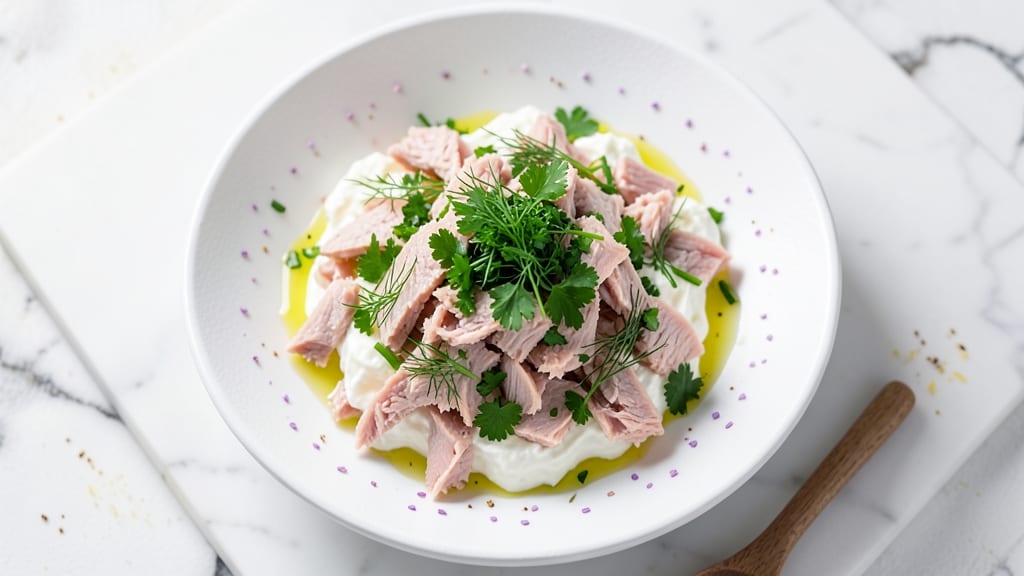
Alison Roman’s tuna salad recipe transforms a classic into something elevated—creamy, herby, and packed with texture. The secret? Swapping mayo for whipped cream cheese creates a lighter, tangier base that balances the rich tuna, while fresh herbs and crunchy celery add layers of freshness.
This version is perfect for picnics, sandwiches, or elegant appetizers, with a brightness that keeps it from feeling heavy.
The magic happens in the prep: flaking high-quality tuna by hand ensures tender bites, while a quick soak in lemon juice keeps it from drying out.
Whipped cream cheese (not full-fat) keeps the salad light, and a mix of parsley, dill, and chives adds an aromatic freshness that Roman’s recipes are known for. The celery and red onion add crunch, and a touch of Dijon mustard ties everything together with a subtle kick.
What you’ll end up with is a tuna salad that’s creamy yet fresh, with a perfect balance of richness and acidity. The whipped cream cheese prevents the salad from becoming greasy, while the herbs and lemon keep it vibrant.
It’s the kind of dish that feels special enough for a gathering but simple enough for a weeknight lunch—with a texture and flavor that’ll have everyone asking for seconds.
Serve it on crisp lettuce cups, stuffed into croissants, or with crusty bread for dipping. The possibilities are endless, but the foundation is foolproof. Let’s make it—your picnic just got an upgrade.
Ingredients for alison roman tuna salad
Here’s what you’ll need to make Alison Roman’s bright, herby, and creamy tuna salad—perfect for picnics or elegant bites.
| Ingredient | Amount | Notes |
|---|---|---|
| High-Quality Canned Tuna in Water 🐟 | 1 ½ lb | Drained and flaked by hand |
| Whipped Light Cream Cheese 🧀 | 8 oz | Not full-fat for lightness |
| Fresh Lemon Juice 🍋 | 2 tbsp | Freshly squeezed |
| Fresh Parsley 🌿 | ¼ cup | Chopped finely |
| Fresh Dill 🌿 | 2 tbsp | Chopped finely |
| Fresh Chives 🌿 | 2 tbsp | Chopped finely |
| Crisp Celery 🧅 | ½ cup | Finely diced |
| Red Onion 🧅 | ¼ cup | Finely diced |
| Dijon Mustard 🌶️ | 1 tbsp | For subtle kick |
| Extra-Virgin Olive Oil 🫒 | 1 tbsp | For richness |
| Salt 🧂 | ½ tsp | Kosher or sea salt |
| Ground Black Pepper 🌶️ | ¼ tsp | Freshly ground |
The tuna makes all the difference here. Wild-caught, high-quality canned tuna in water is non-negotiable—skip the oil-packed kind, and always drain it well. I grab Wild Planet or Vital Choice from the grocery store, but any reputable brand works. The whipped cream cheese is key too—light, not full-fat—so it doesn’t weigh down the salad. Grab a block and whip it yourself for the best texture, or use a tub of pre-whipped if you’re in a rush. Fresh herbs are a must: parsley, dill, and chives add that signature Roman brightness. Trader Joe’s or Whole Foods have great pre-washed bundles, but if you’re growing your own, even better.
No fresh dill? Dried works at half the amount, but it won’t have the same pop. Short on chives? Green onion or scallion is a solid swap. The celery and red onion add crunch—baby carrots or jicama can stand in if you’re feeling adventurous. The Dijon mustard is non-negotiable for that subtle kick, but if you’re avoiding it, a dash of hot sauce or sriracha works too. The olive oil should be extra-virgin—cheap oil will taste harsh here. And trust me on the lemon juice: fresh is non-negotiable. Bottled just won’t cut it.
This salad keeps beautifully for 3-4 days in the fridge, sealed in an airtight container. The flavors actually deepen overnight, so it’s perfect for meal prep. If you’ve got leftovers, toss them into a wrapped sandwich or serve them on crisp lettuce cups. The cream cheese keeps it creamy, but if it starts to separate, just give it a quick whisk before serving. And if you’re prepping ahead, flake the tuna and mix everything else separately—combine right before serving to keep the celery and onion crisp.
Why You'll Love This Recipe
- No-Fuss Freshness: I swear by this recipe because it’s the only tuna salad that doesn’t taste like it came from a jar. The light cream cheese—whipped to airy perfection—cuts through the tuna’s richness while the lemon juice brightens everything up. Honestly, I’ve tried every shortcut, but this combo? It’s the only one that actually tastes fresh.
- Herb-Packed Punch: Between us, most tuna salad is just sad. But this one? The parsley and dill—finely chopped and tossed in—add a herbaceous kick that makes it feel like a restaurant dish. The lemon juice ties it all together, so it’s bright, herby, and ridiculously good without being overpowering.
- Lunchbox Legend: This is my go-to for packed lunches, but it’s also the star of my charcuterie boards. Spread it on crackers, stuff it in wraps, or pile it on toast with a sprinkle of salt. Between us, I’ve even used it as a dip for veggies at dinner parties—no one ever questions it.
- Budget-Friendly Luxury: You’d never guess this tastes like a fancy appetizer, but it costs me less than $5 for a whole batch. The canned tuna is high-quality but affordable, the cream cheese is light, and the herbs add freshness without breaking the bank. Plus, it keeps for days, so I’m never scrambling for last-minute snacks.
Step-by-step instructions for Alison Roman's herb-infused tuna salad
Here's how to make this bright, herb-packed tuna salad that's perfect for picnics and sandwiches.
Flake the Tuna and Mix with Cream Cheese
Open the 1.5 lb high-quality canned tuna in water and drain it thoroughly in a colander, pressing gently to remove all excess liquid. Transfer the drained tuna to a large mixing bowl. Using two forks or your hands, flake the tuna into small, even pieces - you want it to break down completely for the best texture.
Add the 8 oz whipped light cream cheese to the bowl. Using a sturdy spoon or your hands, mix until the cream cheese is fully incorporated and the tuna is evenly coated. This step is crucial for creating that signature creamy texture without making the salad too heavy. I like to work it gently to avoid breaking up the tuna too much.
Add the Fresh Herbs and Celery
To the tuna mixture, add the 0.25 cup finely chopped fresh parsley, 2 tbsp finely chopped fresh dill, and 2 tbsp finely chopped fresh chives. Stir everything together, making sure the herbs are evenly distributed throughout the tuna. The herbs will give this salad that bright, fresh flavor that makes it so special.
Next, add the 0.5 cup finely diced crisp celery and mix again. The celery adds a nice crunch and helps balance the richness of the cream cheese. I like to taste the mixture at this point to check the flavor balance - it should be fresh and herby, with just a hint of saltiness from the tuna.
Incorporate the Remaining Ingredients
Add the 0.25 cup finely diced red onion, 1 tbsp Dijon mustard, and 1 tbsp extra-virgin olive oil to the bowl. Mix everything together thoroughly. The onion adds a subtle sweetness that pairs perfectly with the tuna, while the mustard and olive oil help bind everything together and add depth of flavor.
Finally, add the 2 tbsp fresh lemon juice, 0.5 tsp salt, and 0.25 tsp ground black pepper. Mix one last time until everything is completely combined. The lemon juice brightens up the flavors, while the salt and pepper round out the seasoning. At this point, your tuna salad should look vibrant and inviting, with a beautiful herby green color.
Chill and Serve
Cover the bowl with plastic wrap and refrigerate the tuna salad for at least 30 minutes before serving. This chilling time allows all the flavors to meld together and the texture to develop nicely. I usually make it at least an hour ahead if possible - it tastes even better after the flavors have had time to marry.
When ready to serve, give the salad one final stir to redistribute any ingredients that may have settled. This salad is perfect for serving on croissants, in lettuce wraps, or with crackers. The herb-infused cream cheese twist makes it light yet flavorful, with just the right amount of creaminess to hold up well even after a few hours in the fridge.
Pro Tips For Making Alison Roman Tuna Salad
- Drain the Tuna Properly: The canned water is the real enemy here—don’t just shake it out. Use a fine-mesh strainer or paper towels to press out every last drop, or the salad will turn into a sad, watery mess. I learned this the hard way when my first batch ended up more like tuna soup.
- Whip the Cream Cheese Cold: Take the whipped light cream cheese straight from the fridge and beat it with a fork until it’s smooth and fluffy—no room for lumps. Room temperature makes it greasy; cold keeps it light and easy to fold. Trust me, your salad will thank you.
- Zest the Lemon First: Add the lemon zest to the cream cheese before mixing in the juice—it brightens the whole dish immediately. The zest dissolves better this way, and you avoid that awkward moment where you realize you forgot it until the end.
- Chop Herbs Fine: Use a sharp knife and rock-chop the parsley and dill into tiny pieces, not just rough chops. The texture should be almost paste-like so the flavors blend seamlessly. I was skeptical until I tried it—now I can’t go back.
Essential equipment for this recipe
Handy Mixing Tools
You’ll need a large mixing bowl (I use a stainless steel Cambro for durability) to combine all ingredients without spills. A sturdy silicone spatula or wooden spoon works best for folding in the whipped cream cheese—it won’t scratch your bowl like metal utensils.
For flaking the tuna, two forks or your hands work perfectly, but if you prefer precision, a small offset spatula helps scrape every last bit from the can. 🧑🍳
Knife & Cutting Prep
A sharp chef’s knife (I love the Mercer Culinary Genesis) is essential for dicing celery and red onion evenly. For herbs, a pair of kitchen shears speeds up chopping parsley, dill, and chives—just snip finely and pulse in a food processor if you’re short on time.
A microplane is optional but handy for zesting lemon if you want extra brightness. Always keep a cutting board (I prefer bamboo for grip) nearby to avoid countertop messes.
Measuring & Storage
Use a small liquid measuring cup for the lemon juice and olive oil, and a standard measuring spoons set for Dijon, salt, and pepper. For storage, transfer the salad to an airtight glass container (like Pyrex) to keep flavors fresh.
If prepping ahead, store the tuna and cream cheese separately until ready to mix—this prevents soggy celery. A small whisk comes in handy if you need to re-emulsify the salad after chilling. ❄️
Optional Extras
A mandoline makes quick work of thinly slicing red onions for extra crunch, while a food mill can help break down tuna into ultra-fine flakes if you prefer a smoother texture.
For serving, grab lettuce leaves (like butter lettuce) or mini croissants—I keep a stash of Waterford crystal plates for elegant presentations. If you’re feeling fancy, a small citrus juicer ensures perfectly fresh lemon juice without seeds.
Nutrition facts
Frequently asked questions
Why does this recipe use cream cheese instead of mayo?
Cream cheese creates a lighter, tangier base that won't weigh down the salad like traditional mayo. The whipped version adds airiness, balancing the richness of the tuna while keeping it bright with fresh herbs. Plus, it prevents that greasy texture you sometimes get with mayo-based tuna salads.
Can I make this tuna salad ahead of time?
This salad actually tastes better after chilling for 3-4 hours as the flavors meld together. Store it in an airtight container for up to 3 days in the fridge. For best texture, keep the celery and onion separate until ready to mix if prepping more than a day ahead.
What's the best way to serve this tuna salad?
Alison Roman's version shines on crisp lettuce cups, toasted baguette slices, or mini croissants. For a picnic, pack it in a mason jar with crackers or serve it as a filling for open-faced sandwiches. The creamy texture holds up well for all these applications.
Can I substitute oil-packed tuna?
Not recommended—oil-packed tuna will make the salad too rich and heavy. If you must use it, drain it thoroughly and rinse with cold water to remove excess oil. For best results, stick with high-quality water-packed tuna (like Wild Planet) as called for in the recipe.
How do I keep the celery from getting soggy?
Add the celery last and mix gently. For longer storage, keep it separate until ready to serve. If you notice it softening, add a tiny pinch of salt to draw out moisture and pat it dry before mixing. The key is timing—don't let it sit mixed too long before serving.