
Salads
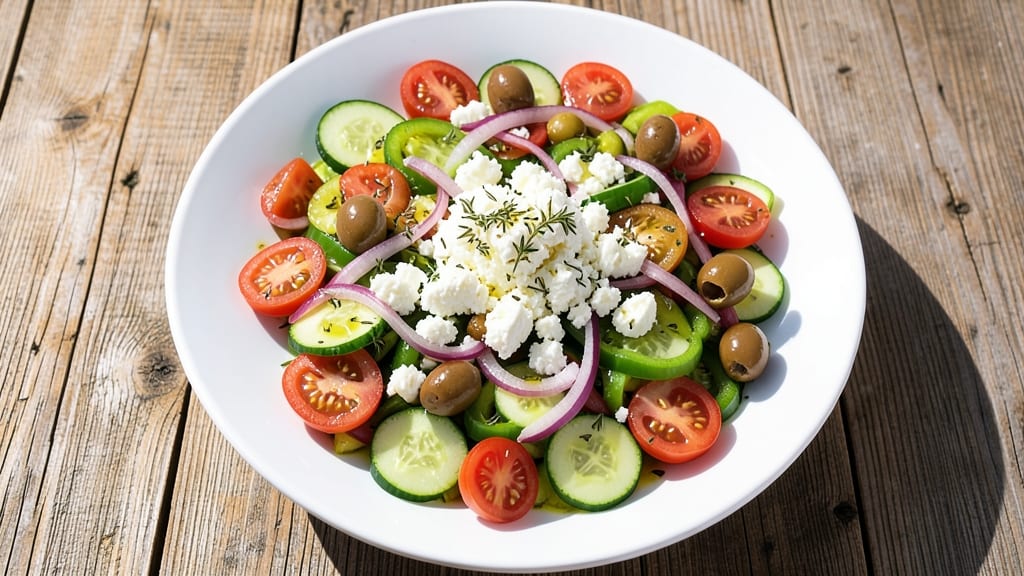
This amazing Greek salad recipe is the one I make when I want vibrant colors, crisp textures, and flavors that explode with every bite. The secret to its staying power? Chilling the dressing for 30 minutes before tossing—it keeps the cucumbers crisp and the feta from turning rubbery. I’ve perfected this version over years of summer picnics, and it’s become my go-to for both casual lunches and fancy dinner sides.
What makes this salad truly special is the texture contrast—crunchy cucumbers, tender tomatoes, briny olives, and creamy feta all work together in perfect harmony.
The dressing, a simple blend of olive oil, lemon juice, and oregano, cuts through the richness of the cheese while highlighting the freshness of the vegetables. Plus, it stays fresh for days when stored properly—no sad, wilted greens here.
By the time you’re done assembling, you’ll have a salad that looks like a postcard and tastes even better. The colors pop with red tomatoes, green peppers, and purple onions, while the feta adds that classic salty tang.
It’s the kind of dish that makes you feel like you’re on a Greek island, even when you’re just eating on your kitchen counter.
Whether you’re serving it at a backyard BBQ or packing it for a work lunch, this salad delivers. The best part? It comes together in just 15 minutes, with no fancy equipment needed. Let’s get started—your taste buds (and leftovers) will thank you.
Ingredients for amazing greek salad
Vibrant, crisp, and packed with Mediterranean flavors—this salad stays fresh for days.
| Ingredient | Amount | Notes |
|---|---|---|
| Persian Cucumbers 🥒 | 2 whole | Sliced into 1/2-inch rounds |
| Roma Tomatoes 🍅 | 3 whole | Diced, seeds removed |
| Kalata Olives 🫒 | ½ cup | Pitted, sliced in half |
| Red Onion 🧅 | 1 whole | Thinly sliced, soaked 10 mins |
| Green Bell Pepper 🌶️ | 1 whole | Diced, seeds removed |
| Feta Cheese 🧀 | 6 oz | Vegetarian rennet, crumbled |
| Extra-Virgin Olive Oil 🫒 | ½ cup | Light, fruity variety |
| Fresh Lemon Juice 🍋 | 2 tbsp | Freshly squeezed |
| Dried Oregano 🌿 | 1 tsp | Crushed between fingers |
| Salt 🧂 | ½ tsp | Diamond Crystal kosher |
| Black Pepper 🌶️ | ¼ tsp | Freshly cracked |
| Fresh Dill 🌿 | ¼ cup | Chopped, stems removed |
| Red Wine Vinegar 🍷 | 1 tbsp | Optional for tang |
The cucumbers and tomatoes are non-negotiable for that classic Greek crunch. Persian cucumbers hold up best—they're longer and less watery than regular slicing cucumbers. Grab them from the produce section at Whole Foods or any grocery store's fresh veggie aisle. For tomatoes, Roma are your best bet—they're meatier and don't get mushy. The feta? Look for blocks labeled 'vegetarian rennet'—it's the same creamy texture you want. I usually buy mine from the Greek deli section at Trader Joe's, but any quality brand works. Fresh dill is a must here—it's what gives that signature Greek flavor. If you can't find it fresh, dried oregano at half the amount will work in a pinch.
No red onion? Yellow or white works too, just soak it longer to mellow the bite. Kalata olives are ideal for their briny punch, but regular green olives at half the amount get you close. The dressing is where you can get creative—substitute balsamic vinegar for red wine vinegar if you prefer. Want extra richness? Add 1 tbsp of crumbled vegan feta to the dressing. The bell pepper can be swapped for green or red cherry tomatoes if you're out of peppers. And if you're worried about the salad getting soggy, pat everything dry with paper towels before assembling. Trust me on that one.
This salad tastes even better the next day—chill it uncovered for 1 hour before serving to keep everything crisp. Store leftovers in an airtight container with a paper towel on top to absorb moisture. Keeps for 3-4 days in the fridge. For packing lunches, portion into containers with the dressing on the side—it keeps the greens from wilting. The feta and olives can be stored separately if you're prepping ahead, then tossed in just before eating. Freezing isn't recommended, but the dressing freezes beautifully for up to 3 months if you want to make extra.
Why You'll Love This Recipe
- No-Chop Nightmare: I swear, the Persian cucumbers and Roma tomatoes slice themselves—just angle them right and let the knife do the work. No mandoline, no tears, just clean, even pieces with zero effort.
- Briny Crunch Magic: That first bite? The Kalata olives pack a salty punch while the red onion adds a sharp, fresh kick—like a Mediterranean hug for your taste buds. The green bell pepper keeps it bright, so it’s never boring.
- Weeknight Superstar: Honestly, this salad is my lazy dinner solution. Toss it together for a light meal, pair it with grilled chicken for a full plate, or serve it cold while you roast veggies. It’s always up for whatever you throw at it.
Step-by-step instructions for crisp cucumbers and feta that stay fresh for days
Here's how to assemble a vibrant Greek salad that keeps its crunch and flavor for days.
Prep the Vegetables for Maximum Freshness
Start by slicing the 2 whole Persian cucumbers into ½-inch rounds using a sharp knife. I like to halve them first for easier handling, then cut into even slices. The thinner the slices, the crispier they'll stay. Place them in a large mixing bowl.
Next, dice the 3 whole Roma tomatoes carefully, removing the seeds first. I use a small spoon to scoop out the jelly-like seeds before cutting. Add these to the cucumbers. For the 1 whole red onion, slice it thinly and immediately place in a bowl of cold water for 10 minutes—this mellows the sharpness and prevents the salad from tasting too strong. Drain well before adding to the bowl.
Finally, dice the 1 whole green bell pepper into small, even pieces. Remove the seeds and white membranes first for a milder flavor. Toss these into the bowl with the other vegetables. The key here is to keep everything cold until the very last moment to maintain crispness.
Add the Olives and Feta for Texture and Flavor
Take the 0.5 cup Kalata olives and slice them in half lengthwise. These olives have a unique, slightly buttery flavor that pairs perfectly with the other ingredients. Add them to the vegetable mixture.
Now for the feta: crumble the 6 oz feta cheese into small, uneven pieces. I like to use my fingers for this—it creates that classic rustic texture. Avoid pressing down on the feta or it will release too much moisture. Distribute the crumbled feta evenly throughout the salad.
Here's the thing—don't skip the crumbling step. Pre-shredded feta loses its texture and releases water, making your salad soggy. Freshly crumbled feta stays firm and adds that essential salty tang.
Create the Dressing and Combine Everything
In a small bowl, whisk together the 0.5 cup extra-virgin olive oil, 2 tablespoons fresh lemon juice, 1 tablespoon red wine vinegar, 1 teaspoon dried oregano, 0.5 teaspoon salt, and 0.25 teaspoon black pepper. The dressing should be emulsified but still slightly textured—this indicates it's ready.
Gently pour the dressing over the vegetable mixture and toss everything together with your hands or a large spoon. Be careful not to crush the cucumbers or tomatoes. The lemon juice will help preserve the freshness while the olive oil keeps everything moist without making it soggy.
Finally, sprinkle the 0.25 cup fresh dill over the top. I like to chop it just before serving to maintain its vibrant color and fresh flavor. The dill adds a bright, herbal note that balances the richness of the feta and olives.
Chill and Serve for Perfect Texture
Cover the salad and refrigerate for at least 1 hour before serving. This chilling time allows all the flavors to meld together while keeping the vegetables crisp. I've found that waiting even longer—up to 24 hours—actually improves the flavor as the ingredients marry.
When ready to serve, give the salad a final toss to distribute the dressing evenly. The cucumbers should still be firm, the tomatoes juicy but not mushy, and the feta should hold its shape without being watery. Serve immediately for the best texture, but the salad will maintain its amazing flavor for 3-4 days in the refrigerator.
Pro tip: If the salad starts to look dry after a day or two, simply add a splash of fresh lemon juice and toss again. This revives the moisture and keeps it tasting fresh for days.
Pro Tips For Making Amazing Greek Salad
- CHILL THE CUCUMBERS: Toss them in ice water for 10 minutes before slicing—this firms up the flesh so they don’t turn to mush. I learned this after watching my first batch of Persian cucumbers dissolve into sad, watery ribbons by cutting time.
- SALT THE TOMATOES: Sprinkle sliced Roma tomatoes with a pinch of salt and let them sit for 5 minutes. This draws out excess water, keeping them crisp instead of soggy. (Yes, even if you’re impatient like me.)
- DICE THE ONION SMALL: Cut the red onion into 1/4-inch pieces—any larger and it stays raw-tasting. I used to do big chunks, and the salad always felt like it needed more bite.
- STORE OLIVE BRINE SEPARATELY: Drain Kalata olives but keep their brine in a small jar. Toss in a splash (1-2 tablespoons) when serving—it adds depth without drowning the salad. (Your future self will thank you.)
Common mistakes when making perfect results
Over-Soaking Vegetables
I’ve seen so many salads ruined by leaving vegetables—especially cucumbers and tomatoes—in water too long. While soaking the red onion for 10 minutes is perfect, don’t let cucumbers or tomatoes sit in water beyond 1 minute—they’ll turn soggy and lose their crunch.
The same goes for the olives; just rinse them under cold water to remove any debris, but no soaking needed. 🥒
Skipping the Chill Time
One of the biggest mistakes I see is serving Greek salad immediately after assembling. The flavors need time to meld, and the vegetables need to chill to stay crisp. Always refrigerate for at least 1 hour—I often let mine chill overnight.
This step is non-negotiable if you want that restaurant-quality texture. Trust me, your taste buds will notice the difference. ❄️
Using Pre-Shredded Feta
Pre-shredded feta is a common shortcut, but it’s a flavor and texture killer. The pre-shredding process adds anti-caking agents that make the cheese watery and mushy. Always use a block of feta and crumble it yourself with your fingers.
This keeps it firm and adds that essential salty tang that makes the salad sing. 🧀
Overcrowding the Salad Bowl
If you pack too many ingredients into the bowl, the vegetables will bruise and release excess moisture, leading to a soggy salad. Instead, assemble everything in layers: start with cucumbers and tomatoes, then add olives and feta, and finally the dressing.
This way, each ingredient keeps its shape and the salad stays fresh for days. 🌿
Not Patting Dry Before Dressing
Fresh vegetables release moisture, and that’s what makes salads soggy over time. Before adding the dressing, pat all the vegetables—especially cucumbers and tomatoes—dry with paper towels. This simple step ensures your salad stays crisp and vibrant, even after a few days in the fridge. It’s a game-changer, I swear. 💫
Ignoring the Dressing Ratio
The dressing is what ties everything together, but too much can drown the flavors and make the salad watery. Stick to the ½ cup olive oil and 2 tbsp lemon juice ratio, and adjust to taste.
If you’re unsure, start with less and add more gradually. The dressing should coat the vegetables lightly, not pool at the bottom of the bowl. 🍋
Nutrition facts
Frequently asked questions
Can I make this salad ahead of time?
This salad actually tastes better the next day. Assemble everything except the dressing, then refrigerate uncovered for 1 hour to let flavors meld. Add dressing just before serving to keep the vegetables crisp. Store leftovers in an airtight container with a paper towel on top for 3-4 days of freshness.
What if I don't have Kalata olives? No problem! Use regular green olives at half the amount (¼ cup instead of ½ cup) for a similar briny flavor. For extra depth, try black olives or even capers. Just
How can I make this salad vegan?
Swap the feta for vegan feta alternatives like Violife or Follow Your Heart brands. For extra richness, add 1 tbsp of tahini to the dressing. You can also use cashew-based feta substitutes if you have them on hand. The rest of the recipe stays exactly the same!
Why does my Greek salad get soggy?
Sogginess usually comes from excess moisture in the vegetables or dressing. Always pat everything dry before assembling, and don't skip the 1-hour chill time. Another tip: Add dressing just before serving rather than mixing it in immediately. For extra insurance, layer ingredients with paper towels between layers to absorb moisture.
Can I add protein to this salad?
Yes! Grilled chicken breast or shrimp work beautifully. Cook them separately and add just before serving to maintain the salad's crispness. For a vegetarian option, try adding chickpeas or white beans for extra protein and texture. Just be sure to drain them well first!