
Salads
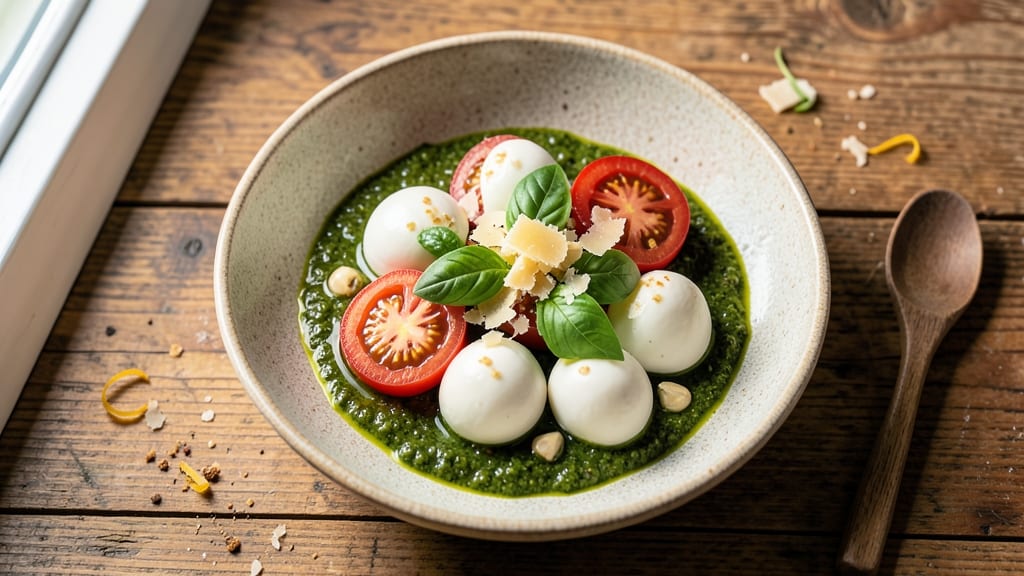
This Caprese salad recipe with pesto transforms a classic Italian dish into something even more vibrant and flavorful. ✨ The secret lies in swapping traditional basil oil for homemade pesto, which adds depth while keeping the dish's signature simplicity.
I developed this version after realizing how much richer the flavors become when fresh basil, garlic, and Parmesan join the classic trio of tomatoes, mozzarella, and basil.
The beauty of this recipe is its balance between tradition and innovation. You'll still get those perfectly ripe heirloom tomatoes, creamy fresh mozzarella balls, and fresh basil leaves, but now with a luscious pesto dressing that coats every ingredient.
This herb-infused twist elevates the salad from a simple side to a showstopping main dish that's perfect for summer entertaining or a light weeknight dinner.
What makes this Caprese salad truly special is how the pesto transforms the presentation—creating a vibrant green base that contrasts beautifully with the red tomatoes and white mozzarella. The salad's components come together in a way that's both elegant and effortless, requiring just 15 minutes of prep time.
The result is a dish that's as visually stunning as it is delicious, with every bite offering a perfect harmony of creamy, tangy, and herby flavors.
For an extra touch of sophistication, I recommend drizzling with a high-quality balsamic glaze and topping with toasted pine nuts. This version stays true to the Caprese's Italian roots while offering a modern twist that will impress even the most discerning guests.
The best part? It's a recipe that feels special without requiring any advanced techniques.
Ingredients for caprese salad recipe with pesto
Fresh heirloom tomatoes, creamy mozzarella, and vibrant pesto—this Caprese salad is a flavor-packed twist on a classic.
| Ingredient | Amount | Notes |
|---|---|---|
| Heirloom Tomatoes 🍅 | 2 whole | Ripe, medium-sized, sliced into 1/2-inch pieces |
| Fresh Mozzarella Balls 🧀 | 8 whole | Bocconcini or pearl mozzarella, drained |
| Fresh Basil Leaves 🌿 | 1 ½ cups | Packed, stems removed, plus extra for garnish |
| Garlic Cloves 🧄 | 3 cloves | Peeled, roughly chopped for pesto |
| Parmesan Cheese 🧀 | ¾ cup | Freshly grated, high-quality |
| Extra-Virgin Olive Oil 🫒 | ¾ cup | High-quality, fruity variety |
| Pine Nuts 🥜 | ¼ cup | Toasted lightly for crunch |
| Lemon Juice 🍋 | 1 tbsp | Freshly squeezed |
| Sea Salt 🧂 | ½ tsp | Fine grain, Diamond Crystal preferred |
| Freshly Ground Black Pepper 🌶️ | ¼ tsp | Freshly cracked for best flavor |
| Balsamic Glaze 🍷 | 2 tbsp | High-quality, aged balsamic reduction |
The heirloom tomatoes are non-negotiable here—their sweetness and texture make all the difference. Local farmers markets often have the best selection, but any grocery store with a produce section should carry them. Look for tomatoes that are firm but yield slightly to gentle pressure. The mozzarella should be fresh, not pre-shredded—Bocconcini or pearl mozzarella from the refrigerated section (near the deli) keeps its shape beautifully. For the pesto, fresh basil from the grocery store's produce section works, but if you can find it, the basil at Whole Foods or specialty Italian markets has an extra burst of flavor. Toast your pine nuts in a dry pan over medium heat until fragrant—about 2-3 minutes—then let them cool before adding to the pesto.
No heirloom tomatoes? Cherry tomatoes work in a pinch, but halved for even presentation. Fresh mozzarella unavailable? Fresh mozzarella from a block shredded yourself will work, though it won't hold its shape as well. The pesto can be made ahead—store it in an airtight container with a thin layer of olive oil on top to prevent browning. For extra richness, swap half the Parmesan for Pecorino Romano. The balsamic glaze should be aged—Barilla or Colavita are reliable brands. If you can't find a good one, a splash of red wine vinegar thinned with a little honey will mimic the depth, though it won't be quite the same.
This salad is best enjoyed fresh, but the pesto can be prepped up to 3 days ahead and stored in the fridge. The mozzarella and tomatoes should be added just before serving to keep them at their peak. The pesto keeps for 5 days in the fridge, covered with olive oil, or 3 months frozen in ice cube trays. To serve, arrange the tomatoes and mozzarella on a platter, drizzle with pesto, and finish with a sprinkle of pine nuts, a drizzle of balsamic glaze, and a few extra basil leaves. The flavors meld beautifully when assembled just before eating, so don't rush this step—it's worth the extra minute.
Why You'll Love This Recipe
- No-Fuss Assembly: I swear, this comes together faster than I can say "dinner’s ready." Halve the heirloom tomatoes, nestle in the mozzarella balls, drizzle pesto—boom. No boiling, no baking, no stress. The basil and garlic just need a quick pulse in the food processor, and suddenly, you’ve got restaurant-quality flavor with zero effort.
- Pesto Magic: Between us, the pesto is what makes this salad ridiculously good. That garlic-basil punch cuts through the sweetness of the tomatoes and the creaminess of the mozzarella like a knife—just enough to make every bite feel like a little Italian vacation. And honestly? The Parmesan shavings on top? That’s the cherry.
- Weeknight to Party: This salad is my secret weapon for when I’m too tired to cook but still want to impress. Serve it as a light lunch, a side for grilled meats, or even as a fancy appetizer when friends drop by. (Yes, even on a Tuesday night.) The pesto keeps it fresh longer than plain Caprese, so it’s always ready to shine.
- Budget-Friendly Upgrade: Fresh mozzarella and heirloom tomatoes might sound fancy, but this is cheaper than takeout. I buy basil in bunches, freeze half the pesto, and stretch the recipe for days. Leftovers? Toss them in pasta, wrap them in toast, or just eat them cold—no waste, all flavor. My wallet thanks me.
Step-by-step instructions for Caprese salad with pesto
Transform the classic Caprese into a vibrant, herb-infused masterpiece with this pesto twist.
👨🍳 Step 1: Craft the Pesto Base
In a food processor, pulse the 3 cloves Garlic Cloves and 0.25 cup Pine Nuts until the pine nuts are finely ground but not pasty. Add the 1.5 cups Fresh Basil Leaves and pulse until just combined—you want to preserve some texture for that fresh basil brightness.
With the processor running, slowly drizzle in the 0.75 cup Extra-Virgin Olive Oil until fully emulsified. Add the 0.75 cup Parmesan Cheese, 1 tbsp Lemon Juice, 0.5 tsp Sea Salt, and 0.25 tsp Freshly Ground Black Pepper. Pulse until smooth but still vibrant green—about 30 seconds. Taste and adjust seasoning if needed. This pesto is the flavor backbone of your elevated Caprese.
🍳 Step 2: Assemble the Salad Layers
On a large platter, arrange the 2 whole Heirloom Tomatoes in a single layer, sliced into ½-inch pieces. Their juicy sweetness will contrast beautifully with the creamy mozzarella. Gently place the 8 whole Fresh Mozzarella Balls in the spaces between tomato slices, keeping them whole for that classic bocconcini presentation.
Drizzle ⅓ of the pesto evenly over the tomatoes and mozzarella, reserving the rest for finishing. The pesto should coat the ingredients lightly but not pool—this ensures every bite delivers that herby brightness. Sprinkle with a pinch of freshly ground black pepper to wake up the flavors.
🥘 Step 3: Add Crunch and Final Touches
Lightly toast the remaining 0.25 cup Pine Nuts in a dry skillet over medium heat for 2-3 minutes until fragrant and golden. Watch them closely—they burn quickly! Scatter these toasted nuts over the salad for a delightful crunch that cuts through the creamy mozzarella.
Finish with a drizzle of 2 tbsp Balsamic Glaze, allowing it to cascade naturally over the ingredients. The acidity will brighten the dish, while the sweetness enhances the tomato's natural sugars. Garnish with a few extra fresh basil leaves for that restaurant-quality presentation.
⏰ Step 4: Serve Immediately for Peak Freshness
Serve the Caprese salad right away while the mozzarella is still cool and the tomatoes are crisp. The pesto will soften slightly as it sits, so timing matters for that perfect texture contrast. Pair with a crisp white wine or a glass of sparkling water to complement the dish's bright, fresh flavors.
For an extra touch, serve with crusty bread to soak up any pesto drippings. The combination of juicy tomatoes, creamy mozzarella, herby pesto, and sweet balsamic creates a symphony of textures and flavors that elevates this classic dish to new heights.
Pro Tips For Making Caprese Salad Recipe With Pesto
- SALT THE MOZZARELLA: Toss those fresh mozzarella balls in a bowl with 1/2 teaspoon of flaky sea salt and a drizzle of olive oil before assembling—it keeps them from turning into a soggy mess. I learned this the hard way when my Caprese turned into a sad, watery puddle after 20 minutes.
- COLD PESTO IS BETTER: Chill your pesto for at least 30 minutes before tossing it with the salad—warm pesto melts the mozzarella too fast and makes the basil turn bitter. I used to skip this, and the dish always lost its bright, fresh flavor by the second bite.
- DRY THE BASIL: Pat the basil leaves thoroughly with paper towels before adding them—wet leaves dilute the pesto and make the salad watery. Sounds tedious, but it’s the thing that matters most for keeping that vibrant green color and texture.
- HALVE THE GARLIC: Use just one clove of garlic in your pesto (or even half) unless you’re serving a crowd—too much overpowers the delicate tomato and mozzarella flavors. I was skeptical until I tried it; now I never go back to the full clove.
Regional styles of this caprese salad recipe with pesto
Italian Roots
The Caprese salad traces its origins to the island of Capri, where it was born from simple, fresh ingredients available in the region. This version keeps that Italian soul while adding a pesto twist.
My grandmother used to make a similar salad with just tomatoes, mozzarella, and basil—she'd drizzle it with olive oil and a pinch of salt.
The pesto here is my modern interpretation of that rustic tradition, using the same fresh basil but blending it with garlic and Parmesan for extra depth. 🌿
Florentine Twist
In Tuscany, they take the Caprese concept further by adding arugula and sometimes prosciutto for a more robust flavor. For this pesto version, I swap the prosciutto for extra pine nuts and a touch of lemon juice to keep it vegetarian while maintaining that Tuscan brightness.
The Florentine approach teaches us that Caprese isn't just about tomatoes and cheese—it's about balancing textures and flavors. I love how the pesto's herby notes complement the peppery arugula if you choose to add it.
Southern Italian Adaptation
Down in Sicily, they often use fresh ricotta salata instead of mozzarella and add a drizzle of chili oil for heat. While we're sticking with mozzarella here, you could try a mix of ricotta salata and mozzarella for a Southern Italian-inspired variation.
The pesto works beautifully with this adaptation, as the nutty ricotta salata pairs perfectly with the herby basil. This version would be especially good for those who enjoy a slightly saltier, more complex flavor profile. 🍅
Modern American Version
In the US, we've taken the Caprese and made it our own with bold flavors and creative presentations. This pesto version is perfect for summer entertaining—it's colorful, fresh, and easy to assemble on a platter.
I often serve it at backyard barbecues where guests can pick at it while the main dishes cook. The key to the American adaptation is balancing tradition with innovation, which is exactly what this pesto twist delivers. It's familiar enough to feel comforting, yet exciting enough to impress.
Coastal California Style
On the West Coast, they often incorporate local ingredients like avocado or heirloom tomatoes grown in the region's fertile valleys. For a California-inspired Caprese with pesto, I'd add sliced avocado to the mix—its creamy texture pairs beautifully with the mozzarella and pesto.
The coastal climate also means you can find incredible heirloom tomatoes year-round, making this version even more vibrant. This adaptation shows how regional ingredients can transform a classic dish while keeping its essence intact.
Vegetarian-Friendly Fusion
While Caprese traditionally features mozzarella, this pesto version works beautifully with other vegetarian cheeses too. Try substituting the mozzarella with vegan mozzarella or even marinated tofu for a completely plant-based version. The pesto's rich flavor carries the dish, making it adaptable to various dietary needs.
This fusion approach proves that classic dishes can evolve to meet modern eating habits without losing their charm. 💫
Nutrition facts
Frequently asked questions
Can I make this Caprese salad ahead of time?
The pesto can be prepared up to 3 days ahead and stored in an airtight container with a thin layer of olive oil on top to preserve freshness. However, assemble the salad just before serving to keep the mozzarella and tomatoes at their peak texture. The pesto keeps for 5 days in the fridge or 3 months frozen in ice cube trays.
What if I can't find fresh mozzarella balls?
No problem! Use fresh mozzarella from a block, shredded yourself, or even Burrata for extra creaminess. For shape, try rolling small portions into balls with your hands. Pre-shredded mozzarella won't work as well—it contains anti-caking agents that make it too dry and crumbly for this dish.
How can I make this salad more substantial for a main course?
Add 1 cup cooked quinoa or farro to the base for heartier texture, or serve with grilled chicken or shrimp on the side. For a vegetarian option, top with toasted bread croutons or add a scoop of creamy ricotta. The pesto's rich flavor will complement all these additions beautifully.
Is there a way to make this without pine nuts?
Swap the pine nuts for walnuts or almonds in the pesto (toast them first for extra flavor) or omit them entirely. For crunch, add toasted breadcrumbs or crispy fried shallots instead. The dish will still be delicious—pine nuts just add that special nutty depth that pairs perfectly with the pesto.
Why does my pesto turn brown or separate?
Pesto oxidizes quickly when exposed to air, causing browning. Always store it covered with a thin layer of olive oil to prevent this. If it separates, simply stir in a tablespoon of fresh olive oil to re-emulsify. For extra freshness, make it in small batches and use within 2 days. The basil should be packed tightly in the processor to prevent air exposure.