
Salads
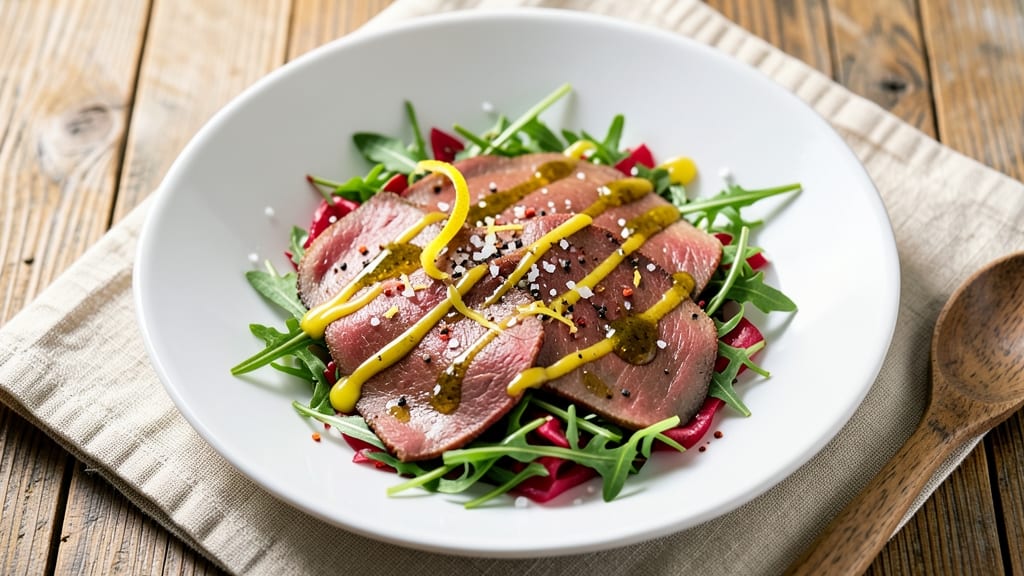
This carpaccio salad recipe transforms simple ingredients into a restaurant-worthy dish that’s fresh, elegant, and packed with bold flavors. Thinly shaved beef, crisp arugula, and a bright lemon-olive oil dressing create a dish that’s as visually stunning as it is delicious.
The secret lies in the precision of the slicing and the balance of textures—tender beef, peppery greens, and crunchy toppings all working in harmony.
The beauty of carpaccio is its versatility—it’s equally at home as a light lunch or an impressive starter for dinner guests. While traditionally made with raw beef, this method works beautifully with seafood like tuna or salmon for a pescatarian twist.
The key to success is using a sharp knife (or a mandoline for even slices) and high-quality ingredients that shine without overpowering each other.
What you’ll end up with is a dish that’s vibrant, flavorful, and effortlessly sophisticated. The beef stays tender and juicy thanks to a quick marinade, while the lemon zest and olive oil dressing add a zesty brightness that cuts through the richness.
Topped with shaved Parmesan, capers, and a sprinkle of flaky salt, every bite is a perfect balance of savory, tangy, and umami.
Serve it with crusty bread or grilled vegetables to round out the meal, or enjoy it as-is for a refreshing, no-fuss dish. This recipe proves that fine dining doesn’t require complicated techniques—just the right ingredients and a little attention to detail.
Ingredients for carpaccio salad
High-quality ingredients transform into a visually stunning, restaurant-worthy carpaccio salad with bold flavors.
| Ingredient | Amount | Notes |
|---|---|---|
| Thinly Shaved Beef Tenderloin 🥩 | 12 oz | Raw, high-quality, sliced paper-thin |
| Fresh Arugula 🌿 | 4 cups | Baby leaves preferred for tenderness |
| Extra-Virgin Olive Oil 🫒 | ½ cup | High-quality, fruity variety |
| Fresh Lemon Juice 🍋 | 3 tbsp | Strained, freshly squeezed |
| Lemon Zest 🍋 | 1 tsp | Fine, from organic lemons |
| Flaky Sea Salt 🧂 | 1 ½ tsp | Maldon or Jacobsen preferred |
| Freshly Ground Black Pepper 🌶️ | ½ tsp | Coarsely ground |
| Shaved Parmesan Cheese 🧀 | ½ cup | Freshly shaved from block |
| Capers 🫒 | 2 tbsp | Nonpareils, rinsed and drained |
| Freshly Sliced Radishes 🍓 | ½ cup | Thinly sliced, pink variety |
| Toasted Pine Nuts 🥜 | ¼ cup | Lightly toasted, chopped |
| Fresh Basil Leaves 🌿 | ¼ cup | Thinly sliced, for garnish |
| Balsamic Glaze 🍷 | 1 tbsp | Reduction, for drizzling |
The beef is the foundation of this dish, so prioritize quality—look for tenderloin with good marbling at specialty butchers or high-end grocery stores like Whole Foods or Eataly. The thinner the slices, the more tender the final result, so ask for pre-sliced carpaccio cuts if available. For a pescatarian twist, substitute sushi-grade tuna or salmon—ensure it’s fresh and sliced immediately before serving. Arugula should be vibrant green, not wilted, and organic varieties often have a more intense peppery flavor. Store beef and seafood in the coldest part of your fridge and use within 2 days for optimal freshness.
No flaky sea salt? Diamond Crystal kosher salt works in a pinch, though the texture differs slightly. Substituting pine nuts? Toasted walnuts or pecans add a similar crunch. For extra richness, swap the balsamic glaze with a drizzle of aged balsamic vinegar reduction. If radishes are unavailable, thinly sliced fennel or jicama provide a refreshing crunch. The lemon zest can be doubled if you love that bright citrus note—it’s what elevates this dish from simple to extraordinary. For a lighter touch, reduce the zest to half a teaspoon and increase the olive oil slightly.
Beef and seafood should be served immediately after slicing to maintain texture. Store prepped ingredients separately in airtight containers—arugula in a damp paper towel-lined container lasts 3 days, while cheese and nuts keep for 1 week in the pantry. The dressing components (olive oil, lemon juice, zest) can be prepped 1 day ahead and stored in a sealed jar. This dish is best enjoyed fresh, but you can assemble it up to 4 hours before serving if stored properly. For a make-ahead option, slice the beef or seafood, refrigerate it, and shave just before serving.
Why You'll Love This Recipe
- No Knife Skills Needed: I swear by my mandoline for this one—it takes two minutes to shave that tenderloin paper-thin. No butchering skills required, just slice-and-go.
- Bright, Meat-Lover’s Dream: That beef? Tender but still firm, with a zesty olive oil-lemon punch that cuts through like a summer breeze. The arugula’s peppery bite just makes it all sing.
- Date Night or Lunch Box: Dress it up with shaved Parmesan and toasted pine nuts for a fancy dinner, or pack it in a jar for a no-fuss workday lunch. Same recipe, two vibes.
- Leftover Hack That Works: The beef stays fresh for days in the fridge—toss it into salads, wraps, or even a quick pasta. Honestly, I’ve eaten this stuff cold for three days straight, and it’s still good.
Step-by-step instructions for carpaccio salad
This elegant dish transforms raw beef into a restaurant-worthy creation with precise technique and fresh ingredients.
Prepare the Beef Carpaccio
Lay the 12 oz thinly shaved beef tenderloin on a clean cutting board. Using a sharp knife, carefully separate any overlapping pieces to create an even layer. The goal is to have perfectly uniform slices that cook evenly when served rare. I like to fan them out slightly on a serving platter to maximize surface area for the dressing.
Place the beef in the refrigerator uncovered for 15-20 minutes to chill completely. This step is crucial—it prevents the beef from cooking during assembly and ensures perfect presentation. The slices should feel cool to the touch when you handle them, and their edges should remain slightly pink when viewed from the side.
Assemble the Base Components
In a large mixing bowl, combine the 4 cups fresh arugula with the 0.5 cup freshly sliced radishes. Gently toss just until the radishes are evenly distributed—you want to maintain the arugula's delicate texture. Spread this mixture evenly over the chilled beef slices on your serving platter, creating a vibrant green bed for the meat.
Lightly sprinkle the 1.5 tsp flaky sea salt and 0.5 tsp freshly ground black pepper over the arugula and radish mixture. The salt should be distributed evenly, but don't press it down—you want those delicate flakes to remain visible for visual appeal. The pepper should be sprinkled in a circular pattern to create visual interest when the dish is served.
Create the Lemon-Olive Oil Dressing
In a small bowl, whisk together the 0.5 cup extra-virgin olive oil with the 3 tbsp fresh lemon juice and 1 tsp lemon zest. The mixture should emulsify slightly, creating a light, glossy dressing. I find it works best to add the lemon juice gradually while whisking vigorously to prevent separation.
Taste the dressing and adjust seasoning if needed—you might want to add a pinch more salt or lemon zest to balance the flavors. The dressing should be bright, tangy, and just slightly sweet from the lemon. Pour this dressing evenly over the beef and arugula mixture, allowing it to soak in gently without saturating the greens.
Add Garnishes and Final Touches
Sprinkle the 0.5 cup shaved parmesan cheese evenly over the beef, creating a snowy white contrast against the red meat. Distribute the 2 tbsp capers and 0.25 cup toasted pine nuts in small clusters around the platter—this creates visual focal points that draw the eye.
Finally, arrange the 0.25 cup fresh basil leaves in a decorative pattern, using their vibrant green color to complement the dish. Drizzle the 1 tbsp balsamic glaze in elegant zigzag patterns over the top, allowing it to pool slightly in the crevices for maximum visual impact.
Serve Immediately
This dish should be served immediately to maintain the perfect texture and temperature of the beef. The beef carpaccio should remain slightly cool to the touch, with a delicate pink center that's still slightly chilled from the refrigerator. Each bite should deliver a perfect balance of tender beef, peppery arugula, briny capers, and the bright citrus notes from the dressing.
For best results, serve this carpaccio with a crisp white wine that complements the lemon and olive oil flavors. The dish holds together beautifully when served on a large platter, allowing guests to create their own portions with the vibrant toppings. The combination of textures—tender beef, crisp radishes, crunchy pine nuts—makes this a truly memorable salad experience.
Pro Tips For Making Carpaccio Salad
- FREEZE THE BEEF FIRST: I learned this the hard way—skipping the freezer makes shaving tenderloin a messy, uneven battle. Pop it in the freezer for 20-30 minutes first, then slice against the grain with a sharp knife. The cold firmness keeps those delicate strands intact, and you’ll end up with even, restaurant-worthy ribbons instead of a pile of ragged scraps.
- SALT THE BEEF IMMEDIATELY: Don’t wait until the last second. As soon as you shave the beef, toss it with a generous pinch of flaky salt (about 1 tsp per pound) and let it sit for 5 minutes. This draws out moisture, crisps the edges, and ensures the lemon and olive oil cling to every strand—no soggy carpaccio here.
- USE AROUGULA LIKE A PROTEIN: Treat arugula like the star it is—don’t just toss it in. Massage it with half the dressing (lemon juice + olive oil) before adding the beef, then layer it strategically under the meat. The peppery bite gets absorbed into the beef’s juices, and you avoid the sad, wilted pile at the bottom of the plate.
- DRESS IT LAST-MINUTE: Carpaccio’s magic is in the timing. Hold off on the full dressing until serving—even 10 minutes ahead makes the arugula limp. Instead, drizzle just enough olive oil and lemon to coat the beef right before eating, then finish with zest. The acidity stays bright, and the oil stays glossy, not greasy. (Yes, it’s annoying, but it works.)
Essential equipment for this dish
Precision Slicing Tools
For perfect carpaccio, invest in a high-quality chef's knife (like the Wüsthof Ikon or Shun Premier) for hand-slicing—it gives you control over thickness. I prefer slicing against the grain for maximum tenderness.
For absolute uniformity, a mandoline slicer (such as the OXO Good Grips) with a 0.02-inch blade works wonders, but always use the safety stop to prevent over-slicing. 🔪
Plating Essentials
A large rectangular platter (I love the Le Creuset stoneware) serves as your canvas—its neutral surface lets the vibrant colors shine. For elevation, use small glass bowls (like Libbey's 4-ounce serving bowls) to hold individual toppings (capers, pine nuts) so guests can customize their bites.
A small squeeze bottle (like Oxo Good Grips) makes drizzling balsamic glaze effortless and precise.
Chilling & Storage
Keep your beef perfectly chilled with a wide, shallow stainless-steel bowl (the Chicago Metallic brand is ideal) placed in the fridge uncovered for 15-20 minutes before serving.
For prepping ahead, store ingredients in airtight glass containers—arugula stays fresh for 3 days in a damp paper towel-lined container, while cheese and nuts keep for 1 week in the pantry. A digital thermometer (like Thermoworks Thermapen) ensures your fridge stays at 34-38°F for safe storage. ❄️
Dressing & Garnish Tools
Whisk your lemon-olive oil dressing in a small ceramic bowl (like Corelle) to prevent scratches. For zesting, a microplane (such as Barbagiano) yields finer, more flavorful strips than a grater.
Toast pine nuts in a small cast-iron skillet (like Lodge) over medium heat for 2-3 minutes until golden—watch them closely to avoid burning. A fine-mesh strainer (like OXO Good Grips) helps drain capers efficiently. 🍋
Serving Presentation
Elevate your dish with tweezers (like KitchenCraft) for placing delicate toppings (basil leaves, shaved Parmesan) with precision. A small offset spatula (such as Mercer Culinary) helps arrange arugula neatly. For dramatic plating, use edible flowers (like nasturtiums) or thin lemon wheels as garnishes.
Serve on a wooden board (like Bambu) for a rustic touch or a marble slab for a classic Italian vibe. 🌸
Nutrition facts
Frequently asked questions
Can I make carpaccio with seafood instead of beef?
For a pescatarian version, use sushi-grade tuna, salmon, or halibut sliced paper-thin. The key is using the freshest fish possible—ask your fishmonger for cuts specifically labeled for raw consumption. Serve immediately after slicing to maintain texture, and pair with lemon zest and olive oil dressing for brightness. For extra safety, freeze the fish for 7 days to kill any potential parasites before slicing.
How do I prevent the beef from cooking before serving?
Chill the sliced beef uncovered for 15-20 minutes before assembling to keep it cool. Use the coldest part of your fridge (around 34-38°F) and avoid touching the slices with your hands to prevent warming. Serve on a chilled platter and work quickly when adding toppings. If prepping ahead, store components separately and assemble just before serving.
What's the best way to slice beef for carpaccio?
Use a sharp chef's knife and slice against the grain for maximum tenderness. Aim for 0.02-inch thick slices—a mandoline with a thin blade works best for uniformity. For hand-slicing, practice on a small piece first to get comfortable with the technique. The slices should be so thin they're nearly translucent when held up to light.
Can I make this dish ahead of time?
Prep components separately: slice the beef and store it uncovered in the fridge for up to 2 hours before serving. Keep the arugula, dressing, and toppings stored separately in airtight containers. Assemble just before serving to maintain perfect texture. The beef should remain slightly cool to the touch—never let it sit at room temperature for more than 30 minutes.
What wine pairs best with carpaccio?
A crisp Pinot Grigio or Sauvignon Blanc complements the lemon and olive oil beautifully. For red wine lovers, a light Chianti or Barbera works well with beef carpaccio. The acidity in these wines cuts through the richness of the beef, enhancing all the flavors. Serve chilled white wines at 45-50°F for best results.