Salads
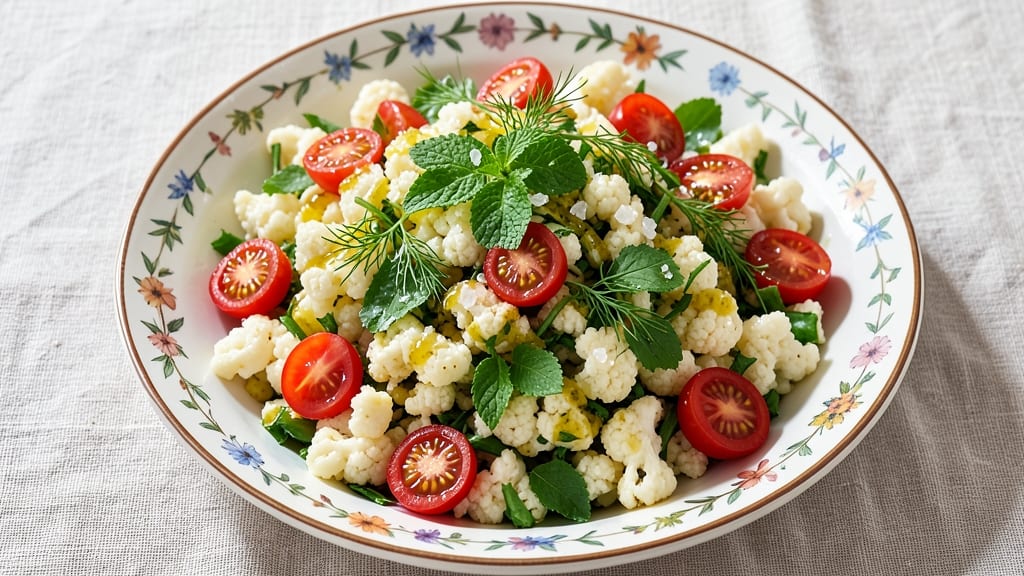
This cauliflower tabbouleh salad recipe transforms a Middle Eastern classic into a lighter, vegan-friendly version that keeps all the bright herbaceousness—just without bulgur wheat. The secret lies in riced cauliflower, which soaks up the lemony dressing and fresh herbs while adding a satisfying texture that holds up perfectly.
What makes this dish special is how it balances traditional flavors with modern nutrition, creating a salad that’s both restaurant-worthy and packed with nutrients.
The foundation of great tabbouleh is in the dressing—a tangy mix of lemon juice, olive oil, and fresh herbs that infuses every bite with vibrant freshness.
I’ve found that using finely chopped parsley and mint (plus a touch of dill) creates that signature herby depth, while the cauliflower rice absorbs the flavors beautifully without turning mushy.
The key to success is prepping the cauliflower just right—pulsing it until it mimics the texture of bulgur, so it stays tender but holds its shape.
What you’ll end up with is a salad that’s bright, zesty, and full of texture—crisp cauliflower mixed with juicy tomatoes, fresh herbs, and a dressing that’s perfectly balanced between tangy and rich.
It’s the kind of dish that feels fresh enough for a summer lunch but hearty enough to stand up as a main course. The flavors develop even more as it sits, making it ideal for meal prep or serving at gatherings.
Serve it chilled or at room temperature, garnished with extra herbs and a drizzle of olive oil for that final touch of Mediterranean flair. This recipe is a game-changer for anyone looking to enjoy tabbouleh without the wheat, while keeping all the soul of the original. Let’s get started!
Ingredients for cauliflower tabbouleh salad
Bright herbs, zesty dressing, and crisp cauliflower—this tabbouleh skips the wheat but keeps all the flavor.
| Ingredient | Amount | Notes |
|---|---|---|
| Fresh Cauliflower 🥬 | 4 cups | Riced, pulsed finely |
| Fresh Parsley 🌿 | 1 cup | Chopped, stems removed |
| Fresh Mint Leaves 🌿 | ½ cup | Chopped, loosely packed |
| Fresh Dill 🌿 | ¼ cup | Chopped, loosely packed |
| Cherry Tomatoes 🍅 | 1 ½ cups | Halved, seedless |
| Extra-Virgin Olive Oil 🫒 | ½ cup | High quality, fruity |
| Fresh Lemon Juice 🍋 | ¼ cup | Freshly squeezed |
| Sea Salt 🧂 | 1 tsp | Fine grain preferred |
| Black Pepper 🌶️ | ¼ tsp | Freshly ground |
| Cucumber 🥒 | 1 medium | Seeded, diced small |
| Red Onion 🧅 | ¼ cup | Finely diced |
| Garlic Cloves 🧄 | 3 cloves | Minced fine |
The herbs are non-negotiable here. Fresh parsley and mint from the grocery store's produce section (not the sad plastic containers) make all the difference. Trader Joe's has the best selection of fresh herbs in bulk, but any grocery store with a good produce section works. The dill adds that signature depth—skip it, and you're missing a key flavor. For the cauliflower, fresh is best, but frozen riced cauliflower works in a pinch. Just make sure to pulse it until it's fine, like bulgur wheat should be. The tomatoes? Cherry or grape tomatoes are ideal—they're juicy and sweet, cutting through the herby flavors perfectly.
No fresh herbs? Dried parsley at one-third the amount is a decent swap, but the flavor won't be the same. Short on lemon juice? Lime juice works too, though it's slightly more tart. The cucumber can be subbed with zucchini or radishes if you're out, but cucumber's crispness is key. The red onion adds a little bite—skip it if you prefer milder flavors. For the olive oil, any good-quality extra-virgin will do, but avoid the cheapest store brand. The garlic? Fresh is a must—jarred garlic paste lacks the depth. If you're prepping ahead, store the dressing separately until ready to combine.
This salad tastes even better the next day as the flavors meld. Store the dressing and veggies separately in airtight containers for up to 3 days in the fridge. The cauliflower will soften slightly, which is actually great for texture contrast. To reheat, just toss everything together and let it sit for 10 minutes before serving. For meal prep, double the recipe and portion into containers—it keeps 4 days in the fridge. Garnish with extra herbs and a drizzle of olive oil right before serving for that restaurant-worthy touch.
Why You'll Love This Recipe
- No Rice, No Problem: I swear by this when I forget to buy bulgur—just pulse the cauliflower florets in a food processor until they mimic couscous grains. The texture is chef’s kiss: tender but still holds its shape, so it doesn’t turn into mush like some sad salads I’ve made.
- Herb Bomb Every Bite: Between the parsley, mint, and dill, this salad is a flavor explosion. I’ll be real: I often double the herbs because the first batch always feels too polite. The cherry tomatoes add that bright, juicy pop—no blandness here.
- Lunchbox Hero: This keeps beautifully for days, and honestly? It’s my go-to for packed lunches. The cauliflower stays crisp, the herbs keep their punch, and it’s light enough to eat cold. My kids used to complain about "healthy food," but now they fight over who gets the extra portion.
- Budget Brightener: Fresh herbs can be pricey, but here’s the hack: buy them in small bunches and freeze what you won’t use. The cauliflower stretches further than bulgur, and cherry tomatoes are often cheaper than full-sized ones. A big batch feeds the whole family without breaking the bank.
Step-by-step instructions for cauliflower tabbouleh salad
Here's how to create a vibrant, herb-packed salad that mimics the classic while keeping it gluten-free and fresh.
Pulse the Cauliflower to Mimic Bulgur
Start by cutting the 4 cups fresh cauliflower into florets and pulse them in a food processor until they resemble fine rice grains. You want a texture similar to bulgur wheat—small, irregular pieces that will absorb the dressing well. Don't over-process or you'll end up with cauliflower rice, which won't hold the herbs properly.
Transfer the pulsed cauliflower to a large mixing bowl. This step is crucial because the texture should mimic traditional tabbouleh while keeping the dish gluten-free. If you don't have a food processor, you can use a box grater with the fine holes attachment, but the pulsed version gives better consistency.
Finely Chop All Herbs for Maximum Flavor
In a separate bowl, combine the 1 cup fresh parsley, 0.5 cup fresh mint leaves, and 0.25 cup fresh dill. Chop them all together using a sharp chef's knife. The goal is to get them finely minced—small enough to distribute evenly but not so fine that they turn to paste. This is where the salad gets its signature bright, herby flavor profile.
Add the chopped herbs directly to the cauliflower in the mixing bowl. Give everything a gentle toss with your hands to distribute the herbs evenly. I like to do this step first because the herbs release their oils and aromas immediately, which helps infuse the cauliflower as we move forward.
Prepare the Vegetable Add-Ins
Halve the 1.5 cups cherry tomatoes and remove the seeds to prevent excess moisture in the salad. Dice the 1 medium cucumber into small, even pieces and finely dice the 0.25 cup red onion. Mince the 3 cloves garlic cloves extremely fine—almost like a paste, so they dissolve into the dressing without being noticeable as individual pieces.
Add all these prepared vegetables to the cauliflower-herb mixture. The cherry tomatoes will add natural sweetness, the cucumber provides refreshing crunch, and the red onion brings a subtle sharpness. The finely minced garlic will infuse the dressing with deep flavor without overpowering the fresh herbs.
Make the Dressing and Combine Everything
In a small bowl, whisk together the 0.5 cup extra-virgin olive oil, 0.25 cup fresh lemon juice, 1 tsp sea salt, and 0.25 tsp black pepper. This dressing is the heart of the salad—bright, tangy, and rich. Taste it before adding to the salad to ensure the seasoning is balanced. You can adjust the lemon juice if needed, but don't over-salt because the herbs and vegetables already contribute to the flavor.
Pour the dressing over the cauliflower mixture and gently fold everything together with your hands. The salad should be well-coated but still retain some texture. Let it sit at room temperature for 10 minutes before serving—this allows the flavors to meld and the dressing to fully absorb into the cauliflower.
Chill and Serve for Best Texture
Transfer the salad to an airtight container and refrigerate for at least 30 minutes before serving. Chilling allows the flavors to develop fully and prevents the salad from becoming soggy. When ready to serve, give it one final toss to redistribute any herbs that might have settled.
The perfect cauliflower tabbouleh should be bright green from the herbs, slightly tangy from the lemon, and have a satisfying texture from the cauliflower and vegetables. Serve it as a side dish or as a light main course with grilled meats or fresh bread. The salad keeps well in the refrigerator for up to 3 days, making it perfect for meal prep.
Pro Tips For Making Cauliflower Tabbouleh Salad
- Pulse, Don’t Blend: I learned this the hard way—hitting "blend" on the herbs and cauliflower turns your tabbouleh into a sad, mushy paste. Instead, pulse in short bursts (3-4 seconds at a time) until the cauliflower is rice-sized but still has texture. You want bite, not glue.
- Salt the Cauliflower First: Toss the chopped cauliflower with a pinch of salt (½ tsp) right after cutting and let it sit for 5 minutes. This draws out moisture so your salad stays crisp, not soggy. (Yes, even if you’re impatient like me.)
- Halve Those Tomatoes: Whole cherry tomatoes get lost in the mix and turn to mush when tossed. Cut them in half—it doubles their surface area for better flavor distribution and keeps them from turning to pulp. (Your future self will thank you.)
- Toast the Herbs: Heat a dry pan over medium-low for 30 seconds, then toss in the chopped parsley, mint, and dill for 10 seconds until fragrant. This wakes up their flavors without cooking them to death. Sounds weird, but it works—trust the process.
Flavor customization for this dish
Herb Intensity Boost
For an extra herby punch, add 1 tbsp chopped cilantro or 1 tsp dried sumac to the dressing. Sumac adds a tangy citrus note that complements the lemon beautifully—just sprinkle ½ tsp over the finished salad.
If you love basil, swap ¼ cup fresh basil for half the parsley. The key is balance: never let one herb dominate the mix. 🌿
Spicy Heat Variations
Add a kick with ½ tsp Aleppo pepper or ¼ tsp smoked paprika to the dressing for warmth. For a smoky depth, mix ½ tsp harissa paste into the olive oil before combining.
If you prefer fresh heat, finely dice 1 small jalapeño and toss it in with the veggies. Always taste first—spicy flavors intensify as the salad sits. 🌶️
Sweet-Tangy Twist
Brighten the salad with 1 tbsp honey or agave syrup in the dressing for a sweet-tangy balance. I love adding ½ tsp ground coriander too—it rounds out the lemon’s sharpness.
For extra freshness, fold in ¼ cup diced cucumber and 2 tbsp chopped mint after chilling. The sweetness makes the herbs pop even more. 🍯
Nutty Crunch Add-Ins
Top with 2 tbsp toasted pine nuts or pumpkin seeds for texture. Toast them in a dry pan over medium heat for 3-4 minutes until golden. For a Middle Eastern touch, add ¼ cup crumbled feta (if not vegan) or vegan feta for creaminess.
Sprinkle with 1 tsp sesame seeds too—they add a nutty crunch that pairs perfectly with the lemon. 🌰
Citrus Zest Upgrade
Zest 1 small orange and mix it into the dressing for a bright, citrusy twist. The zest adds a subtle sweetness that balances the tartness. For extra zing, add 1 tsp grated lemon zest along with the juice.
If you have fresh grapefruit, swap ½ the lemon juice for grapefruit juice—it’s tart but less acidic. 🍊
Smoky Charred Veggies
For a smoky depth, char ½ red bell pepper and ½ red onion in a grill pan over high heat for 2-3 minutes until blackened. Cool, peel, and dice before adding to the salad.
The charred flavor adds a restaurant-quality dimension. If you don’t have a grill pan, broil them for 5 minutes on high. 🔥
Nutrition facts
Frequently asked questions
Can I use frozen cauliflower instead of fresh?
Yes, but thaw and drain it thoroughly first! Use 4 cups frozen riced cauliflower (thawed) and pat completely dry with a paper towel to prevent a watery salad. The texture will be slightly softer than fresh, but it still works well when pulsed finely and mixed with the herbs.
How do I make this salad extra flavorful?
Let it rest for 30 minutes before serving—this lets the flavors meld beautifully. For maximum impact, add 1 tbsp lemon zest to the dressing and garnish with extra herbs. A pinch of sumac or smoked paprika also adds depth without overpowering.
What's the best way to store leftovers?
Keep the dressing and veggies separate in airtight containers for up to 3 days. When ready to eat, toss everything together and let it sit for 10 minutes at room temperature. The flavors actually improve overnight, making it perfect for meal prep!
Can I make this without a food processor?
Use a box grater with fine holes or pulse in a blender until you get rice-sized pieces. For extra texture, leave some slightly larger pieces—just avoid turning it into cauliflower rice. A sharp knife and some elbow grease work too!
Why does my cauliflower tabbouleh get soggy?
Excess moisture from tomatoes or cucumbers is the usual culprit. Remove tomato seeds and pat all veggies dry before mixing. Also, avoid adding dressing too soon—let the cauliflower absorb it gradually. Chilling helps too, as cold temperatures slow moisture release.