
Salads
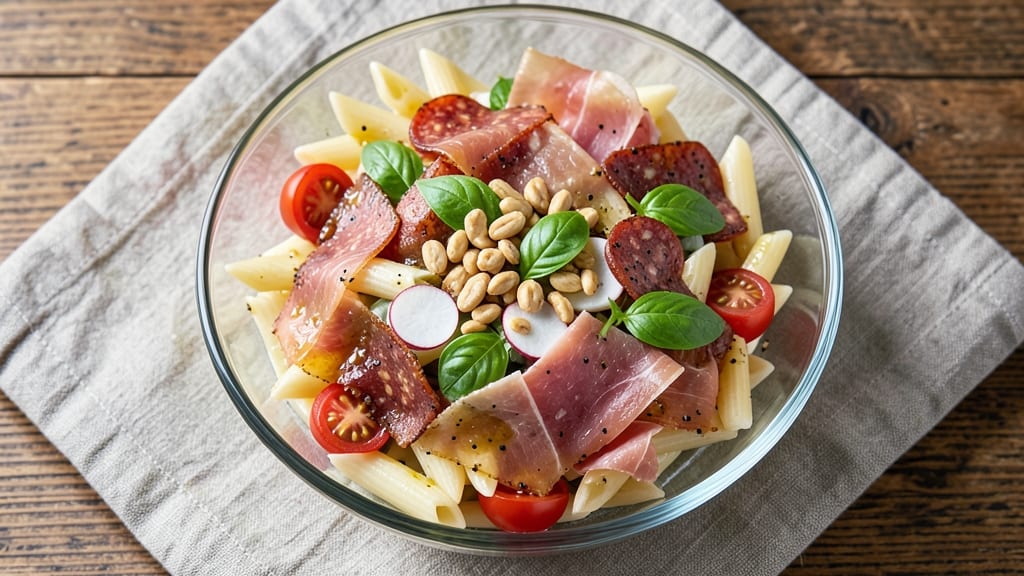
This charcuterie pasta salad recipe transforms humble ingredients into a sophisticated dish that’s perfect for summer gatherings or meal prep. The secret lies in balancing salty cured meats, creamy cheese, and crisp add-ins for a salad that’s as visually stunning as it is flavorful.
I’ve perfected this recipe over years of testing—each component plays a role in creating harmony between textures and tastes.
Start with al dente pasta (penne or fusilli work best) tossed in a light dressing of olive oil, Dijon mustard, and a splash of red wine vinegar. Thinly sliced charcuterie—prosciutto, salami, and pepperoni—adds salty depth, while crumbled feta or goat cheese brings richness.
The crunch comes from toasted pine nuts, chopped fresh herbs, and a sprinkle of flaky sea salt.
What makes this salad special is how the flavors develop when chilled for at least an hour. The cured meats soften slightly, the cheese melds into the pasta, and every bite delivers a mix of creamy, crisp, and savory notes.
It’s hearty enough to serve as a main dish but elegant enough for potlucks or picnic spreads.
Assemble it the night before for maximum flavor infusion, and store leftovers in the fridge for up to 4 days. Garnish with fresh basil or a drizzle of high-quality olive oil before serving to elevate the presentation.
This isn’t just a pasta salad—it’s a celebration of bold flavors in every forkful.
Ingredients for charcuterie pasta salad
Sixteen ingredients balance salty, creamy, and crisp textures for a charcuterie pasta salad that’s perfect for gatherings.
| Ingredient | Amount | Notes |
|---|---|---|
| Penne Pasta 🍝 | 1 ½ lb | Al dente, cooked according to package |
| Extra-Virgin Olive Oil 🫒 | ½ cup | High-quality, fruity variety |
| Dijon Mustard 🍯 | 1 ½ tbsp | Mild or strong based on preference |
| Red Wine Vinegar 🍷 | 2 tbsp | Dry, not sweet |
| Fresh Prosciutto 🥓 | 6 oz | Thinly sliced, high-quality |
| Salami 🌭 | 6 oz | Sweet or spicy variety |
| Pepperoni 🌭 | 6 oz | Thinly sliced, not crumbled |
| Feta Cheese 🧀 | 8 oz | Crumbled, not block |
| Goat Cheese 🧀 | 4 oz | Soft, crumbled texture |
| Pine Nuts 🥜 | ½ cup | Toasted until golden |
| Fresh Basil Leaves 🌿 | ½ cup | Chopped, stems removed |
| Flaky Sea Salt 🧂 | 1 tsp | For garnish, not table salt |
| Garlic Cloves 🧄 | 2 cloves | Minced, for dressing |
| Honey 🍯 | 1 tbsp | Optional, for subtle sweetness |
The cured meats are where this salad shines. Look for high-quality prosciutto and salami at specialty delis or well-stocked grocery stores like Whole Foods or Trader Joe's. The difference between store-brand and artisanal is noticeable—thinner slices, more flavor. For the cheese, fresh feta and soft goat cheese work best; pre-shredded loses texture. The pasta should be al dente—undercooked is better than mushy. Toast your pine nuts in a dry pan until golden (about 3-4 minutes) for maximum crunch.
No prosciutto? Thinly sliced ham or capicola works in a pinch. Swap goat cheese for ricotta or mascarpone if needed. The dressing can be made ahead—just whisk olive oil, Dijon, vinegar, minced garlic, and honey. For extra depth, add 1 tsp balsamic vinegar or a pinch of smoked paprika. If you’re short on time, use pre-toasted walnuts or pecans instead of pine nuts—they hold up well in the fridge. Fresh herbs are ideal, but dried basil at half the amount keeps the flavor profile intact.
This salad tastes even better the next day as flavors meld. Store in an airtight container in the fridge for up to 4 days. The cured meats and cheese keep well, but the herbs and nuts lose crunch over time. To revive texture, sprinkle with a little extra olive oil and flaky salt before serving. For a restaurant-worthy presentation, arrange components separately on a platter and let guests assemble their own portions—it’s always a crowd-pleaser.
Why You'll Love This Recipe
- No-Cook Additions: I swear by the prosciutto—just tear it into ribbons and fold it in at the end. That salty, peppery crunch turns a simple pasta salad into something ridiculously good.
- Dressing in Minutes: The olive oil, Dijon, and red wine vinegar come together with a whisk (or just a jar lid) in under 2 minutes. No balancing flavors—just tangy, rich, and exactly what pasta needs.
- Weeknight to Potluck: Make a big batch on Sunday, and you’ve got lunch for the week. Or double it for a picnic—it’s hearty enough to feed a crowd but light enough to pack in a cooler.
- Leftovers That Don’t Suck: Honestly, this salad tastes better the next day. The prosciutto softens just enough, the pasta absorbs the dressing perfectly, and it’s still a showstopper in a lunchbox.
Step-by-step instructions for charcuterie pasta salad
Assemble this hearty pasta salad with bold flavors and satisfying textures in just minutes.
Cook and Cool the Pasta
Bring a large pot of salted water to a rolling boil and cook the 1.5 lb penne pasta according to package directions until al dente—about 11-12 minutes. Drain immediately and transfer to a large mixing bowl while still hot. This residual heat helps the dressing cling better.
Toss the pasta with 2 tablespoons of the extra-virgin olive oil to prevent sticking. Let it cool completely to room temperature—this prevents the goat cheese from melting prematurely. I like to spread it on a baking sheet and refrigerate for 15-20 minutes while I prep the other components.
Prepare the Dressing
In a small bowl, whisk together the remaining 0.33 cup extra-virgin olive oil, 1.5 tablespoons Dijon mustard, 2 tablespoons red wine vinegar, 1 tablespoon honey, and 2 minced garlic cloves. The dressing should be smooth and emulsified—if it separates, whisk vigorously until it recombines.
Taste and adjust seasoning with additional red wine vinegar for tang or honey for sweetness. This dressing balances the salty charcuterie and creamy cheeses with bright acidity and subtle sweetness. Set aside while you assemble the remaining toppings.
Toast the Pine Nuts
Heat a dry skillet over medium heat and add the 0.5 cup pine nuts. Toast for 3-4 minutes, stirring constantly, until they turn golden brown and smell nutty. Remove immediately—they'll continue cooking from residual heat and can burn quickly.
Transfer the toasted pine nuts to a plate to cool. Their nutty crunch contrasts beautifully with the creamy components and adds texture. If you don't have pine nuts, toasted almonds or pecans work as a substitute, though the flavor will differ slightly.
Assemble the Charcuterie Components
Add the 6 oz fresh prosciutto, 6 oz salami, and 6 oz pepperoni to the cooled pasta. Use your hands to gently break the cured meats into bite-sized pieces—this ensures even distribution throughout the salad. The salty, savory flavors will infuse the pasta as it sits.
Next, fold in the 8 oz crumbled feta cheese and 4 oz crumbled goat cheese. The goat cheese adds a tangy creaminess that pairs perfectly with the salty charcuterie. If you prefer a smoother texture, you can press the goat cheese through a fine-mesh strainer before adding it.
Combine and Garnish
Pour the dressing over the pasta mixture and toss gently but thoroughly to coat every strand. The pasta should glisten from the olive oil and appear evenly distributed. Fold in the 0.5 cup chopped fresh basil leaves and toasted pine nuts last—their delicate textures should remain intact.
Transfer the salad to a serving bowl and sprinkle with 1 teaspoon flaky sea salt. Let it sit for 10-15 minutes before serving to allow the flavors to meld. The salad tastes best when served chilled, so refrigerate for at least 1 hour before serving to let the flavors develop fully.
Pro Tips For Making Charcuterie Pasta Salad
- COLD SOAK THE PASTA: I used to toss al dente penne straight from boiling water into the salad, and it’d turn mushy by lunch. Now I rinse it under cold water, drain, and let it sit in the fridge for 30 minutes—keeps it firm and absorbs the dressing better. (Yes, even if you’re impatient like me.)
- DICE THE PROSCIUTTO SMALL: Thick slices of prosciutto stay chewy and overwhelming. Cut it into 1/4-inch cubes—this lets the salt and fat meld into the pasta without dominating. Toss them in last so they don’t turn rubbery in the dressing.
- TEMPER THE VINEGAR: Mix your mustard and vinegar first, then slowly whisk in the olive oil. If you dump the acid straight into the oil, it’ll split and make your dressing look like mayo. Start with 1 tablespoon vinegar, taste, then adjust—you’re aiming for bright, not sour.
- REST THE DRESSING: Make the vinaigrette 15 minutes ahead and let it sit. The mustard softens, the flavors marry, and you won’t end up with a clumpy mess. Store it in the fridge if prepping early—it’ll taste richer when you toss it with the pasta. (I skip this and always regret it.)
Make-ahead tips for this recipe
Prep Ahead Strategy
This salad is designed for make-ahead success—I always prep the components separately the night before. Cook and cool the pasta completely, then store it in an airtight container in the fridge. The dressing can be made up to 3 days ahead and kept in a sealed jar.
The charcuterie and cheeses stay fresh for 5-7 days in the fridge when stored separately. This separation prevents sogginess and keeps flavors vibrant. 📅
Chilling Time Matters
For optimal flavor development, chill the assembled salad for at least 4 hours—overnight is even better. The cured meats soften slightly, the cheese melts into the pasta, and the dressing emulsifies perfectly.
I recommend assembling it in the morning if serving at a daytime event. The longer it sits, the more the flavors meld together. Trust me, the wait is worth it! ✨
Portioning for Events
When serving for gatherings, divide the salad into individual portions before refrigerating. This keeps the pine nuts and herbs crisp and prevents the pasta from becoming mushy. Store portions in separate airtight containers, and garnish with fresh basil and flaky salt just before serving.
This also makes it easy to grab and go for picnics or potlucks. 🥗
Freezing Considerations
While this salad isn't ideal for long-term freezing (the texture changes), you can freeze the cooked pasta and dressing separately for up to 2 months. Thaw overnight in the fridge, then assemble with fresh toppings.
The charcuterie and cheese should be added fresh after thawing to maintain quality. For best results, stick to refrigerated storage for this dish. ❄️
Reheating Leftovers
If you have leftovers, reheat gently on the stovetop with a splash of water or broth to revive the texture. I recommend low heat for 3-4 minutes to warm through without drying out the pasta.
For a quick fix, microwave individual portions covered with a damp paper towel for 1-2 minutes. Always add fresh herbs and a drizzle of olive oil before serving to brighten the flavors. 🔥
Storage Containers
Use glass containers with tight-sealing lids for storage—they maintain freshness better than plastic. I prefer quart-sized containers for individual portions or a large gallon container for the whole batch.
Label containers with dates to track freshness. The salad keeps well for 4 days in the fridge, but the crunchiness diminishes after 2 days, so plan accordingly. 💡
Nutrition facts
Frequently asked questions
Can I use any type of pasta for this charcuterie salad?
Short, sturdy shapes like penne or fusilli work best—they hold up well to mixing and don't get mushy. Avoid delicate shapes like angel hair or spaghetti, which can break easily. For extra texture, try rotini or farfalle, but stick to 12-14 oz dry weight per 6 servings to maintain the right proportion.
How do I prevent the cured meats from drying out?
Slice the charcuterie just before assembling (not days ahead) to keep it fresh. Store any extras in the fridge wrapped in parchment paper for no more than 3 days. For extra moisture, add 1 tablespoon of olive oil when tossing the cured meats with pasta. If using pepperoni, opt for thin slices that won't overpower the dish.
What if I don't like goat cheese?
No problem! Swap it for ricotta, mascarpone, or even creamy blue cheese for a different flavor profile. For a vegetarian option, use marinated artichoke hearts or sun-dried tomatoes to add creaminess. Just reduce the feta slightly (6 oz) to balance the dish.
Can I make this salad without nuts?
Skip the pine nuts and add toasted breadcrumbs, crushed croutons, or chopped cucumber for crunch. For a protein boost, stir in chickpeas or white beans (rinsed and drained). The key is maintaining a 30% crunch ratio to keep the texture exciting.
Why does my dressing separate?
This happens when oil and vinegar aren't properly emulsified. Whisk vigorously for 30 seconds or use a blender for a smoother texture. Add 1 tsp honey or 1 tsp Dijon mustard to help bind the ingredients. If it still separates, stir before tossing with pasta—it'll blend in perfectly.