
Salads
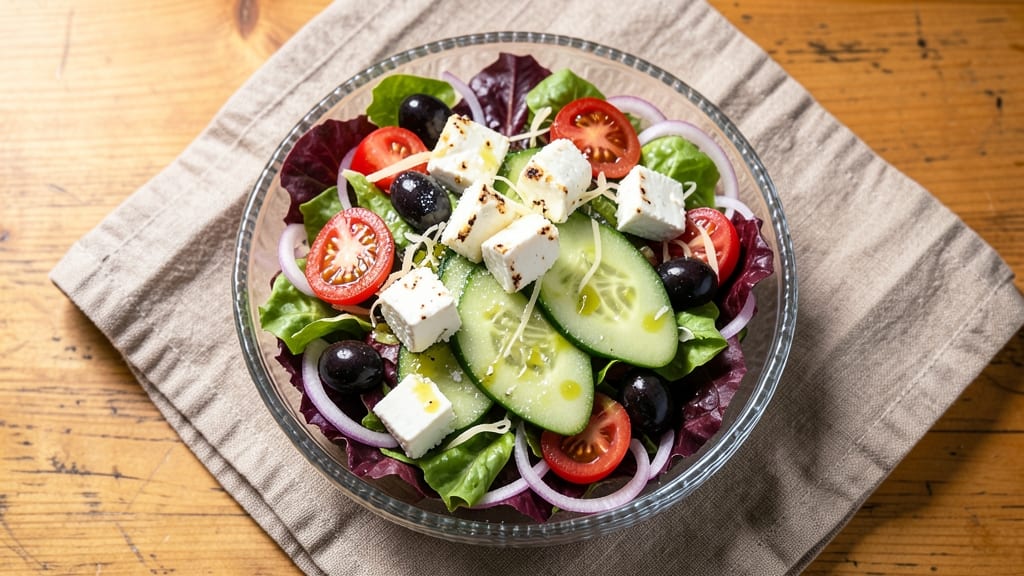
This Cheesecake Factory Greek salad recipe brings the restaurant's signature flavors straight to your kitchen table. The secret lies in perfectly balanced ingredients—crisp cucumbers, ripe tomatoes, briny Kalamata olives, and that iconic smoky feta—all tossed in a tangy, herbed dressing.
I've recreated the dish after years of perfecting the texture and flavor profile, ensuring every bite delivers that same satisfying crunch and bright acidity.
The key to authentic restaurant quality starts with fresh, high-quality ingredients and proper prep. You'll chop vegetables into uniform pieces for even texture, then assemble them in layers to maintain crispness.
The dressing is where the magic happens—a blend of olive oil, lemon juice, and fresh herbs that coats each ingredient without making the salad soggy. This recipe delivers the same bold flavors and satisfying crunch that made the Cheesecake Factory version legendary.
What sets this salad apart is the attention to detail in both presentation and flavor balance. The smoky feta adds depth, while Kalamata olives bring briny contrast to the sweet tomatoes and cucumbers. The dressing ties everything together with a perfect balance of tang and richness.
This is the kind of salad that tastes even better the next day, making it perfect for meal prep or entertaining guests.
For those looking to customize, you can easily adapt this recipe with vegan feta or additional greens while keeping the core flavors intact. The assembly method ensures you can build this salad in minutes, making it ideal for weeknight dinners or picnic spreads.
Let's get started on recreating this restaurant classic at home.
Ingredients for cheesecake factory greek salad
Crisp vegetables, briny olives, and smoky feta create this restaurant-style Greek salad masterpiece.
| Ingredient | Amount | Notes |
|---|---|---|
| English Cucumber 🥒 | 2 whole | Seedless, peeled into 1/4-inch slices |
| Roma Tomatoes 🍅 | 4 whole | Ripe, cut into 1/2-inch wedges |
| Kalamata Olives 🫒 | 1 cup | Pitted, sliced in half |
| Smoky Feta Cheese 🧀 | 1 ½ cups | Crumbled, not pre-packaged |
| Red Onion 🧅 | 1 whole | Thinly sliced, soaking in cold water |
| Red Leaf Lettuce 🥬 | 4 cups | Romaine or butter lettuce, torn |
| Extra-Virgin Olive Oil 🫒 | ½ cup | High-quality, fruity variety |
| Fresh Lemon Juice 🍋 | ¼ cup | Freshly squeezed, strained |
| Fresh Dill 🌿 | ¼ cup | Chopped, stems removed |
| Fresh Oregano 🌿 | 1 tbsp | Chopped, dried works at 1/3 amount |
| Diamond Crystal Kosher Salt 🧂 | 1 tsp | For seasoning and dressing |
| Freshly Ground Black Pepper 🌶️ | ½ tsp | Coarsely ground |
| Garlic Cloves 🧄 | 2 cloves | Minced, for dressing |
| Honey 🍯 | 1 tbsp | For dressing balance |
The feta is non-negotiable—smoky feta from a specialty cheese shop delivers that authentic restaurant flavor. Whole Foods or Trader Joe's carry excellent options, but avoid pre-packaged crumbles that often contain anti-caking agents. For the cucumbers, seedless English cucumbers stay crisp longer than regular varieties. Roma tomatoes hold their shape better than beefsteak when sliced, which is key for maintaining that satisfying crunch. Kalamata olives should be plump and briny—look for jars packed in olive oil, not brine, for authentic flavor. The red onion needs a quick soak in cold water to mellow its bite before draining well.
No smoky feta? Regular feta plus a pinch of smoked paprika gets you close, though it won't be identical. Substituting regular olives for Kalamata? Use green olives and add a pinch of lemon zest to compensate for the milder flavor. The dressing can be made ahead, but add the honey and lemon juice just before tossing to prevent the lettuce from wilting. For the herbs, dried oregano works at one-third the amount, but fresh dill is essential for that bright, fresh flavor. The garlic can be roasted for a milder taste if you prefer, though fresh minced works perfectly. If you're watching calories, reduce the olive oil to 1/4 cup without sacrificing flavor.
This salad tastes even better the next day—store components separately in airtight containers. The dressing keeps for 5 days in the fridge, while the vegetables stay crisp for 3 days if wrapped in paper towels. For meal prep, assemble just before serving to maintain that satisfying crunch. The feta can be stored in its original packaging for up to 2 weeks, but it's best used within a week for peak flavor. If you make extra dressing, freeze it in ice cube trays for easy single-serving use later.
Why You'll Love This Recipe
- No-Chop Nightmare: I swear, the English cucumber and Roma tomatoes are the only things I slice—everything else is just tearing olives off the stem and crumbling feta. That smoky feta alone makes this feel like a restaurant dish without the fuss.
- Taste Like a Vacation: Between us, the briny Kalamata olives and that tangy smoky feta? It’s the kind of flavor combo that hits you like a Greek island breeze. The red onion adds a sharp kick that keeps it from being too sweet—honestly, it’s the perfect balance.
- Lunchbox Hero: Pack this in a container and it’s still fresh by dinner. I’ve sent it to work, tossed it in my kid’s lunch, and even brought it to potlucks—no one ever asks what’s in it, they just eat it all. The cucumber stays crisp, the feta holds up, and it’s always a crowd-pleaser.
- Fridge Magic: This salad tastes better the next day, which means I can make a big batch on Sunday and have effortless lunches all week. Plus, the ingredients are cheap—olives and feta stretch far, and the veggies last longer than you’d think. My wallet and my leftovers thank me.
Step-by-step instructions for Cheesecake Factory Greek salad
Assemble this restaurant-quality salad with bold Mediterranean flavors and perfect texture balance.
Prepare the Base Ingredients
Start by peeling the 2 whole English cucumbers and slicing them into ¼-inch thick slices. I use a mandoline for even slices, but a sharp chef's knife works too. Place the cucumber slices in a large bowl and sprinkle immediately with ½ teaspoon of the Diamond Crystal kosher salt. This draws out excess water, which prevents a soggy salad. Let them sit for 10 minutes while you prep the remaining ingredients.
Cut the 4 whole Roma tomatoes into ½-inch wedges and add them to the bowl with the cucumbers. Thinly slice the 1 whole red onion and place it in a separate bowl. Pour ½ cup of cold water over the onion slices and let them soak for 5 minutes to mellow their sharpness. Drain before adding to the salad.
Assemble the Salad Components
Tear the 4 cups red leaf lettuce into bite-sized pieces and add them to the bowl with cucumbers and tomatoes. Gently toss everything together to combine. I use my hands for this step—it's more thorough than forks and helps distribute any released juices evenly.
Pit and halve the 1 cup Kalamata olives and add them to the salad mixture. Crumble the 1.5 cups smoky feta cheese over the top, reserving a few pieces for garnish. The smoky flavor is key here—don't skip this step. Fold everything together gently just once or twice to distribute the feta evenly without mashing the lettuce.
Make the Signature Dressing
In a small bowl, whisk together the 0.5 cup extra-virgin olive oil, 0.25 cup fresh lemon juice, 1 tbsp honey, and 2 minced garlic cloves. Add the 0.25 cup chopped fresh dill, 1 tbsp chopped fresh oregano, ½ teaspoon Diamond Crystal kosher salt, and ½ teaspoon freshly ground black pepper. Whisk until fully combined and emulsified.
Here's the thing—this dressing needs to be perfectly balanced. The honey and lemon juice should complement each other without overpowering the Mediterranean flavors. Taste and adjust: add a pinch more salt if needed, or a splash more lemon juice if the honey seems too dominant.
Combine and Serve
Just before serving, pour the dressing over the salad and toss gently to coat everything evenly. The ideal dressing-to-salad ratio is about ¼ cup dressing per serving, so you may not use all of it. Let the salad sit for 5 minutes before serving to allow the flavors to meld together.
Garnish each serving with the reserved feta pieces and a sprinkle of extra fresh dill and fresh oregano. The presentation matters—arrange the components attractively on a large platter with the lettuce as the base, cucumbers and tomatoes scattered throughout, and feta pieces artistically placed on top.
Pro Tips For Making Cheesecake Factory Greek Salad
- SALT THE CUCUMBER: Toss the sliced English cucumber with ½ teaspoon of salt and let it sit in a colander for 10 minutes before rinsing. This pulls out the excess water so your salad stays crisp—not soggy—like it does at the Cheesecake Factory. (Yes, even if you’re impatient like me.)
- HALVE THE TOMATOES: Cut the Roma tomatoes in half lengthwise, then slice them thinly—no need to dice. The halves keep their shape better in the bowl, and the juices stay contained so your salad doesn’t turn into a watery mess. (I learned this the hard way after serving a sad, drowned salad.)
- CRUMBLE THE FETA: Use your fingers to break the smoky feta into uneven chunks, not a fine crumble. The Cheesecake Factory version has big, salty shards that melt slightly but still hold their shape. If you’re lazy and crumble it too fine, it’ll dissolve into a paste—no one wants that.
- SOAK THE OLIVES: Drain and rinse the Kalamata olives under cold water for 30 seconds to remove any brine clinging to them. This keeps the dressing from getting too salty or bitter—trust me, your salad will taste fresher and more balanced. (Skip this, and you’ll regret it when the first bite hits like a salty wall.)
Perfect pairings for cheesecake factory greek salad
Protein Pairings
This Greek salad pairs beautifully with grilled chicken breast or shrimp skewers—both complement the bright flavors without overpowering them. I love serving it with garlic-herb grilled chicken marinated in lemon and oregano, or lemon-pepper shrimp that mirrors the salad's citrus notes.
For a vegetarian option, grilled halloumi cheese adds a salty, creamy contrast. 🍗
Bread Pairings
Warm, crusty bread is essential for soaking up any leftover dressing. I recommend warm pita bread brushed with olive oil and sprinkled with crumbled feta and dried oregano.
For a more substantial option, garlic naan or fresh focaccia works perfectly. Avoid soft, buttery breads—they can make the salad taste heavy.
Dessert Pairings
Finish your meal with something light that won't compete with the salad's bold flavors. A Greek yogurt parfait with honey and walnuts keeps the Mediterranean theme going. For something richer, baklava or orange and almond cake provides a perfect sweet contrast.
I also love a simple lemon sorbet to cleanse the palate between courses. 🍮
Beverage Pairings
A crisp white wine like Assyrtiko from Greece or a Sauvignon Blanc with citrus notes enhances the salad's brightness. For beer lovers, a light Greek lager or witbier with its refreshing coriander and citrus flavors works beautifully.
Sparkling water with a squeeze of lemon is always a crowd-pleaser for non-alcoholic options.
Seasonal Additions
In summer, add grilled zucchini or roasted eggplant for extra texture. For winter, swap fresh herbs for dried oregano and thyme, and include roasted red peppers for warmth. I also like adding pickled red onions in fall for a tangy twist that stands up to cooler weather flavors. 🍂
Nutrition facts
Frequently asked questions
Can I make this Greek salad ahead of time?
Store the vegetables separately in airtight containers for up to 3 days—wrap them in paper towels to maintain crispness. The dressing keeps for 5 days in the fridge, but add the lemon juice and honey just before serving to prevent wilting. Assemble the salad 15 minutes before eating for the best texture and flavor melding.
What's the secret to crispy cucumbers and tomatoes?
The key is salting the cucumbers 10 minutes before assembling and using Roma tomatoes instead of beefsteak varieties. Thinly slice the cucumbers and sprinkle with ½ teaspoon salt to draw out excess water. For tomatoes, their firmness holds up better than larger varieties when sliced into ½-inch wedges.
Can I substitute regular feta for smoky feta?
Yes, but you'll lose that signature restaurant flavor. Mix 1 cup regular feta with 1 teaspoon smoked paprika for a close approximation. For best results, use smoky feta from specialty stores—it's worth the extra effort. The smoky depth is what makes this salad taste authentically Mediterranean.
How do I prevent the lettuce from getting soggy?
Toss the lettuce last and use just enough dressing to coat—about ¼ cup per serving. Assemble the salad in layers with the lettuce on the bottom, then add other ingredients. If making ahead, store dressing separately and add it right before serving. Avoid overmixing to preserve that satisfying crunch.
What's the best way to serve this salad for a crowd?
Prepare all components separately and let guests assemble their own bowls. Use a large platter for the base ingredients and a small bowl for the dressing. This keeps everything fresh and allows customization. For presentation, arrange the salad in concentric circles with lettuce as the base, cucumbers and tomatoes in the middle, and feta on top.