
Salads
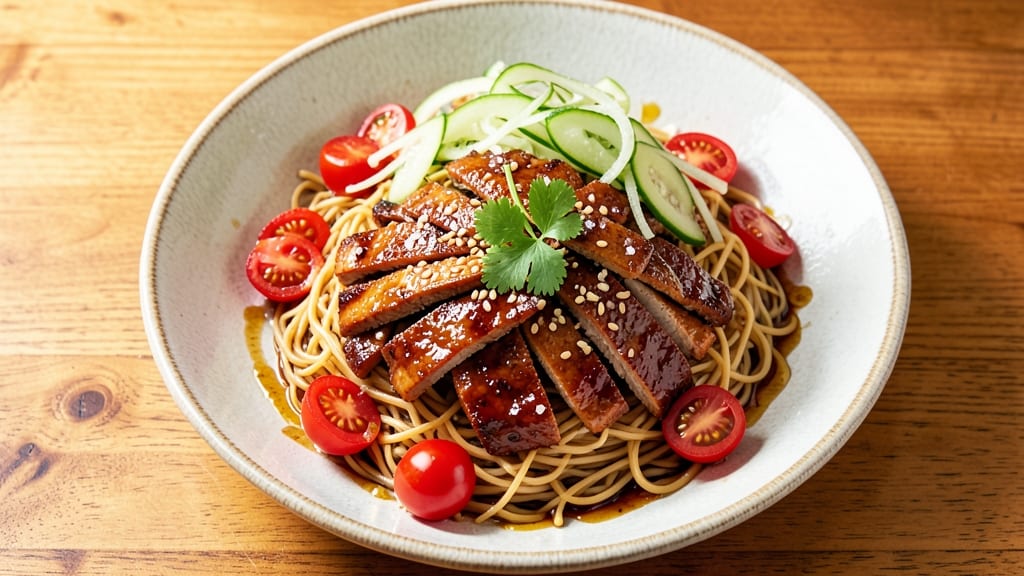
This chicken galbi noodle salad reimagines Korean flavors with a bold fusion twist—tender marinated chicken galbi meets spicy-sweet noodles crowned with crispy celery.
The secret lies in the marinade, where gochujang and honey create a caramelized crust on the chicken, while the noodles soak up a tangy sesame dressing that balances heat and sweetness. Every bite delivers that perfect contrast of smoky, spicy, and crunchy textures.
What sets this dish apart is the fusion technique: while traditional galbi is grilled, we'll achieve that signature tenderness through a 30-minute marinade followed by quick searing. The celery crowns add a modern touch, offering fresh crunch that cuts through the richness.
This isn't just a salad—it's a complete meal with protein, noodles, and vegetables all working in harmony.
By the time you're done, you'll have perfectly marinated and seared chicken galbi with golden, caramelized edges, chewy noodles tossed in a vibrant dressing, and crisp celery crowns that add visual appeal.
The dish is restaurant-quality but designed for home cooks—no special equipment needed, just a few key techniques to master.
Whether you're serving this as a main course or a showstopping side, the presentation is just as important as the flavor. Garnish with sesame seeds and sliced green onions for that final touch of authenticity. Let's bring this fusion dish to life!
Ingredients for chicken galbi noodle salad
Fusion flavors meet crispy textures in this bold chicken galbi noodle salad.
| Ingredient | Amount | Notes |
|---|---|---|
| Boneless Chicken Thighs 🍗 | 1 ½ lb | Cut into 1-inch strips |
| Gochujang Paste 🌶️ | ½ cup | Korean chili bean paste |
| Honey 🍯 | ¼ cup | Wildflower preferred |
| Soy Sauce 🥫 | ¼ cup | Kosher salt reduced |
| Sesame Oil 🫒 | 2 tbsp | Toasted for aroma |
| Minced Garlic 🧄 | 4 cloves | Freshly minced |
| Fresh Ginger 🌿 | 1 tbsp | Grated, finely |
| Rice Noodles 🍜 | 8 oz | Thin, dried variety |
| Celery Stalks 🥬 | 2 whole | Thinly sliced lengthwise |
| Green Onions 🧅 | 4 whole | Thinly sliced |
| Sesame Seeds 🌰 | 2 tbsp | Toasted lightly |
| Vegetable Oil 🫒 | 2 tbsp | High smoke point |
| Rice Vinegar 🍶 | ¼ cup | Seasoned preferred |
| Sesame Dressing Base 🥣 | ¼ cup | Store-bought or homemade |
| Salt 🧂 | 1 tsp | Kosher or sea salt |
The gochujang is non-negotiable here—Hanjin or Maesil brands deliver that perfect balance of sweet and spicy. Grab a small jar from the Korean market if you can, but the regular grocery store stuff works in a pinch. Fresh ginger and garlic? Buy them whole—you'll use them in other recipes before they go bad. For the chicken, thighs stay juicier than breasts, and cutting them into even strips ensures consistent cooking. If you can't find rice noodles, vermicelli or udon will work, but they'll have a slightly different texture. Celery crowns need to be crisp, so slice them just before serving—no wilting allowed.
No gochujang? Substitute 2 tbsp chili paste plus 1 tbsp molasses for a similar effect. Running out of sesame oil? Toasted peanut oil at half the amount gives a different but still delicious flavor. The sesame dressing base can be made from scratch with tahini, rice vinegar, and a touch of sugar, but Trader Joe's or Whole Foods have great pre-made versions that save time. For the celery crowns, if you're worried about them getting soggy, blanch them for 30 seconds first—keeps them crisp even after sitting in the dressing. And if you're feeling adventurous, swap the chicken for pork shoulder—it works beautifully too.
Marinated chicken keeps for 2 days in the fridge, but it's best served fresh. The celery crowns? Slice them last minute—they wilt fast. Store the dressing separately and toss it in just before serving. This dish reheats surprisingly well—microwave for 30 seconds with a splash of water to revive the noodles. For meal prep, I portion the chicken and dressing separately, then assemble everything the morning of. The flavors actually improve overnight as the dressing soaks into the noodles—trust me on that.
Why You'll Love This Recipe
- 30-Minute Magic: I swear by this one—marinate the chicken thighs in gochujang and honey for 15 minutes, grill or pan-sear until sticky and caramelized, then toss with cold noodles. No chopping, no fuss, just pure satisfaction.
- Sweet-Heat Balance: That gochujang and honey combo? It’s chef’s kiss—sweet enough to make your taste buds dance, but the soy and sesame oil keep it sharp and savory. The chicken stays juicy while the sauce clings like a second skin.
- Lunchbox Superstar: Between us, this is my go-to for packed lunches. The flavors hold up for days, and I double the batch so I’ve got leftovers for at least three lunches. Just add cucumber or kimchi for crunch—no one will guess it’s prepped ahead.
- Budget Win: Chicken thighs are forgiving and cheap, and a little gochujang goes a long way. I make this for date nights or when I’m feeding the whole family—same effort, way more bang for your buck. Plus, the leftovers taste just as good reheated (or cold, no judgment).
Step-by-step instructions for chicken galbi noodle salad
Here's how to create this bold, flavor-packed dish with tender chicken and vibrant noodles.
Marinate and Cook the Chicken
In a large bowl, combine the 1.5 lb boneless chicken thighs cut into 1-inch strips with 0.5 cup gochujang paste, 0.25 cup honey, 0.25 cup soy sauce, 2 tbsp sesame oil, 4 cloves minced garlic, 1 tbsp fresh ginger, and 1 tsp salt. Mix thoroughly until the chicken is fully coated and the marinade is evenly distributed. Let it sit at room temperature for 15 minutes while you prepare the other components.
Heat 2 tbsp vegetable oil in a large skillet over medium-high heat until shimmering. Add the marinated chicken in a single layer, being careful not to overcrowd the pan. Cook for 4-5 minutes per side until the chicken develops a deep caramelization and reaches an internal temperature of 165°F. The edges should be slightly charred while maintaining juicy centers. Remove from heat and set aside.
Prepare the Celery Crowns and Noodles
Using a sharp chef's knife, carefully slice the 2 whole celery stalks lengthwise into thin strips, keeping them whole rather than chopped. This creates elegant "crowns" that add texture and visual appeal. Set aside in a bowl of ice water to maintain crispness while you work.
Meanwhile, bring a large pot of water to a rolling boil and add 8 oz rice noodles. Cook according to package instructions (typically 3-5 minutes) until al dente but still slightly firm. Drain immediately and rinse under cold water to stop the cooking process. Toss the noodles with 2 tbsp toasted sesame seeds and 4 whole green onions sliced thinly to prevent clumping.
Create the Signature Dressing
In a small bowl, whisk together 0.25 cup rice vinegar, 0.25 cup sesame dressing base, and 2 tbsp toasted sesame seeds. The dressing should be smooth but still have slight texture from the seeds. Taste and adjust seasoning with additional salt if needed - it should be tangy with a subtle sweetness that complements the spicy chicken.
Here's the thing - the dressing is what ties everything together. I like to let it sit for 5 minutes before using so the flavors meld slightly. This waiting period makes a noticeable difference in the final harmony of the dish.
Assemble the Noodle Salad
In a large serving bowl, combine the cooked noodles, celery crowns, and cooked chicken. Pour the dressing over the top and gently toss everything together until evenly coated. The noodles should be glossy from the dressing while maintaining their chewy texture. If the salad seems too dry, add a splash of rice vinegar to loosen it up.
Let the salad sit for 10 minutes before serving to allow all the flavors to meld together. This resting period is crucial - it lets the spicy-sweet chicken marinade infuse the noodles and celery, creating that perfect balance of textures and temperatures. The result should be a vibrant, colorful dish with each bite offering a perfect combination of tender chicken, crisp celery, and chewy noodles in a flavorful dressing.
Pro Tips For Making Chicken Galbi Noodle Salad
- Marinate Chicken Overnight: I learned this the hard way—skipping the overnight soak means tough, flavorless meat. Use a mix of 2 tablespoons soy sauce, 1 tablespoon honey, and 1 teaspoon sesame oil for every 500g of chicken thighs. Toss in a ziplock bag and refrigerate; the acid and fat break down the fibers so the galbi stays tender even after grilling.
- Grill on High Heat: High heat. Seriously, crank your grill or pan to max and sear those chicken thighs for 2-3 minutes per side. The goal is char, not slow cooking—this adds depth to the gochujang glaze later. If you’re using a stovetop, a cast-iron skillet gets hotter faster than nonstick.
- Balance Gochujang Heat: Gochujang varies wildly in spice level, and cutting it with honey or soy sauce doesn’t always fix it. Taste the paste raw first—if it’s too sharp, mix in 1 teaspoon of sugar per tablespoon of gochujang before adding other ingredients. This smooths out the bite without muting the umami.
- Toss Noodles Last: Cook your noodles al dente, rinse in cold water, and drain thoroughly—wet noodles turn mushy when mixed with the sauce. Keep them separate until you’re ready to serve, then fold them in gently. The heat from the chicken and sauce will finish them perfectly; no need to overcook.
Creative variations of chicken galbi noodle salad
Spicy Miso Fusion
Swap the traditional gochujang marinade for a spicy miso glaze by mixing 0.3 cup white miso paste, 0.2 cup rice vinegar, 1 tbsp honey, and 1 tsp gochugaru (Korean chili flakes).
Marinate the chicken for 20 minutes before cooking—this creates a deeper umami profile with a subtle heat. The miso adds complexity that pairs beautifully with the sesame dressing. 🌶️
Thai-Inspired Peanut Crunch
Add a Thai peanut twist by tossing the cooked noodles with 2 tbsp crushed peanuts and a dressing made from 0.25 cup peanut butter, 0.25 cup coconut aminos, 1 tbsp lime juice, and 1 tsp sriracha.
Replace the celery crowns with thinly sliced cucumber for a refreshing contrast. This version is nutty, tangy, and packed with crunch—perfect for a fusion crowd. 🥜
Vegan Galbi Substitution
For a plant-based version, replace the chicken with extra-firm tofu pressed for 30 minutes and marinated in the same gochujang-honey blend. Slice the tofu into 1-inch strips and pan-fry until golden.
Boost umami with 1 tbsp soy sauce in the marinade. The texture stays satisfyingly chewy, and the flavors hold up perfectly in the salad. 🌱
Summer Citrus Refresh
Brighten up the dish for summer with a citrus-infused dressing—whisk 0.25 cup rice vinegar, 0.25 cup orange juice, 1 tbsp honey, and 1 tsp grated ginger. Add 1 tbsp chopped cilantro and a pinch of salt.
The citrus cuts through the richness while keeping the spicy-sweet balance. Garnish with mandarin orange slices for a pop of color and freshness. 🍊
Winter Comfort Bowl
Transform this into a warm noodle bowl by serving the salad over steamed rice instead of rice noodles. Top with a soft-boiled egg and quick-pickled radishes for crunch. The contrast of warm rice and cool dressing creates a comforting winter dish.
Double the chicken marinade and serve it as a dipping sauce on the side for extra indulgence. ❄️
Nutrition facts
Frequently asked questions
Can I use chicken breast instead of thighs for this recipe?
While you can use chicken breast, thighs are ideal because they stay juicier during cooking. If you prefer breast, cut it into ½-inch thick strips and reduce cooking time to 3-4 minutes per side to avoid drying out. The marinade will still work, but monitor closely for doneness at 165°F.
How do I make the celery crowns extra crispy?
For maximum crunch, slice the celery just before serving and immediately place the strips in ice water for 10 minutes. Drain well before adding to the salad. For extra crispiness, lightly toss them with ½ tsp cornstarch before adding to the ice bath. This prevents wilting and keeps them snappy.
What if I don't have gochujang paste?
You can substitute with 2 tbsp chili paste plus 1 tbsp molasses for the marinade. For a milder version, use 1 tbsp sriracha plus 1 tbsp honey. The dressing will still work with regular sesame dressing, but the chicken's flavor profile will be less complex.
Can I prepare this salad ahead of time?
Yes! Marinate the chicken and cook it up to 1 day ahead, then store it in the fridge. Cook the noodles fresh and assemble the salad just before serving. Keep the dressing separate until the last minute to maintain crispness in the celery and chewiness in the noodles. The flavors actually improve overnight!
How do I adjust the spice level?
For less heat, reduce the gochujang to ¼ cup and add 1 extra tbsp honey to balance it. For more spice, add ½ tsp gochugaru (Korean chili flakes) to the marinade or a dash of sriracha to the dressing. Taste as you go—adjust gradually!