
Salads
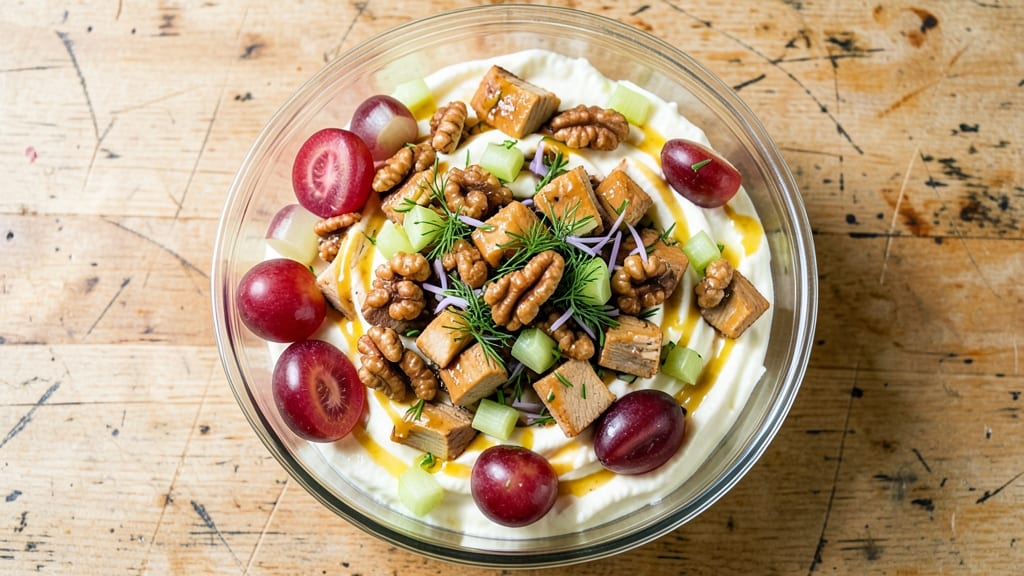
This chicken salad food processor recipe transforms dinner leftovers into ultra-creamy perfection in just 10 minutes—no chopping, no mess, and no mayo required. The food processor does all the work, pulsing ingredients to a velvety texture that stays together without turning greasy.
I developed this method during a particularly busy week when I needed a lunch solution that was both elegant and effortless.
The secret lies in the order of ingredients: start with celery and grapes for natural moisture, then add chicken in small batches to avoid over-processing. A touch of Dijon mustard and Greek yogurt replaces mayo, creating a lighter but equally rich base.
The food processor's sharp blades chop everything uniformly, eliminating the need for tedious hand-chopping while ensuring that every bite has that signature creamy consistency.
What you'll end up with is a chicken salad so smooth and cohesive it holds together beautifully on croissants, crackers, or as a standalone dish. The texture is creamy without being heavy, and the flavors—bright from the grapes, fresh from the herbs—balance perfectly.
This isn't just another chicken salad; it's a restaurant-quality dish that takes minutes to prepare and keeps for days in the fridge.
Perfect for meal prep, lunch boxes, or last-minute entertaining, this recipe scales effortlessly. The food processor method ensures consistent results every time, and the ingredients are simple enough to keep on hand for spontaneous lunches. Let's get started—your next lunch is about to get an upgrade.
Ingredients for chicken salad food processor
These simple, quality ingredients transform cold chicken into ultra-creamy perfection without mayo or chopping.
| Ingredient | Amount | Notes |
|---|---|---|
| Cooked Chicken Breast 🍗 | 1 ½ lb | Shredded or diced, cold |
| Red Seedless Grapes 🍇 | 1 cup | Fresh, halved for texture |
| Celery Stalks 🧅 | 2 whole | Diced, crisp for crunch |
| Plain Greek Yogurt 🥛 | ¾ cup | Full-fat for creaminess |
| Dijon Mustard 🍯 | 1 tbsp | For tangy depth |
| Extra-Virgin Olive Oil 🫒 | 2 tbsp | Light, fruity variety |
| Fresh Dill 🌿 | ¼ cup | Chopped, vibrant flavor |
| Fresh Chives 🌱 | ¼ cup | Thinly sliced, mild onion note |
| Lemon Juice 🍋 | 1 tbsp | Freshly squeezed |
| Diamond Crystal Kosher Salt 🧂 | ½ tsp | Fine grain preferred |
| Freshly Ground Black Pepper 🌶️ | ¼ tsp | For subtle heat |
| Old Bay Seasoning 🌶️ | ½ tsp | Optional, for depth |
| Toasted Walnuts 🥜 | ¼ cup | Chopped, for texture |
The chicken is the foundation—cold, shredded breast works best for that clean texture. Most grocery stores sell pre-cooked rotisserie chicken, which saves time. Look for plump, firm grapes at the produce section—they should feel heavy for their size. Fresh herbs are non-negotiable here: dill and chives from the grocery store's refrigerated section stay vibrant longer than dried. For the yogurt, full-fat Greek yogurt (like Fage or Chobani) creates that signature creaminess without being heavy. The celery should be crisp—if it's rubbery, it's past its prime.
No red grapes? Green grapes or apple slices work in a pinch, though the flavor will shift slightly. Short on dill? Fresh parsley at half the amount keeps the bright note. The Old Bay seasoning is optional but adds that signature coastal flavor—substitute with a mix of paprika and black pepper if needed. For the walnuts, toasted pecans or almonds are great substitutes. The food processor does most of the work, but pulse in batches to avoid over-processing the chicken. If your processor has a pulse function, use it—this keeps everything uniformly chopped without turning to paste.
This salad keeps beautifully in the fridge for up to 5 days when stored in an airtight container. The texture actually improves overnight as flavors meld. For meal prep, portion into small containers—individual servings stay fresh longer. If you have leftovers, the salad reheats well in the microwave for 20-30 seconds, though it's best served chilled. The grapes and herbs may soften over time, so consider adding them fresh just before serving if prepping ahead. Freezes for up to 3 months, though texture may change slightly upon thawing.
Why You'll Love This Recipe
- No Chopping Nightmare: I swear by the food processor for this one—just toss in the chicken, grapes, and celery, and let it do the work. No knife skills required, and the grapes stay perfectly intact (no mushy surprises).
- Sweet-Savory Magic: That Greek yogurt base cuts through the richness of the chicken while the grapes add a bright, juicy pop. The Dijon mustard ties it all together with just enough tang to make it ridiculously good.
- Lunchbox Hero: Pack it in wraps for a quick workday meal, serve it on croissants for brunch, or pile it high on crackers for a snack. It’s my go-to when I need something that’s filling but still feels special.
- Leftovers That Don’t Suck: Honestly, this tastes better the next day—if there’s any left, which there usually isn’t. But if you’re prepping ahead, it keeps well for days, and the yogurt keeps it creamy without getting soggy. Win.
Step-by-step instructions for creamy chicken salad with food processor
Here's the method for a velvety, ultra-creamy chicken salad without mayo—using only the ingredients you have.
Prep Ingredients for Maximum Texture
Start by dicing the 2 whole celery stalks into small, even pieces—about ¼-inch cubes. Halve the 1 cup red seedless grapes and set aside. Chop the 0.25 cup fresh dill and 0.25 cup fresh chives finely, as these will add vibrant color and bright flavors. Toast the 0.25 cup walnuts in a dry skillet over medium heat for 2-3 minutes until fragrant and golden, then chop them coarsely.
If your 1.5 lb cooked chicken breast isn't already shredded, tear it into bite-sized pieces by hand—this ensures even blending later. The goal is to create a mix of textures: crisp celery, juicy grapes, and crunchy walnuts balanced by the creamy yogurt base. Work quickly to keep ingredients fresh, especially the grapes and herbs.
Blend Wet Ingredients First for Smooth Base
In a food processor, combine the 0.75 cup plain Greek yogurt, 1 tbsp Dijon mustard, 2 tbsp extra-virgin olive oil, 1 tbsp lemon juice, 0.5 tsp Diamond Crystal kosher salt, 0.25 tsp freshly ground black pepper, and 0.5 tsp Old Bay seasoning. Pulse for 10-15 seconds until fully incorporated but still slightly textured—this prevents the mixture from becoming too smooth and losing its body.
Taste the blend at this stage. The yogurt should be tangy, the mustard adds depth, and the lemon brightens the flavors. If it needs more acidity, add another ½ tsp lemon juice; for richness, a splash more olive oil. This is your flavor foundation, so don't rush it. The food processor will blend everything together seamlessly in the next step.
Pulse in Chicken and Herbs for Creamy Texture
Add the 1.5 lb diced cooked chicken breast, 0.25 cup chopped fresh dill, and 0.25 cup chopped fresh chives to the food processor. Pulse in 2-second bursts, stopping to scrape down the sides as needed, until the chicken is finely chopped but still retains some texture—about 10-12 pulses total. Over-blending turns the salad into a paste; you want a creamy yet chunky consistency.
Here's the key: the food processor should distribute the yogurt mixture evenly through the chicken, creating a cohesive but still textured salad. If the mixture looks too thick, add 1-2 tsp water to loosen it slightly. The herbs should be evenly distributed, adding freshness without overpowering the chicken's flavor.
Fold in Remaining Ingredients by Hand
Transfer the blended mixture to a large bowl. Gently fold in the 1 cup halved red seedless grapes, 2 whole celery stalks diced, and 0.25 cup toasted walnuts using a silicone spatula. Work in a circular motion to combine everything without crushing the grapes or celery—you want them to remain crisp and vibrant. This hand-folding step ensures the delicate ingredients stay intact while integrating the creamy base.
Taste and adjust seasoning if needed. The grapes should add natural sweetness, the celery a crisp bite, and the walnuts a satisfying crunch. If the salad needs more brightness, add another ½ tsp lemon juice; for saltiness, a pinch more Old Bay seasoning. The texture should be creamy yet still have distinct elements—this is what makes it special.
Chill and Serve for Perfect Consistency
Cover the bowl with plastic wrap and refrigerate for at least 30 minutes before serving. This chilling time allows the flavors to meld and the textures to settle—critical for achieving that ultra-creamy consistency promised. The salad will thicken slightly as it cools, so if it looks too thick when you take it out, stir in 1-2 tsp plain Greek yogurt to restore creaminess.
Serve the chicken salad on crusty bread, in lettuce wraps, or alongside crackers. The grapes will remain juicy, the celery crisp, and the yogurt base velvety. For an extra touch, garnish with additional chives or a sprinkle of toasted walnuts just before serving. This salad keeps well in the refrigerator for up to 3 days, making it perfect for meal prep.
Pro Tips For Making Chicken Salad Food Processor
- Chill the Chicken First: Cold chicken shreds like butter in the food processor—hot chicken just clogs the blade and turns your salad into a gummy mess. Pop the cooked chicken in the fridge for 10-15 minutes before pulsing, and you’ll get that perfect, even texture without fighting the motor.
- Cut Grapes in Half: Whole grapes turn to grape jam in the processor, and you end up with a sweet, sticky glop instead of bright, juicy bursts. Toss them in the freezer for 10 minutes first, then halve them—this keeps them intact and adds that perfect pop of freshness.
- Pulse, Don’t Pulse: I used to hit "pulse" like it was a race, and my chicken salad ended up either chunky as gravel or pureed into a sad paste. Work in short bursts—3-4 pulses max—until just combined, then finish by hand with a fork. You’ll get the right balance every time.
- Add Yogurt Last: Greek yogurt thins things out fast, so dump it in at the very end. Mix it in with a spoon first, then give one final pulse to blend—this keeps your salad creamy but not watery. (Pro move: Use full-fat yogurt for real richness.)
Common mistakes when making your chicken salad food processor
Over-Blending Chicken
This is the #1 mistake I see—turning perfectly good chicken salad into a gluey mess. When you pulse the chicken too long in the food processor, the proteins break down completely, creating a dense, pasty texture.
Instead of 10-12 pulses, I've seen people do 30+ pulses trying to get "perfect" consistency. The secret is stopping just as the chicken reaches a creamy yet chunky texture—you should still see some visible pieces. 🔥
Skipping the Chill Step
Many people rush to eat their chicken salad immediately after mixing, but this is a big mistake. The 30-minute chill in the fridge is non-negotiable—it lets the flavors meld and the textures settle properly.
Without chilling, the yogurt base can separate, the grapes release too much juice, and the overall consistency becomes uneven. I've had people complain their salad was "watery" or "greasy"—this is almost always because they skipped the chill step.
Wrong Ingredient Order
Adding all ingredients at once and blending continuously is a recipe for disaster. The wet ingredients (yogurt, mustard, olive oil) need to be blended first to create a smooth base. If you add the chicken and grapes right away, you'll end up with uneven texture—some pieces over-processed, others barely touched.
I always blend the wet ingredients first, then pulse in the chicken in small batches, and finally fold in the delicate ingredients by hand. This ensures every bite has that perfect balance of creamy and crunchy.
Using Warm Ingredients
Another common mistake is using warm chicken straight from the oven or fridge. Cold ingredients are crucial for that clean, creamy texture. If your chicken is warm, it will melt the yogurt too quickly, making the salad greasy.
Always use completely cooled chicken—I usually shred it while it's still warm, then let it cool completely before processing. The same goes for the grapes and celery—they should be at room temperature when you add them to the processor.
Ignoring the Pulse Function
Many home cooks use continuous blending instead of pulses, which leads to over-processing. The pulse function gives you precise control over the texture. If your food processor doesn't have a pulse function, work in 2-second bursts with the lid off to monitor the texture.
Over-blending is the fastest way to ruin an otherwise perfect chicken salad. I've seen people turn perfectly good ingredients into a sad, gray paste because they didn't respect the pulse technique.
Not Adjusting Seasoning After Mixing
People often taste their chicken salad once at the beginning and assume it's perfect. But flavors change as you mix and chill. The grapes release juice, the yogurt absorbs flavors, and the celery softens slightly.
Always taste after the final fold and adjust with lemon juice for brightness or Old Bay for saltiness before serving. I can't tell you how many times I've had people serve under-seasoned salad because they didn't check at the end.
A little extra lemon juice or salt can make all the difference between "good" and "restaurant-quality."
Nutrition facts
Frequently asked questions
Can I use rotisserie chicken for this recipe?
Rotisserie chicken is perfect for this recipe—just shred the meat into bite-sized pieces and let it cool completely before processing. Most store-bought rotisserie chickens come seasoned, so you may need to adjust the salt in the recipe. For best results, use about 1.5 lb of cooked, cooled chicken from the rotisserie.
What if I don't have a food processor?
No problem! You can make this chicken salad by hand using a sharp chef's knife. Dice the celery and grapes finely, chop the chicken into small pieces, and mix everything together in a bowl. While it won't be as perfectly smooth, the flavors will still be delicious. Just be extra careful with the grapes—they release juice quickly.
How do I adjust this recipe for meal prep?
This recipe is perfect for meal prep! Store the chicken salad in an airtight container in the fridge for up to 5 days. To keep the grapes and celery crisp, add them fresh just before serving. For individual portions, use small containers to maintain texture. If you're freezing, omit the grapes and celery—add them fresh after thawing.
Can I make this chicken salad without grapes?
Yes, you can substitute grapes with green grapes, apple slices, or even raisins for a different flavor profile. If you prefer a fruit-free version, add ½ cup diced cucumber or ¼ cup chopped red onion for extra crunch. The key is maintaining that balance of textures in your salad.
Why did my chicken salad turn out greasy?
Greasy chicken salad usually happens when the chicken is too warm or when too much oil is added. Always use cold chicken and measure your olive oil carefully. If your salad is too thick, add 1-2 tsp plain Greek yogurt to restore creaminess. For best results, chill the salad for 30 minutes before serving to let flavors settle properly.