Salads
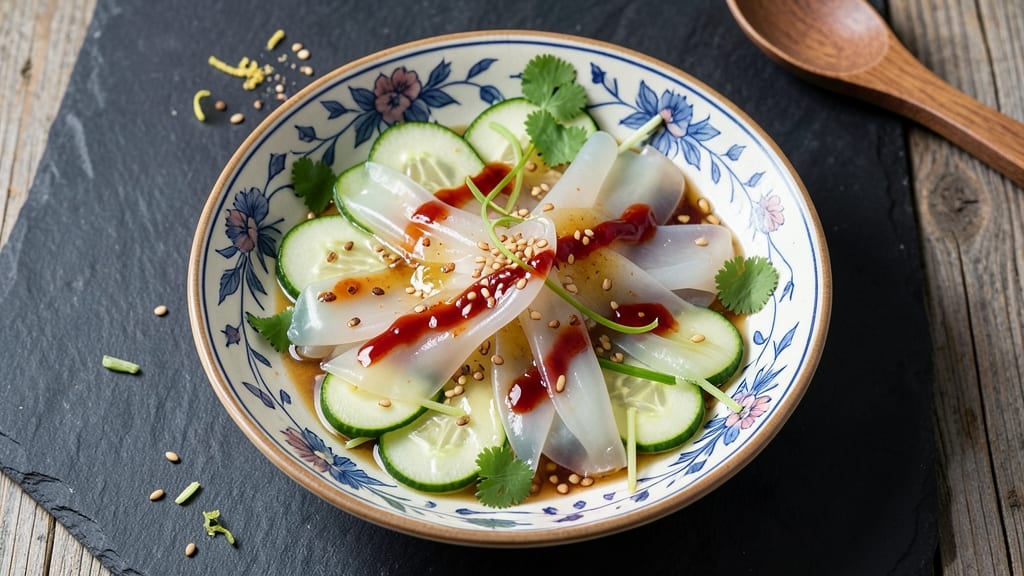
This Chinese jellyfish salad delivers the perfect balance of crispy bites and silky texture, a dish that transports you to coastal Chinese eateries with every bite. The preparation begins with carefully cleaning and marinating the jellyfish—a process that transforms its delicate structure into a satisfying crunch.
What makes this recipe special is the harmony of textures: tender jellyfish meets crisp cucumbers and a tangy, aromatic dressing that ties everything together.
The foundation of this dish lies in its traditional ingredients: jellyfish, cucumber, chili oil, and a light vinegar dressing infused with sesame oil. Each component plays a crucial role—crispy jellyfish provides the satisfying bite, while the cucumber adds refreshing crunch and the dressing brings a bright, tangy contrast.
The dish is rooted in coastal Chinese cuisine, where jellyfish is a prized ingredient for its unique texture and mild flavor.
By the time you finish assembling this salad, you'll have a dish that's both elegant and approachable—perfect for sharing or enjoying as a light yet satisfying meal. The jellyfish achieves that sought-after crispy texture when properly marinated and fried, while the cucumber and dressing provide a refreshing balance.
This recipe is ideal for those who appreciate the art of texture in cuisine.
Serve this salad as a refreshing appetizer, a light lunch, or a side dish alongside grilled meats or seafood. The combination of flavors and textures makes it a standout dish that's sure to impress. Let's dive into the steps to create this coastal delicacy in your own kitchen.
Ingredients for chinese jellyfish salad
Traditional coastal ingredients transformed into a crispy, refreshing salad masterpiece.
| Ingredient | Amount | Notes |
|---|---|---|
| Dried Jellyfish 🐙 | 8 oz | Rinsed and cleaned thoroughly |
| Persian Cucumbers 🥒 | 2 whole | Thinly sliced lengthwise |
| Sesame Oil 🫒 | 2 tbsp | Toasted for aroma |
| Rice Vinegar 🍶 | ½ cup | Seasoned variety preferred |
| Soy Sauce 🍶 | 2 tbsp | Light or dark preferred |
| Chili Oil 🌶️ | 1 ½ tbsp | Homemade or store-bought |
| Garlic Cloves 🧄 | 3 cloves | Minced for dressing |
| Ginger Root 🌿 | 1 tbsp | Fresh, grated finely |
| Green Onions 🧅 | 3 whole | Thinly sliced, white and green |
| Vegetable Oil 🫒 | 2 cups | For frying jellyfish |
| Salt 🧂 | 1 ½ tsp | Kosher or sea salt |
| White Pepper 🌶️ | ½ tsp | Freshly ground preferred |
| Sesame Seeds 🌾 | 1 tbsp | Toasted for garnish |
The jellyfish is the star here, and proper preparation is everything. Start with high-quality dried jellyfish from a trusted Asian market—look for pieces that are clean, white, and free of any slimy residue. The Persian cucumbers should be firm and crisp, with vibrant green skin. For the dressing, toasted sesame oil adds depth, while seasoned rice vinegar brings the necessary tang. If you can't find Persian cucumbers, English cucumbers work too, but they'll be slightly less crisp. The ginger and garlic should be freshly grated and minced—pre-minced versions lose flavor quickly.
No sesame oil? Toasted peanut oil works in a pinch, though the flavor will differ slightly. Short on chili oil? Mix 1 tbsp olive oil with 1 tsp red pepper flakes for a similar kick. The jellyfish marinade can be prepped a day ahead—store it in an airtight container in the fridge—but don't marinate longer than 24 hours, or the texture will suffer. For the frying step, maintain oil temperature at 350°F—too hot and it burns, too cool and it stays soggy. The green onions can be swapped for shallots if you prefer a milder flavor, but the white and green sections add both texture and freshness.
The fried jellyfish stays crispy for about 2 hours at room temperature if stored in a single layer on paper towels. For longer storage, keep it in an airtight container in the fridge for up to 3 days, though texture will degrade faster than fresh. The dressing components—vinegar, soy sauce, and chili oil—can be mixed ahead and stored for up to 1 week. When serving, toss the jellyfish and cucumbers just before plating to maintain that crispy texture. This salad is best enjoyed immediately after assembly, but if you must prep ahead, keep the dressing and jellyfish separate until the last moment.
Why You'll Love This Recipe
- I’ll be real: the jellyfish just needs a quick soak—no hours of waiting like some other dishes. Toss it in warm water for 20 minutes, rinse, and you’re done. That’s it. No fuss, no drama, just ready-to-use texture.
- No-Soaking Struggle: I’ll be real: the jellyfish just needs a quick soak—no hours of waiting like some other dishes. Toss it in warm water for 20 minutes, rinse, and you’re done. That’s it. No fuss, no drama, just ready-to-use texture.
- Umami-Packed Crunch: Between us, the combo of chewy jellyfish and those crisp Persian cucumbers is ridiculously good. Drizzle in the sesame oil and a splash of rice vinegar? Suddenly, you’ve got that perfect balance—salty, tangy, and just a little funky that makes you keep reaching for more.
- Lunchbox Legend: This salad holds up like a champ. Pack it the night before, and it’s still fresh and satisfying by noon. Honestly, it’s my go-to for work lunches or school lunches—no wilting, no soggy mess, just that same great flavor hours later.
Step-by-step instructions for Chinese jellyfish salad
Transform delicate jellyfish into a restaurant-quality dish with perfect texture and bold flavors.
Prepare the Dried Jellyfish for Frying
Begin by thoroughly rinsing the 8 oz dried jellyfish under cold running water for 5 minutes to remove any impurities. Soak it in cold water for 30 minutes, changing the water every 10 minutes—this removes excess salt and relaxes the fibers. After soaking, rinse again and pat completely dry with paper towels.
Next, cut the jellyfish into 1-inch square pieces using a sharp knife. The pieces should be uniform in size for even cooking. Arrange them on a wire rack and let them air-dry for 1 hour at room temperature. This step is crucial—proper drying ensures crispy texture rather than chewy or soggy jellyfish.
Fry the Jellyfish Until Crispy
Heat 2 cups vegetable oil in a deep skillet over medium-high heat until it reaches 350°F. Use a thermometer to monitor the temperature—this precision prevents burning while ensuring crispiness. Fry the jellyfish pieces in batches for 1-2 minutes per side, stirring gently with a slotted spoon, until they turn golden brown and crisp.
Remove the fried jellyfish and drain on a wire rack lined with paper towels. Let them cool completely before proceeding—this prevents the oil from making the dressing too greasy. The crispy texture should hold even when pressed gently; if any pieces feel soft, fry them for an additional 30 seconds until fully set.
Make the Dressing and Prepare the Cucumbers
In a small bowl, whisk together the 0.5 cup rice vinegar, 2 tbsp soy sauce, 1.5 tbsp chili oil, 1 tbsp finely grated ginger root, and 3 cloves minced garlic cloves until fully combined. Taste and adjust seasoning with 1.5 tsp salt and 0.5 tsp white pepper—the dressing should balance tangy, spicy, and umami flavors.
Meanwhile, thinly slice the 2 whole Persian cucumbers lengthwise into ¼-inch strips. Rinse them under cold water to remove any excess moisture and pat dry with a clean kitchen towel. The cucumbers should be crisp and fresh, providing a refreshing contrast to the crispy jellyfish.
Assemble and Garnish the Salad
In a large serving bowl, gently toss the fried jellyfish and cucumber strips with the prepared dressing. Toss lightly—just enough to coat the ingredients evenly without breaking the jellyfish’s crispy texture. Let the salad sit for 5 minutes to allow the flavors to meld together.
Just before serving, thinly slice the 3 whole green onions and sprinkle them over the salad. Toast the 1 tbsp sesame seeds in a dry skillet over medium heat for 1-2 minutes until fragrant, then sprinkle them on top. Serve immediately while the jellyfish is still crispy and the cucumbers retain their crunch.
Serve with Confidence
Divide the salad into 4 servings and garnish each portion with an additional sprinkle of sesame seeds and green onions. The contrast of crispy jellyfish, refreshing cucumbers, and bold dressing creates a harmonious balance of textures and flavors. For best results, serve at room temperature to maintain the jellyfish’s crispiness.
This dish highlights the delicate art of balancing textures—crispy, silky, and fresh—while delivering the authentic flavors of Chinese cuisine. The key lies in precise frying and careful assembly to preserve each component’s integrity.
Pro Tips For Making Chinese Jellyfish Salad
- SOAK JELLYFISH TWICE: First soak the dried jellyfish in warm water for 30 minutes to break up the toughest fibers, then drain and re-soak in cold water for 2–3 hours. The cold water at the end keeps the texture delicate instead of rubbery—trust me, skipping this second soak ruins the mouthfeel.
- SLICE CUCUMBERS THIN: Use a sharp knife and cut Persian cucumbers into ⅛-inch slices, not thick rounds. Thin slices crisp up faster and absorb the dressing evenly—thick slices stay soggy and dull the salad’s texture.
- DRESSING IN STAGES: Toss the jellyfish and cucumbers with just half the soy sauce and rice vinegar first, then drizzle the rest after adding sesame oil. This prevents the jellyfish from absorbing too much liquid early and turning mushy—sesame oil should glaze the top, not pool at the bottom.
- CHILL BEFORE SERVING: Let the salad sit in the fridge for at least 15 minutes after dressing. The flavors meld better and the jellyfish softens just enough to be tender, not chewy. I used to serve it immediately—big mistake.
Flavor customization for these flavors
Spicy Heat Levels
Adjust the chili oil to control heat—start with 1 tbsp for mild, 1.5 tbsp for medium, or 2 tbsp for fiery. For a smoky kick, swap ½ tbsp chili oil with ½ tbsp Lao Gan Ma chili crisp (the crunchy kind).
I love adding 1 tsp gochujang to the dressing for fermented depth and a subtle sweetness that balances the heat. 🌶️
Sweet-Tangy Balance
Add 1 tbsp honey or 1 tsp sugar to the dressing for a sweet contrast. I recommend lightly toasted brown sugar for caramelized notes that pair beautifully with the salty soy sauce.
For a fruity twist, stir in 1 tsp lime zest and 1 tsp lime juice—this brightens the dish and cuts through the richness of the fried jellyfish.
Herb Variations
Swap green onions for cilantro or Thai basil for a fresher, more aromatic profile. If you prefer earthy flavors, add 1 tbsp chopped mint or 1 tsp dried shiso leaves (common in Japanese-Chinese fusion).
Toast 1 tsp fennel seeds and sprinkle over the salad for a licorice-like warmth that complements the seafood.
Umami Boosters
Enhance the savory depth by adding 1 tsp fish sauce or 1 tsp oyster sauce to the dressing. For a vegetarian option, use 1 tsp mushroom powder or 1 tbsp soy sauce reduction (simmer 2 tbsp soy sauce until syrupy).
A dash of white miso paste (½ tsp) adds a creamy, fermented richness that elevates the entire dish.
Texture Contrasts
Add ¼ cup toasted peanuts or 2 tbsp crispy fried shallots for extra crunch. For a creamy element, fold in 2 tbsp shredded mozzarella or 1 tbsp whipped coconut cream—this softens the crispy texture while adding a luxurious mouthfeel.
I also love tossing in ½ cup baby spinach just before serving for a fresh, tender bite. ✨
Regional Twists
For a Cantonese-style version, reduce the chili oil and add 1 tsp Shaoxing wine to the dressing. In Fujian cuisine, incorporate 1 tsp preserved mustard greens (yan cai) for a tangy, funky depth.
For a modern fusion take, mix in 1 tbsp pomegranate molasses and 1 tsp sumac—this adds a Middle Eastern-inspired brightness that’s surprisingly delicious. 🗺️
Nutrition facts
Frequently asked questions
How do I know if my dried jellyfish is fresh and safe to eat?
Look for jellyfish pieces that are white, firm, and free of any slimy residue or dark spots. The texture should be slightly rubbery but not brittle. Avoid any pieces with a strong fishy odor or excessive saltiness—these indicate poor quality. When soaked, the water should remain clear rather than cloudy or murky.
Can I substitute regular cucumbers for Persian cucumbers?
Yes, but expect slightly less crispness. English or regular cucumbers work well, though they have more seeds and softer skin. To compensate, slice them thinner (⅛-inch instead of ¼-inch) and pat them extra dry before adding to the salad. For maximum crunch, chill the cucumbers for 30 minutes before slicing.
Why did my jellyfish turn rubbery instead of crispy?
This usually happens from over-soaking or improper drying. Limit soaking to 30 minutes (changing water every 10 minutes) and ensure pieces air-dry completely for 1 hour before frying. Also, check your oil temperature—it should be 350°F (use a thermometer). If pieces feel gummy after frying, they likely weren't dry enough before cooking.
Is this dish gluten-free? Can I make it vegetarian?
The base recipe is naturally gluten-free, but check your soy sauce and chili oil for hidden gluten. For vegetarian, replace jellyfish with thinly sliced eggplant (marinated in soy sauce) or crispy fried tofu. Both work well when fried to similar crispiness. The texture contrast with cucumbers remains the same, just with a plant-based protein.
How long can I store the fried jellyfish before serving?
Keep fried jellyfish in a single layer on paper towels at room temperature for up to 2 hours to maintain crispiness. For longer storage, refrigerate in an airtight container for 3 days max. Reheat in a dry skillet for 30 seconds before serving—this restores some crispness. The dressing should always be made fresh before tossing with the jellyfish.