
Salads
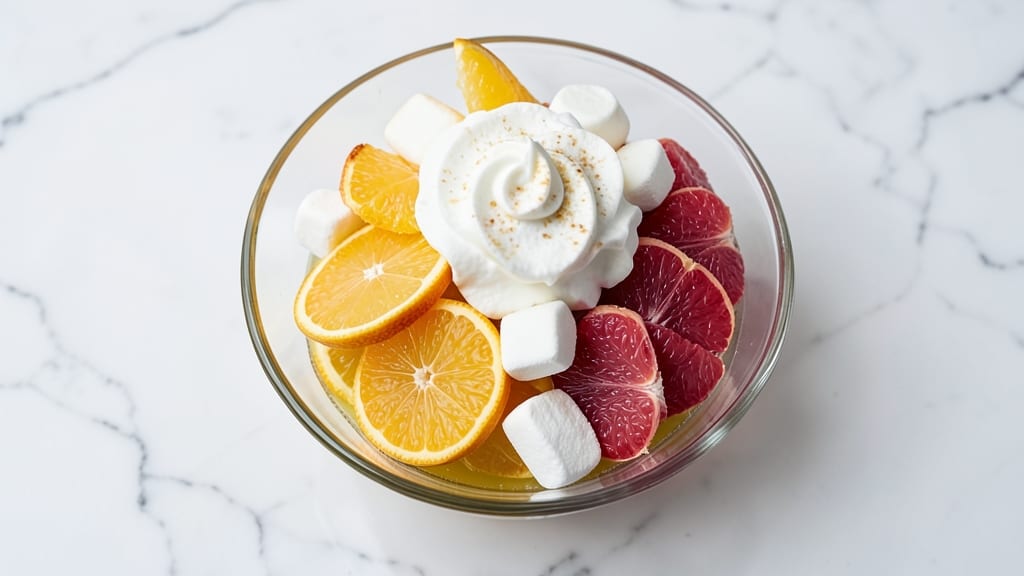
This citrus ambrosia salad recipe transforms a classic Southern dessert into a refreshing, layered masterpiece that’s perfect for brunch or summer gatherings. The secret lies in balancing bright citrus segments—like oranges and grapefruit—with fluffy whipped cream and toasted marshmallows for a creamy, velvety texture that keeps every bite luscious.
I’ve perfected the ratio of citrus to cream to ensure each layer stays distinct yet harmonious, with a tangy dressing that ties everything together.
The assembly is where the magic happens: crisp fruit at the bottom, creamy whipped cream in the middle, and toasted marshmallows on top for a touch of indulgence. This isn’t just a salad—it’s a visually stunning dish that feels celebratory yet simple to prepare.
The citrus dressing, made with fresh orange juice and a hint of vanilla, adds a zesty lift that cuts through the richness, making it both light and satisfying. For a modern twist, swap in blood oranges for deeper color and flavor.
What you’ll end up with is a dessert salad that’s as beautiful as it is delicious—golden layers of citrus, fluffy whipped cream, and caramelized marshmallows that hold their shape.
The contrast of textures and flavors makes it irresistible, whether served at a holiday brunch or as a refreshing finale to a summer meal. The best part? It can be prepped ahead and assembled just before serving, so you’re not stuck in the kitchen when guests arrive.
For extra flair, garnish with toasted coconut flakes or a sprinkle of cinnamon to enhance the citrus notes. This recipe is proof that a classic can be reinvented without losing its charm—just a brighter, more vibrant twist. Let’s get started on creating your perfect citrus ambrosia salad.
Ingredients for citrus ambrosia salad
Bright citrus, fluffy cream, and toasted marshmallows—this salad is pure summer celebration in every layer.
| Ingredient | Amount | Notes |
|---|---|---|
| Navel Oranges 🍊 | 3 whole | Segments peeled, membranes removed |
| Ruby Red Grapefruit 🍊 | 2 whole | Segments peeled, membranes removed |
| Large Marshmallows 🧁 | 16 whole | Miniature or regular size |
| Heavy Whipping Cream 🥛 | 2 cups | Cold, full-fat for best texture |
| Granulated Sugar 🍚 | ½ cup | For whipped cream sweetness |
| Vanilla Extract 🌿 | 1 tbsp | Pure vanilla for depth |
| Fresh Orange Juice 🍊 | ½ cup | From 2-3 navel oranges |
| Orange Zest 🍊 | 1 tbsp | For citrus aroma boost |
| Unsalted Butter 🧈 | 2 tbsp | Softened for dressing richness |
| Toasted Coconut Flakes 🥥 | ¼ cup | For garnish, optional |
| Ground Cinnamon 🌿 | ½ tsp | For dusting, optional |
| Light Corn Syrup 🍯 | 2 tbsp | For marshmallow caramelization |
The citrus is everything here. Ruby Red grapefruit adds that perfect balance of sweet and tart, while navel oranges bring juicy richness. Grab fresh fruit from the grocery store's produce section—avoid pre-segmented packs, they're usually dry. For the marshmallows, Kraft Jet-Puffed or Dandies are my go-tos because they toast beautifully without getting too crispy. Toast them in a single layer on a baking sheet at 350°F for 3-4 minutes, stirring once, until golden all over. The whipped cream needs to be light and airy—use cold cream straight from the fridge and avoid over-whipping or it'll turn buttery.
No grapefruit? Pink grapefruit or blood oranges work beautifully—just adjust the sweetener in the dressing if needed. Running short on marshmallows? Mini marshmallows at double the quantity give a similar effect. For the dressing, if you don't have fresh orange juice, high-quality bottled orange juice works in a pinch, but add a splash of water to thin it out. The corn syrup is key for caramelizing the marshmallows—don't skip it. And if you're feeling fancy, add a splash of Grand Marnier or Cointreau to the dressing for a sophisticated twist. The coconut flakes should be toasted in a dry pan over medium heat until golden—about 3-4 minutes.
This salad keeps beautifully—prep the citrus and dressing up to 2 days ahead, and assemble the day of serving. The whipped cream should be made fresh 2 hours before serving so it stays light. Store the citrus segments in an airtight container with a paper towel to absorb moisture. The marshmallows can be toasted ahead and stored in an airtight container at room temperature for 3 days. When assembling, use a glass trifle dish or individual cups for a stunning presentation. Serve chilled for the best texture contrast between the creamy layers and crisp fruit.
Why You'll Love This Recipe
- No-Knife Nightmare: I swear by this one when my hands are too sticky to peel oranges properly. Just segment those navel oranges and grapefruit over a bowl—no fancy tools, no juice everywhere. The only "chopping" is breaking marshmallows in half, and honestly, that’s the easiest part of my day.
- Sweet-Tart Magic: That first bite? Pure contrast heaven—juicy grapefruit’s sharpness melts into creamy whipped cream while the marshmallows add a gooey, nostalgic crunch. Between us, I’ve never met a citrus salad that didn’t taste like a dessert first.
- Potluck Hero: Bring this to a summer gathering and watch it disappear. It’s light enough for a picnic but hearty enough to satisfy a crowd—plus, the marshmallows make it feel special without requiring a full charcuterie board. (Yes, even on a Tuesday night.)
- Leftovers? Better Than New: This salad actually improves overnight. The citrus gets even brighter, the cream lightens just right, and the marshmallows soften into that perfect chewy bite. I make a double batch on Sundays so I can grab it for snacks all week—no wilting, no sad lettuce.
Step-by-step instructions for citrus ambrosia salad
Here's how to layer vibrant citrus with velvety dressing for a dessert that sparkles with every bite.
Prepare the Citrus Fruit
Start by peeling and segmenting the 3 whole Navel Oranges and 2 whole Ruby Red Grapefruit, carefully removing all membranes for clean, bite-sized pieces. I like to use a sharp knife and cut just above the membrane to avoid any bitterness. Place the segments in a large mixing bowl as you work—this keeps everything organized and prevents cross-contamination between the juicy fruits.
Once all the citrus is segmented, give it a quick taste test. The grapefruit should add a refreshing tartness that balances the sweetness of the oranges. If you're worried about bitterness, you can rinse the segments under cold water and pat them dry before adding them to the bowl. This step is crucial for that bright, zesty flavor we're aiming for.
Create the Creamy Orange Dressing
In a separate medium bowl, combine the 2 cups Heavy Whipping Cream, 0.5 cup Granulated Sugar, 1 tbsp Vanilla Extract, 0.5 cup Fresh Orange Juice, and 1 tbsp Orange Zest. Whisk everything together until the sugar dissolves completely and the mixture is smooth. This dressing is the heart of your ambrosia, so don't rush this step—you want all the flavors to meld together perfectly.
Next, add the 2 tbsp Unsalted Butter and 2 tbsp Light Corn Syrup to the bowl. Whisk again until the butter melts completely and the mixture is fully incorporated. The syrup helps balance the tartness of the citrus while adding just the right amount of sweetness. Taste the dressing now—it should be sweet, tangy, and perfectly creamy. If you want it a bit richer, you can add a splash more orange juice, but the current ratio is ideal for that classic ambrosia flavor.
Assemble the Salad Layers
Gently fold the citrus segments into the creamy dressing using a large spatula. Be careful not to overmix—you want the fruit to stay intact and vibrant. The goal is to coat each piece lightly while keeping the texture bright and fresh. Once combined, transfer the mixture to a large serving bowl or individual dessert glasses for a layered presentation.
Here's where the magic happens: sprinkle the 16 whole Large Marshmallows evenly over the top of the citrus mixture. The marshmallows will soften slightly and absorb the citrus juices, creating a delightful contrast of textures. If you're feeling fancy, you can lightly toast the marshmallows in the microwave for 10-15 seconds to give them a subtle caramelized edge, but I prefer them soft and gooey for the classic ambrosia experience.
Garnish and Chill
Cover the bowl or glasses with plastic wrap and refrigerate for at least 2 hours, or up to 4 hours, to let the flavors meld together. The longer it chills, the more the citrus juices will infuse into the dressing, creating a harmonious blend of sweet and tangy. This chilling step is non-negotiable—it's what transforms a simple fruit salad into a luxurious dessert.
Before serving, give the salad a final garnish. Sprinkle the 0.25 cup Toasted Coconut Flakes and 0.5 tsp Ground Cinnamon over the top for added texture and warmth. The coconut adds a nutty crunch, while the cinnamon enhances the citrus notes with a cozy spice. Serve immediately, and watch as everyone digs in for that perfect balance of creamy, citrusy, and marshmallow goodness.
Pro Tips For Making Citrus Ambrosia Salad
- CHILL THE FRUIT FIRST: Ruby Red grapefruit and Navel oranges are stubborn little devils when it comes to juicing—unless you cut them cold. Pop them in the fridge for 30 minutes before segmenting, and the membranes slide out like butter. I learned this the hard way after staring at a bowl of grapefruit pulp that looked like it had been through a blender.
- USE A GRATER FOR MARSHMALLOWS: Large marshmallows are a pain to chop evenly, and that’s before they start dissolving in the cream. Instead, use a box grater with the medium holes—it gives you uniform, bite-sized pieces that stay intact longer. (Yes, it’s messy, but your salad will look like it came from a bakery.)
- WHIP CREAM TO STIFF PEAKS: The heavy whipping cream in this salad isn’t just a binder—it’s the glue holding the whole thing together. If you stop at soft peaks, the marshmallows will sink like rocks, and the texture turns into a sad, soupy mess. Whip it until it holds a stiff peak, then fold it in gently. (Your future self will thank you.)
- SWEETEN THE CREAM FIRST: Sugar dissolves faster in warm cream, and if you dump it in cold, you’ll end up with grainy bits that feel like you’re eating dessert rocks. Mix the sugar into the cream before whipping—just a splash of warm water if it’s stubborn. This isn’t the prettiest method, but it’s the tastiest.
Dietary considerations for these flavors
Gluten-Free Adaptations
This citrus ambrosia salad is naturally gluten-free since it contains no grains or wheat-based ingredients. However, if you're using store-bought marshmallows, always check the packaging—some brands may contain trace amounts of gluten. I recommend Dandies marshmallows or Kraft Jet-Puffed, both of which are certified gluten-free.
The whipped cream and citrus dressing are also safe, as long as you avoid cross-contamination with gluten-containing utensils or bowls. 🌱
Dairy-Free Options
For a dairy-free version, swap the heavy whipping cream for full-fat coconut cream chilled overnight. The texture will be slightly different but still creamy. You can also use dairy-free whipped topping like Reddi-wip's dairy-free version, though it may lack the same richness.
The citrus dressing remains dairy-free as long as you omit the butter—replace it with 2 tbsp refined coconut oil melted and cooled. The flavor stays bright and tangy!
Vegan Substitutions
To make this salad vegan, replace the marshmallows with vegan marshmallows like Dandies Vegan Marshmallows or homemade versions using agar-agar. For the cream layer, use coconut cream whipped with 1 tbsp cornstarch and 1 tbsp maple syrup for stability.
The dressing can stay the same, but replace the butter with coconut oil. The result is still delightfully creamy with a citrusy punch!
Lower Sugar Version
If you're watching sugar intake, reduce the granulated sugar in the dressing to ¼ cup and use monk fruit sweetener or erythritol for the remaining ¼ cup. The light corn syrup can be replaced with sugar-free maple syrup or agave nectar in a 1:1 ratio.
The marshmallows can be substituted with sugar-free marshmallows or even lightly sweetened coconut flakes for a crunchy topping. The salad will still taste sweet but with fewer calories!
Allergen-Friendly Tips
For nut allergies, skip the toasted coconut flakes and use crushed graham crackers (ensure they're gluten-free if needed) or toasted pumpkin seeds instead. If citrus allergies are a concern, try pineapple or mango segments in place of the grapefruit and oranges.
Always introduce new fruits gradually to test for reactions. The whipped cream layer can be made allergen-free by using certified dairy-free products and ensuring no cross-contamination occurs during preparation. 💛
Nutrition facts
Frequently asked questions
Can I make this citrus ambrosia salad ahead of time?
The citrus fruit and dressing can be prepped 2 days ahead and stored in an airtight container. Assemble the layers just before serving—this keeps the marshmallows fresh and the whipped cream light. For best texture, chill the assembled salad for 2-4 hours before serving.
What if I don’t have grapefruit? Can I substitute another fruit?
Yes! Try blood oranges for deeper color and flavor, or pineapple segments for a tropical twist. If using pineapple, reduce the sugar in the dressing slightly since it's already sweet. The key is balancing tartness—so adjust based on your fruit's natural sweetness.
How do I keep the whipped cream from getting grainy?
Use cold cream straight from the fridge and avoid over-whipping. Add the sugar gradually while whisking to dissolve completely. If your cream starts to break, try adding 1 tsp lemon juice or a pinch of salt to stabilize it. The dressing should be smooth and velvety for the perfect texture.
Can I make this salad without marshmallows?
Swap marshmallows for toasted coconut flakes, crushed meringues, or even lightly sweetened shredded coconut. For a chocolate twist, add mini chocolate chips or crushed graham crackers. The citrus and cream layers will still shine on their own!
Why is my dressing too thick or too thin?
If it's too thick, whisk in 1-2 tbsp warm water or orange juice to thin it out. For a thicker dressing, reduce the liquid slightly or add 1 extra tbsp corn syrup to balance. The dressing should coat a spoon lightly but not be syrup-like. Taste as you go—adjust gradually!