
Salads
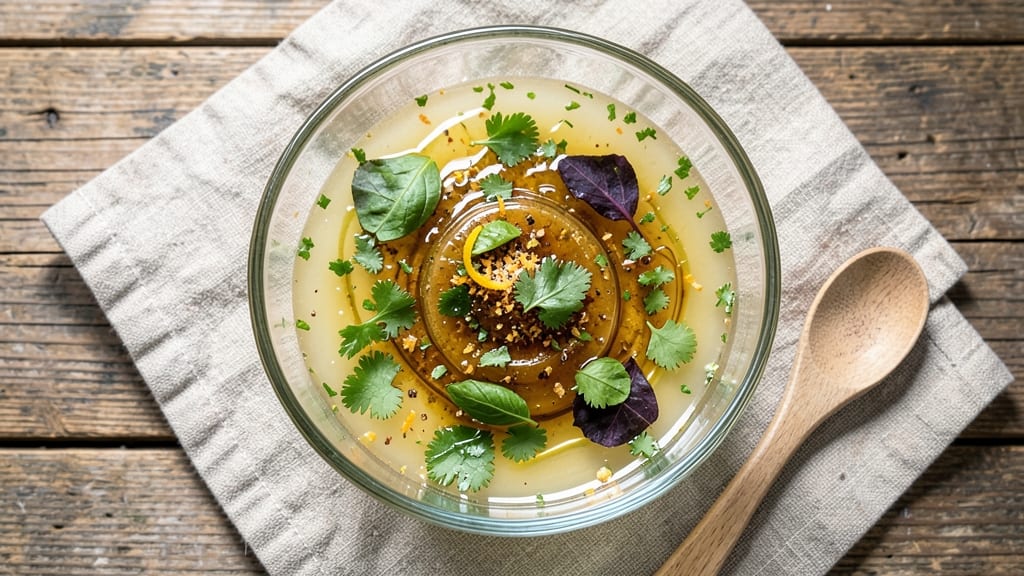
This vegan fruit salad dressing transforms fresh greens and fruit into vibrant, flavor-packed bowls with just 5 simple ingredients and 10 minutes of prep time. The secret lies in balancing tangy citrus with fresh herbs—creating a dressing that's bright, herbaceous, and completely plant-based.
I developed this recipe after realizing store-bought options often lacked the freshness and depth of homemade versions.
The dressing starts with a base of fresh lime juice and orange zest, which provide that signature citrus brightness without overpowering the salad. A touch of maple syrup balances the acidity, while extra-virgin olive oil adds richness and helps emulsify the dressing naturally.
Fresh herbs like cilantro and basil bring an aromatic complexity that elevates even the simplest fruit salad.
What makes this dressing truly special is its ability to enhance rather than overpower your ingredients. The citrus notes complement melons, berries, and tropical fruits beautifully, while the herbs add a fresh, garden-fresh quality.
It's the perfect balance of tangy, sweet, and herbal—ideal for summer meals or anytime you want to elevate your salad game.
Best of all, this dressing keeps well in the fridge for up to a week, making it perfect for meal prep. Simply shake before using to re-emulsify, and you're ready to transform any salad into a vibrant, flavorful dish. Let's get started!
Ingredients for vegan fruit salad dressing
Five ingredients that pack citrus brightness and herbal zing into every spoonful.
| Ingredient | Amount | Notes |
|---|---|---|
| Fresh Lime Juice 🍋 | ½ cup | Strained, no pulp preferred |
| Orange Zest 🍊 | 1 tbsp | From 1 large organic orange |
| Pure Maple Syrup 🍯 | 2 tbsp | Grade B for deeper flavor |
| Extra-Virgin Olive Oil 🫒 | ½ cup | Light, fruity variety preferred |
| Fresh Cilantro Leaves 🌿 | ½ cup | Stems removed, loosely packed |
| Fresh Basil Leaves 🌿 | ¼ cup | Torn, not chopped |
| Sea Salt 🧂 | ½ tsp | Fine grain preferred |
| Black Peppercorns 🌶️ | ¼ tsp | Freshly cracked |
The lime juice is where the magic starts—Mexican limes if you can find them, but regular limes work too. Whole Foods or Latin markets often carry them, but any grocery store lime will do. For zest, grab an organic orange (thicker skin means more flavor)—navel oranges work best. The maple syrup should be Grade B for that caramel depth, but Grade A in a pinch. Fresh herbs are non-negotiable here; dried will never give you that garden-fresh punch. I always double-check my cilantro for bugs—trust me, you don't want that in your dressing.
No lime juice? Key lime juice or even lemon juice works, but you'll lose that unique tartness. Stuck with dried herbs? Use half the amount of dried basil or cilantro, but expect less aroma. For a sweeter dressing, bump the maple syrup to 3 tablespoons. The olive oil can be swapped for avocado oil if you prefer a neutral taste. Want extra brightness? Add 1 teaspoon of apple cider vinegar—it cuts through the richness beautifully. Just don't skip the salt; it's the glue that holds everything together.
This dressing keeps like a dream—1 week in the fridge, sealed tight. I store it in a glass jar with a tight lid, and it stays fresh the whole time. Shake well before each use to re-emulsify that gorgeous citrus-oil blend. For meal prep, I make double batches—one for salads, one for drizzling over fruit bowls. Freezes beautifully too if you want to stash it for months. Just let it come to room temp before shaking, or it'll be ice cold when you're ready to use it.
Why You'll Love This Recipe
- No Chopping Needed: I swear by this one—just squeeze, zest, and stir. No knife skills required, just a lime, an orange, and a quick whisk. My lazy Sundays just got a whole lot brighter.
- Bright & Tangy Magic: That lime juice hits different—sharp, citrusy, with just enough sweetness from the maple to balance it out. The cilantro adds this fresh, herbal punch that makes it taste like a vacation in a jar.
- Meal Prep MVP: I make a big batch on Sundays and keep it in the fridge for the week. Drizzle it over greens, toss it with roasted veggies, or even use it as a marinade. It’s my go-to for when I’m too tired to think.
- Pantry-Friendly Flex: Honestly, this dressing costs me pennies and never goes to waste. The olive oil and maple syrup stretch far, and the citrus keeps it from turning rancid. Plus, it’s vegan, so it works for everyone—no substitutions needed.
Step-by-Step instructions for bright citrus-lime vinaigrette with herbal zing
This vibrant dressing elevates any fruit salad with its perfect balance of tangy citrus and fresh herbal notes.
Prepare the Citrus Base
Start by straining the 0.5 cup fresh lime juice through a fine-mesh sieve to remove any pulp—this ensures your dressing stays silky smooth without any gritty texture. I like to press the lime halves with a spoon to extract every last drop of juice. Set the strained juice aside in a small bowl.
Next, use a microplane to finely grate the 1 tablespoon orange zest from one large organic orange—avoid the white pith, as it can make the dressing bitter. The zest should look like tiny yellow confetti. Add this to the lime juice along with the 2 tablespoons pure maple syrup and 0.5 teaspoon sea salt. Stir vigorously with a whisk until the syrup and salt dissolve completely, creating a bright, aromatic citrus mixture.
Blend the Herbal Elements
In a separate small bowl, combine the 0.5 cup fresh cilantro leaves (stems removed) and 0.25 cup fresh basil leaves (torn, not chopped). The torn basil leaves will release their oils more effectively than chopped ones, giving your dressing a deeper herbal punch. Use your hands to gently crush the leaves against the sides of the bowl, breaking them down while preserving their vibrant color.
Transfer the crushed herbs to a blender or food processor. Pulse briefly until you achieve a coarse, chunky texture—this ensures the dressing has visible herbal flecks while still being smooth enough to drizzle. Don't over-blend or you'll lose the fresh, garden-fresh quality of the herbs.
Emulsify the Dressing
With the blender still running, slowly drizzle in the 0.5 cup extra-virgin olive oil while simultaneously pouring in the citrus mixture from Step 1. This gradual addition is key to creating a stable emulsion—if you add the oil too quickly, the dressing will separate. I like to work in very small streams, whisking continuously between additions.
Once all the oil and citrus mixture are incorporated, add the 0.25 teaspoon freshly cracked black peppercorns and pulse just once or twice to distribute the pepper without over-processing. The dressing should now have a glossy sheen and a thick, velvety consistency. Taste and adjust the balance: need more sweetness? Add another teaspoon of maple syrup. Too tangy? A pinch more salt will help.
Rest and Serve
Transfer the dressing to a clean jar or airtight container and let it rest at room temperature for at least 15 minutes before using. This resting period allows the flavors to meld together and the emulsion to fully stabilize. The dressing will thicken slightly as it sits, which is perfect for clinging to fruit salad ingredients.
When ready to serve, give the dressing a gentle stir. The vibrant green color from the herbs will contrast beautifully with any fruit salad, and the bright citrus notes will complement both sweet and tart fruits equally. Store any leftovers in the refrigerator for up to 5 days, shaking gently before each use to redistribute the ingredients.
Pro Tips For Making Vegan Fruit Salad Dressing
- STRAIN THE ZEST: Orange zest is the star here, but a few stray pith bits ruin the texture. Rub the zest against the fine holes of a microplane, then sift it through a fine-mesh sieve—even if it looks clean, you’ll catch the gritty bits that make your dressing taste bitter. (Yes, it’s extra work, but your mouth will notice.)
- REST THE CILANTRO: Chop cilantro right before mixing—it bruises and oxidizes fast. If you prep it early, store the stems and leaves separately in ice water, then drain and pat very dry before adding. Wet leaves dilute the dressing and turn it slimy.
- WHISK THE OIL LAST: Add olive oil to the citrus-maple mixture after everything else is emulsified. Pour it in slowly while whisking vigorously—this keeps the dressing silky, not split. If you dump it all in at once, you’ll end up with a separated oil slick on top.
- USE AGED MAPLE SYRUP: Cheap, young maple syrup tastes harsh and overpowering in dressings. Splurge on a dark, aged variety (like Grade B)—it’s richer, less sweet, and adds depth without cloying. (I keep a small bottle just for dressings; it’s worth it.)
Common mistakes when making perfect results
Over-Extracting Citrus
Using too much lime juice can make your dressing overly acidic, drowning out the delicate herbal notes. I’ve ruined dressings by squeezing limes until they’re bone dry—don’t do that!
Stick to 0.5 cup fresh lime juice (about 4-5 limes), and strain it well to avoid bitterness from seeds or pulp. If your dressing tastes sharper than a lemon drop, balance it with 1 extra teaspoon of maple syrup or a pinch of salt. 🍋
Skipping the Resting Time
Rushing to serve your dressing right after blending is a common mistake. The flavors need 15-30 minutes to meld, and the emulsion needs time to stabilize. I’ve seen dressings separate dramatically when poured over salads too soon.
Let it sit at room temperature—this also lets the herbs release their full aroma. If you’re in a hurry, blend it again right before serving to re-emulsify.
Using Dried Herbs Instead
Dried herbs lack the bright, fresh flavor of fresh ones and can make your dressing taste dull or even bitter.
If you’re out of fresh basil or cilantro, use half the amount of dried herbs (like ¼ teaspoon dried basil) and add a splash of apple cider vinegar (1 teaspoon) to mimic freshness. But honestly, fresh herbs are non-negotiable for that garden-fresh zing.
I keep a small pot of each on my windowsill year-round.
Adding Oil Too Quickly
Pouring all the olive oil into the citrus mixture at once will cause separation. Instead, drizzle it in slowly while blending or whisking continuously. This gradual addition helps create a stable emulsion.
If your dressing breaks, whisk in 1 teaspoon of Dijon mustard or 1 teaspoon of lemon juice to help bind it back together. A handheld immersion blender works wonders for quick fixes—just pulse until smooth again. 💫
Ignoring the Emulsion Test
Before serving, always do a quick emulsion check: Drizzle a tiny amount of dressing onto a plate and watch how it behaves. If it separates into oil and liquid, your dressing needs more emulsifying help.
A splash of 1 teaspoon of honey or maple syrup can often fix it by reducing surface tension. I also keep a small jar of mustard powder on hand—just a pinch can work magic for stubborn separations.
Overblending the Herbs
Pulsing the herbs into a paste turns your dressing into a green sludge. For the best texture, blend just until the herbs are coarsely chopped—you should still see visible flecks. This keeps the dressing vibrant and fresh-tasting.
If you accidentally over-blend, add a few ice cubes while blending to cool the mixture and help it thicken back up. The result? A dressing with texture and depth, not a murky green liquid. 🌿
Nutrition facts
Frequently asked questions
Can I make this dressing without fresh herbs?
While fresh herbs give the best flavor, you can substitute ¼ teaspoon dried basil and ¼ teaspoon dried cilantro if needed. For brightness, add 1 teaspoon apple cider vinegar to mimic freshness. The texture will be less vibrant, but the citrus notes will still shine.
How long does this dressing keep in the fridge?
This vegan fruit dressing stays fresh for up to 1 week when stored in an airtight glass jar. Always shake well before using to re-emulsify the oils. For longer storage, freeze for up to 3 months—just thaw overnight in the fridge before serving.
What fruits pair best with this citrus dressing?
This bright, herbal dressing complements melons, berries, tropical fruits, and citrus slices perfectly. It also works beautifully with mango, pineapple, and stone fruits. For a savory twist, try it with avocado or cucumber salads. The citrus notes enhance sweet fruits while the herbs add fresh contrast.
Why did my dressing separate?
Separation usually happens when oil and citrus mixture aren't properly emulsified. Fix it by whisking vigorously or blending with 1 teaspoon Dijon mustard or lemon juice. For prevention, add oil slowly while blending or whisking continuously. A quick pulse with an immersion blender often brings it back together.
Can I make this dressing sweeter or tangier?
For extra sweetness, add 1-2 teaspoons more maple syrup. For more tang, increase lime juice by 1 tablespoon. Always taste as you go—balance is key! The dressing should taste bright but not overpowering. Adjust in small increments to avoid ruining the flavor profile.