
Salads
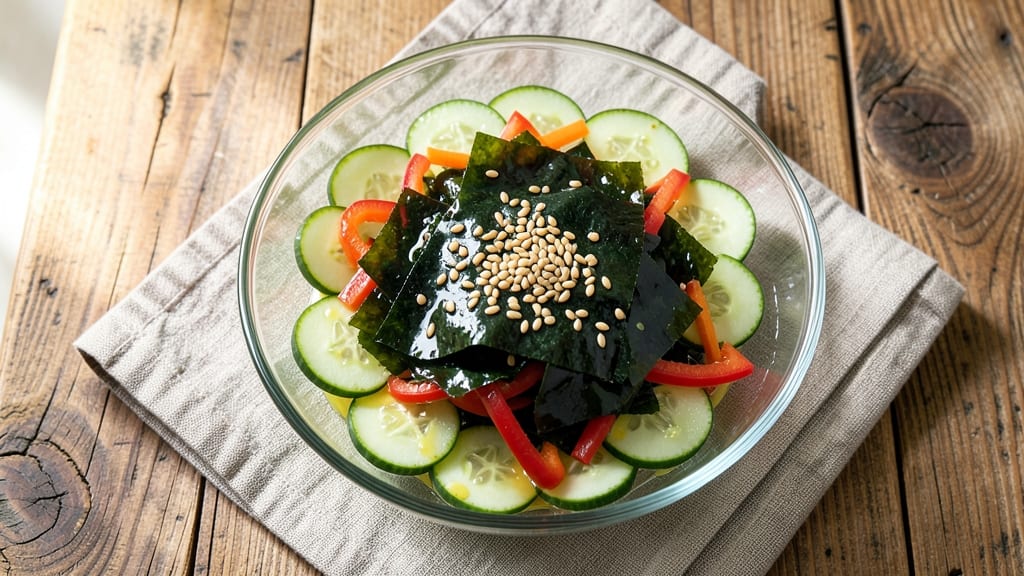
This vegan seaweed salad delivers ocean-fresh umami without a single drop of mayo or animal product. 🌊 The secret lies in properly preparing the seaweed—soaking, rinsing, and drying it just right to achieve that signature crisp-tender texture.
I developed this recipe after realizing how versatile and nutrient-dense seaweed could be in everyday meals, especially for those avoiding dairy or eggs.
What makes this salad special is its perfect balance of textures and flavors: crisp seaweed, fresh cucumber, tangy citrus, and nutty sesame seeds all come together in a dressing that's creamy without being heavy.
The umami-packed seaweed provides a satisfying crunch that stands up to bold flavors, making it a complete dish on its own or an excellent side. Nutritionally, this salad is a powerhouse—rich in iodine, fiber, and plant-based protein while being naturally low in calories.
The dressing uses tahini and rice vinegar for creaminess and tang, while sesame oil adds depth without overpowering. It's the kind of dish that feels both sophisticated and effortless to prepare. Serve this salad alongside sushi, grain bowls, or as a light lunch on its own.
The recipe scales perfectly for meal prep or entertaining, and the flavors only improve as it sits. Let's get started!
Ingredients for vegan seaweed salad
Eight crisp ingredients and a creamy dressing—no mayo, all umami.
| Ingredient | Amount | Notes |
|---|---|---|
| Dried Seaweed Sheets 🌿 | 4 sheets | Dried nori or wakame sheets |
| English Cucumber 🥒 | 1 whole | Seedless, peeled into ribbons |
| Red Bell Pepper 🌶️ | ½ cup | Thinly sliced, any color |
| Carrot 🥕 | 1 whole | Julienned or matchstick cut |
| Sesame Seeds 🌱 | 2 tbsp | White or black, toasted |
| Lemon Juice 🍋 | 2 tbsp | Freshly squeezed |
| Tahini 🥜 | ¼ cup | Sesame paste, unsweetened |
| Rice Vinegar 🍶 | 1 tbsp | Unseasoned, mild flavor |
| Sesame Oil 🫒 | 1 tbsp | Toasted sesame oil |
| Maple Syrup 🍯 | 1 tsp | Pure, grade B preferred |
| Garlic Cloves 🧄 | 2 cloves | Minced, fresh preferred |
| Salt 🧂 | ½ tsp | Sea salt, fine grain |
| Black Pepper 🌶️ | ¼ tsp | Freshly ground |
| Sesame Oil (extra) 🫒 | 1 tbsp | For drizzling, optional |
The seaweed is your star, so pick high-quality dried sheets—look for vibrant color and no yellowing. Asian markets or well-stocked grocery stores like Whole Foods carry the best selection. Wakame or nori both work, but nori has a more intense ocean flavor. If you can't find fresh cucumbers, substitute Persian cucumbers but peel them first—they're less watery. For the sesame seeds, toast them in a dry pan for 30 seconds to bring out their nutty aroma. The garlic should be fresh—pre-minced from jars lacks the punch needed to complement the seaweed's umami.
No tahini? Substitute peanut butter or cashew butter at the same amount, though the flavor will differ slightly. Running out of rice vinegar? Apple cider vinegar works in a pinch, but use half the amount since it's stronger. The maple syrup adds just enough sweetness to balance the tang—agave nectar is a 1:1 swap. For extra crunch, add thinly sliced radishes or shredded cabbage. If you're prepping ahead, store the dressing separately until ready to toss—it keeps for up to 5 days in the fridge, while the veggies stay fresh for 3 days if wrapped tightly.
Seaweed absorbs moisture fast, so pat it dry thoroughly after soaking—this ensures that crisp texture. The dressing will thicken in the fridge, so stir before using and add a splash of water if needed. Portion into airtight containers for meal prep, but keep the dressing on top to prevent sogginess. This salad holds up beautifully for 3 days in the fridge, with flavors deepening over time. For serving, drizzle with extra sesame oil and a sprinkle of toasted sesame seeds—that's where the magic happens.
Why You'll Love This Recipe
- No-Chop Needed: I swear by this trick—just tear the dried seaweed sheets by hand (no knife required) and slice the cucumber into thick half-moons. Five minutes of prep, zero fuss, and you’re ready to go.
- Umami Bomb: That first bite of toasted sesame seeds on crisp seaweed? It’s like a flavor explosion. The carrot adds sweetness, the bell pepper brings brightness, and the seaweed’s natural saltiness ties it all together—no weird aftertaste, just pure satisfaction.
- Lunchbox Hero: Between us, this salad holds up way better than most veggie mixes. Pack it in a jar with the dressing separate, and by lunchtime, the flavors meld into something even better. My kids actually finish their lunches now—(yes, even on a Tuesday).
- Budget Crunch Saver: Dried seaweed lasts forever in the pantry, and the rest of the ingredients are cheap staples. I make a big batch for the week, and it’s always the first thing gone—no sad wilted greens here. Plus, it’s way cheaper than takeout.
Step-by-step instructions for vegan seaweed salad
Transform simple ingredients into a vibrant, umami-rich salad that's fresh, crunchy, and completely plant-based.
👨🍳 Step 1: Prepare the Crunchy Vegetable Base
Start by cutting the 1 whole English cucumber into long, thin ribbons using a vegetable peeler or sharp knife. You'll want about 4-5 ribbons per cucumber. Next, thinly slice the 0.5 cup red bell pepper into matchstick-sized strips and julienne the 1 whole carrot into thin, even matchsticks. I like to keep these veggies separate until assembly—their crisp texture contrasts beautifully with the seaweed.
Place the cucumber ribbons in a large mixing bowl. Add the sliced red bell pepper and carrot matchsticks, tossing gently to distribute evenly. The vibrant colors will create visual appeal, but more importantly, these vegetables provide the perfect crunch that balances the tender seaweed. For best results, work quickly to prevent the cucumber from becoming too soft.
🥘 Step 2: Toast the Sesame Seeds and Hydrate the Seaweed
While you prepare the vegetables, toast the 2 tbsp sesame seeds in a dry skillet over medium heat for 2-3 minutes, stirring constantly until they turn golden brown and smell nutty. Transfer them immediately to a small bowl to cool—they'll crisp up further as they cool.
In a separate bowl, soak the 4 sheets dried seaweed sheets in warm water for 5-7 minutes until pliable but still holding their shape. Drain well and gently pat dry with paper towels. The seaweed should be soft enough to handle but not mushy. I find using a clean kitchen towel works best for removing excess water without tearing the delicate sheets.
🍳 Step 3: Create the Tahini-Lemon Dressing
In a medium bowl, whisk together the 0.25 cup tahini, 2 tbsp lemon juice, 1 tbsp rice vinegar, 1 tbsp sesame oil, 1 tsp maple syrup, 2 cloves minced garlic, 0.5 tsp salt, and 0.25 tsp black pepper. Start with a whisk to break up the tahini completely, then switch to a fork to incorporate all ingredients smoothly.
The dressing should be thick but pourable. If it's too thick, add 1-2 teaspoons of water at a time until it reaches a creamy consistency. This dressing is the heart of the salad—it provides the umami depth and tangy brightness that makes this dish so satisfying. Taste as you go and adjust the lemon or maple syrup to balance the flavors to your preference.
🥘 Step 4: Assemble and Marinate the Salad
Add the hydrated seaweed sheets to the bowl with the prepared vegetables. Drizzle the tahini-lemon dressing over the top and gently toss everything together with clean hands or a spatula. The seaweed should be evenly coated in the dressing while maintaining its texture. If the mixture seems too dry, add 1-2 teaspoons of water to help the dressing cling.
Let the salad marinate in the refrigerator for at least 15 minutes before serving. This allows the flavors to meld together and the seaweed to absorb the dressing completely. The longer it sits, the more vibrant and cohesive the flavors become. For best results, serve within 2 hours to maintain the crunch of the vegetables.
🍽️ Step 5: Finish and Serve
Before serving, sprinkle the toasted sesame seeds evenly over the salad. Drizzle with an additional 1 tbsp sesame oil if desired for extra richness. The seeds add a delightful crunch and visual contrast to the soft seaweed and vegetables.
Serve immediately while the vegetables are still crisp. This salad works beautifully as a light lunch on its own or as a refreshing side dish alongside grilled tofu or steamed rice. The combination of textures—crisp vegetables, tender seaweed, and toasted seeds—makes every bite satisfying and full of flavor. Enjoy while fresh for the best experience!
Pro Tips For Making Vegan Seaweed Salad
- SOAK SEAWEED 10 MINUTES: Dried sheets need a good soak—10 minutes in warm (not boiling) water softens them just enough to hold dressing without turning mushy. I used to rush this, and the texture always felt off.
- SCORE CUCUMBER THINLY: Use a mandoline or sharp knife to slice English cucumber paper-thin—about 1/16-inch. Thicker slices stay soggy, and thinner means more surface area for flavor. (Yes, it’s tedious, but it’s worth it.)
- TOSS VEGETABLES LAST: Add raw bell pepper strips and shredded carrot right before serving—they bruise in dressing. If prepping ahead, keep them separate and toss in just as you’re plating.
- TOAST SESAME SEEDS: Dry-toast sesame seeds in a small pan over medium-low for 1-2 minutes until fragrant. Freshly toasted seeds add depth; store-bought ones taste flat. (Skip this, and your salad loses that nutty punch.)
Creative variations of these flavors
Asian-Inspired Sushi Bowl
Transform this salad into a complete meal by serving it over steamed sushi rice with avocado slices and edamame. The umami from the seaweed pairs perfectly with the creamy avocado and nutty edamame, creating a balanced, protein-rich bowl.
I like to drizzle with extra sesame oil and top with toasted sesame seeds for added texture. 🍱
Mediterranean Twist
For a Mediterranean-inspired variation, swap the cucumber for thinly sliced red onion and add cherry tomatoes halved. Replace the tahini dressing with a lemon-herb version using 2 tbsp olive oil, 1 tbsp lemon juice, 1 tsp dried oregano, and a pinch of red pepper flakes.
Finish with kalamata olives and feta cheese (optional for vegan, omit) for a bright, zesty twist.
Spicy Thai Fusion
Add a kick with a Thai-inspired dressing: mix 2 tbsp coconut aminos, 1 tbsp lime juice, 1 tbsp rice vinegar, 1 tsp maple syrup, 1 tsp sriracha, and 1 tsp grated ginger.
Toss with the salad and top with crushed peanuts and thinly sliced scallions. The spicy-sweet balance elevates the seaweed's natural umami, making it a bold, flavorful dish. 🌶️
Protein-Packed Power Salad
Boost nutrition by adding 1 cup cooked quinoa or chickpeas for extra protein. For a smoky flavor, toss in ½ cup roasted sweet potatoes or grilled tofu cubes.
The quinoa adds heartiness, while chickpeas bring a satisfying crunch. This version is perfect for meal prep—store components separately and assemble when ready to eat.
Citrus-Ginger Zing
Brighten the salad with a citrus-ginger dressing: whisk 3 tbsp orange juice, 1 tbsp rice vinegar, 1 tbsp tahini, 1 tsp grated ginger, and ½ tsp maple syrup.
The citrus cuts through the richness of the tahini, while ginger adds a refreshing zing. Garnish with mandarin orange segments and toasted coconut flakes for a tropical vibe. 🍊
Crunchy Cabbage Crunch
For extra crunch, add ½ cup shredded purple cabbage or green cabbage. The cabbage holds its texture longer than cucumber, making this salad ideal for meal prep.
Pair it with crispy baked chickpeas for added protein and a satisfying crunch. The cabbage’s slight bitterness balances the sweetness of the maple syrup in the dressing.
Nutrition facts
Frequently asked questions
Can I use fresh seaweed instead of dried?
Fresh seaweed works but requires different prep. Rinse it thoroughly to remove sand and salt, then pat completely dry before using. Fresh seaweed is more delicate and may not hold its texture as well as dried sheets. For best results, use it immediately after preparation rather than storing.
How do I store leftover seaweed salad?
Store the dressing separately in an airtight container for up to 5 days. Keep the vegetables and seaweed in another container for 3 days maximum. When ready to eat, toss everything together and add a splash of water if needed to restore moisture. The seaweed will soften further but remains flavorful.
What's the best way to remove excess water from seaweed?
After soaking, place the seaweed between clean kitchen towels or paper towels. Press gently but firmly to absorb moisture without tearing. For extra crispiness, you can even pat it dry with a clean cloth after initial drying. This step is crucial for maintaining that signature crunch in your salad.
Can I make this salad without tahini?
Yes! Substitute with 2 tbsp peanut butter or cashew butter for a similar creamy texture. For a lighter option, use 2 tbsp vegan mayo mixed with 1 tbsp lemon juice. The flavor will differ slightly, but the salad will still be delicious and cohesive.
Why does my seaweed turn slimy?
Over-soaking or improper drying causes sliminess. Always soak for only 5-7 minutes and drain completely. If it's already slimy, try patting it dry again with paper towels or even lightly toasting it in a dry pan for 10-15 seconds to restore crispness.