
Salads
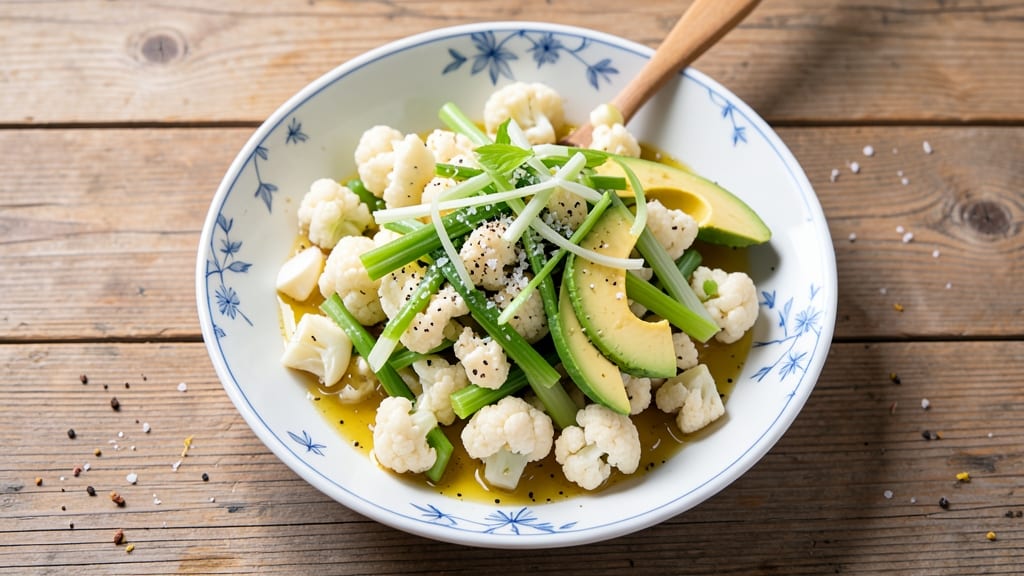
This keto cauliflower potato salad delivers all the creamy, herby goodness of classic potato salad—without a single carb. 💛 After perfecting the texture for my family's low-carb lifestyle, I discovered roasting the cauliflower creates that satisfying bite traditionally found only in potatoes.
The secret lies in the dressing: a rich blend of mayo, mustard, and fresh herbs that coats every floret while keeping it light enough for summer gatherings.
The beauty of this recipe is its versatility—it works as a side dish for grilled meats or as a satisfying main when paired with protein. I've tested it with everything from steak to chicken, and it always brings the meal together.
The key preparation steps are simple: roast the cauliflower until tender-crisp, dice the celery and red onion for fresh crunch, and let the dressing infuse for at least 30 minutes before serving. This waiting time allows all flavors to meld perfectly.
What makes this salad truly special is how it satisfies cravings without compromising dietary needs. The creamy herb dressing provides that familiar potato salad richness, while the cauliflower delivers the satisfying texture.
Each bite offers a perfect balance of fresh herbs, tangy mustard, and the subtle sweetness of roasted cauliflower. It's the kind of dish that converts even the most skeptical keto skeptics.
Perfect for meal prep—this salad keeps beautifully in the refrigerator for up to 5 days, making it ideal for busy weeks. The flavors actually improve as it sits, allowing the herbs to brighten and the cauliflower to absorb even more dressing.
Serve it at picnics, potlucks, or as a light lunch with your favorite protein. Here's how to make it perfectly every time.
Ingredients for cauliflower potato salad recipe keto
Roasted cauliflower florets, fresh herbs, and a tangy keto dressing—all you need for this satisfying side.
| Ingredient | Amount | Notes |
|---|---|---|
| Fresh Cauliflower 🥬 | 1 ½ lb | Cut into florets, similar size |
| Avocado Oil 🫒 | 2 tbsp | For roasting, high smoke point |
| Salt 🧂 | 1 tsp | Kosher salt preferred |
| Black Pepper 🌶️ | ½ tsp | Freshly ground for best flavor |
| Garlic Cloves 🧄 | 3 cloves | Minced for roasting |
| Celery Stalks 🥬 | 2 whole | Diced, for crunch |
| Red Onion 🧅 | ¼ cup | Finely diced, for freshness |
| Keto Mayo 🥫 | ¾ cup | Avocado oil-based preferred |
| Yellow Mustard 🟡 | 1 tbsp | Dijon or classic |
| Fresh Dill 🌿 | ¼ cup | Chopped, for herby flavor |
| Fresh Chives 🌱 | ¼ cup | Chopped, for freshness |
| Lemon Juice 🍋 | 1 tbsp | Freshly squeezed |
| Apple Cider Vinegar 🍶 | 1 tbsp | For tangy balance |
| Sugar-Free Sweetener 🍯 | 1 tsp | Erythritol or stevia |
The cauliflower is the star here, so pick a fresh head—look for bright white florets with no yellowing. I always grab mine from Trader Joe's because they're consistently fresh, but any grocery store works. Cutting the florets evenly is key—they should all be about the same size so they roast uniformly. For the dressing, keto mayo is non-negotiable—regular mayo has too many carbs. Primal Kitchen or Sir Kensington's are my go-tos, but any avocado oil-based mayo will work. If you can't find keto mayo, make your own by mixing avocado oil with Dijon mustard and a pinch of salt.
No fresh dill? Dried dill at one-third the amount works in a pinch, but fresh is best. The red onion can be swapped for green onion if you prefer milder flavor. For extra tang, add a splash of apple cider vinegar—I sometimes double it if I'm feeling bold. If you're missing the sweetener, skip it entirely—the lemon juice and mustard provide enough balance. The garlic is important, but don't overdo it—three cloves is perfect. Too much can make the salad taste bitter. For the roasting, avocado oil has the highest smoke point, so it won't burn at 425°F like olive oil might.
Roasted cauliflower keeps its texture best when refrigerated in an airtight container for up to 5 days. The dressing separates slightly, so give it a good stir before serving. If you're prepping ahead, make the dressing first and store it separately—it'll keep for 1 week in the fridge. For extra flavor, let the salad sit for 30 minutes before serving—the cauliflower absorbs the dressing and the flavors meld beautifully. This salad is perfect for meal prep—just toss everything together the night before and enjoy cold the next day.
Why You'll Love This Recipe
- Here’s what sold me: this keeps perfectly for 4 days in the fridge. Cold or at room temp, it’s still great as a side for grilled chicken or wrapped in lettuce for a low-carb lunch. Honestly, I make it every Sunday now.
- One-Pan Wonder: I swear by this—just toss cauliflower florets in avocado oil, roast until golden, and boom. No boiling, no peeling, no mess. The garlic cloves get crispy on the edges while the cauliflower stays tender inside.
- Crispy-Garlic Magic: Between us, that roasted garlic is where this salad actually shines. I crush the cloves into the oil first, let them caramelize, and suddenly you’ve got this rich, nutty depth that makes it taste like a restaurant dish—not just a keto hack.
- Meal-Prep MVP: Here’s what sold me: this keeps perfectly for 4 days in the fridge. Cold or at room temp, it’s still great as a side for grilled chicken or wrapped in lettuce for a low-carb lunch. Honestly, I make it every Sunday now.
Step-by-step instructions for creamy keto cauliflower salad
Here's how to make this rich, creamy salad that's perfect for keto—no mayo in sight!
🔥 Step 1: Roast the Cauliflower Until Tender and Golden
Preheat your oven to 425°F and line a baking sheet with parchment paper. Cut the 1.5 lb fresh cauliflower into even florets—about 2-inch pieces. Toss them with 2 tablespoons avocado oil, 1 teaspoon salt, and ½ teaspoon black pepper until they're evenly coated.
Spread the florets in a single layer on the baking sheet, leaving space between them for even browning. Roast for 20-25 minutes until the edges are golden brown and the cauliflower feels tender when pierced with a fork. Here's the thing—don't overcrowd the pan or they'll steam instead of crisp up. If your oven runs hot, check at the 20-minute mark.
👨🍳 Step 2: Sauté the Aromatics for Maximum Flavor
While the cauliflower roasts, heat 1 tablespoon avocado oil in a large skillet over medium heat. Add the 3 minced garlic cloves and sauté for 30 seconds until fragrant—don't let them brown or they'll turn bitter. Add the 2 diced celery stalks and ¼ cup finely diced red onion, cooking for 5-6 minutes until softened and golden.
This step builds the flavor foundation. You'll know it's ready when the celery loses its crispness and the onions turn translucent. If the vegetables start sticking, add another ½ tablespoon avocado oil—they should sizzle gently but not burn. Remove from heat and let cool slightly before mixing with the cauliflower.
🥘 Step 3: Whisk Together the Creamy Keto Dressing
In a large bowl, combine the ¾ cup keto mayo, 1 tablespoon yellow mustard, 1 tablespoon lemon juice, 1 tablespoon apple cider vinegar, and 1 teaspoon sugar-free sweetener. Whisk vigorously for 1 minute until completely smooth and well blended. The dressing should be thick but pourable—if it looks too stiff, add 1 tablespoon water to loosen it.
Here's where the magic happens: fold in the ¼ cup chopped fresh dill and ¼ cup chopped fresh chives while whisking. These herbs add bright, fresh flavor that cuts through the richness. Taste the dressing and adjust seasoning with more salt or sweetener if needed. I promise you'll want to eat it straight from the spoon—it's that good!
🥘 Step 4: Combine Everything for Perfect Texture
Add the roasted cauliflower and sautéed vegetables to the dressing bowl. Using a large spoon or your hands, gently fold everything together until the cauliflower is evenly coated. The goal is to distribute the dressing without mashing the cauliflower—you want to keep those beautiful roasted edges intact. Let the salad sit for 10 minutes to allow the flavors to meld together.
This waiting period is crucial. It lets the cauliflower absorb the dressing properly and the flavors develop fully. If you're serving this immediately, give it at least 5 minutes before tasting—you'll notice a big difference in how cohesive everything tastes. For best results, chill for 30 minutes before serving to let the flavors deepen even more.
🍽️ Step 5: Serve Chilled with Fresh Garnishes
Transfer the salad to a serving bowl and garnish with additional chopped fresh dill and chives for a pop of color and freshness. Serve chilled—this salad tastes best when cold, allowing the flavors to shine. The texture should be creamy from the dressing, with tender cauliflower and crisp celery providing contrast.
Each bite should deliver that rich, creamy flavor without the guilt of traditional mayo. The roasted cauliflower adds a satisfying texture, while the fresh herbs keep it bright and vibrant. This keto-friendly version is perfect for summer picnics, BBQs, or as a side dish that actually feels indulgent. Enjoy immediately while the flavors are at their peak!
Pro Tips For Making Cauliflower Potato Salad Recipe Keto
- RICE CAULIFLOWER FIRST: Cut the cauliflower into even 1-inch florets and boil them in salted water for 5 minutes before adding to the salad. I used to skip this, thinking it’d get soggy later—wrong. This step guarantees tender, bite-sized pieces that hold up instead of turning to mush when mixed with dressing.
- SALT THE WATER: Use 1½ teaspoons of salt per 4 cups of water when boiling the cauliflower. I learned this the hard way after tasting bland, flavorless florets. Salt early and often—this isn’t the time to be shy.
- GARLIC MINCE SMALL: Finely mince the garlic into almost a paste—think 1mm pieces or less. Whole cloves or rough chopping means you’ll taste them, not the salad. A few extra seconds with a knife makes all the difference.
- COOL BEFORE MIXING: Drain the cauliflower and spread it on a baking sheet to cool completely before tossing with dressing. I used to mix it warm, and the avocado oil would just pool. Cold florets absorb the dressing evenly—no greasy clumps.
Make-ahead tips for this recipe
Prep Ahead Strategy
Make the dressing first—it keeps perfectly in an airtight container for 1 week in the fridge. I always prep mine on Sunday so it's ready for the week.
Store the roasted cauliflower separately in the fridge for up to 5 days—just toss it with the dressing when you're ready to serve. This two-part prep saves time and keeps everything fresh. 💡
Roasting Timing
Roast the cauliflower 2 days ahead if possible. The flavor deepens as it sits, and the texture stays perfect when stored properly. Cool it completely before refrigerating in a sealed container.
I've found that pre-roasted cauliflower actually tastes better in salads because it absorbs more dressing over time. Trust me, this is a game-changer for busy weeknights.
Dressing Adjustments
Double the dressing recipe and store it in 2 small jars in the fridge. This way, you can grab exactly what you need without measuring each time. I like to keep one jar for salads and another for quick sandwich spreads.
The dressing stays fresh for 7 days—just give it a good stir before using, as it may separate slightly. 🥫
Herb Storage Tip
Chop all your herbs at once and store them in ice cube trays filled with water, then freeze. Once frozen, transfer the herb cubes to a freezer bag. This keeps them fresh for 3 months—perfect for when you're prepping ahead.
Just add a cube or two to your salad when serving. It's like having fresh herbs on demand without the wilt!
Portion Control
Divide the salad into 4 individual containers before storing. This makes it perfect for lunches or quick snacks. I use glass containers with snap-on lids—I swear by Pyrex for keeping salads fresh.
Portioning also helps prevent sogginess because you're not storing the whole batch together. Plus, it's easier to grab and go when you're in a hurry. 📅
Reheating Secrets
If you need to reheat, microwave individual portions for 1 minute on 50% power to warm through without drying out the cauliflower. For a crispier texture, transfer to a skillet and warm over low heat for 2-3 minutes.
I usually avoid reheating because this salad tastes best cold, but sometimes I just can't resist having leftovers for lunch. 🔥
Nutrition facts
Frequently asked questions
Can I use regular mayo instead of keto mayo in this recipe?
Regular mayo contains hidden carbs that will take this dish off keto. For the best results, use an avocado oil-based keto mayo like Primal Kitchen or Sir Kensington's. If you're in a pinch, you can make a quick substitute by mixing ½ cup avocado oil with ½ cup Dijon mustard and a pinch of salt—this mimics the mayo texture while keeping it keto-friendly.
How do I get the cauliflower to taste more like traditional potato salad?
The secret is in the roasting and dressing! For extra potato-like flavor, add 1 teaspoon smoked paprika to the roasting oil and include ½ cup diced pickles in the final mix. The acidity from the pickles and smoky notes bridge the flavor gap beautifully. Also, let the salad chill for 30 minutes before serving—this allows the flavors to meld more like classic potato salad.
What can I substitute if I don't have fresh dill or chives?
No problem! For dill, use 1 teaspoon dried dill (reduce to one-third the fresh amount). For chives, try 1 tablespoon chopped green onion or ½ teaspoon onion powder. If you're missing both, add 1 extra tablespoon of lemon juice and ½ teaspoon garlic powder to boost brightness. The salad will still taste delicious—just slightly different in flavor profile.
Is this salad safe to eat if I'm pregnant or have a weakened immune system?
This recipe is safe because the cauliflower is fully cooked through roasting (internal temperature reaches 165°F) and the dressing ingredients are all shelf-stable or properly refrigerated. However, always use pasteurized mayo and ensure your fresh herbs are thoroughly washed. If you're concerned, you can add ½ teaspoon extra lemon juice to the dressing for additional acidity, which helps preserve the salad longer.
Can I make this gluten-free too?
This recipe is already gluten-free, but double-check your keto mayo label to confirm it contains no gluten additives. The mustard used in the recipe should be gluten-free (Dijon is typically safe), but always verify the brand. If you're avoiding all potential cross-contamination, use a dedicated gluten-free mayo like Hellmann's GF version.