
Salads
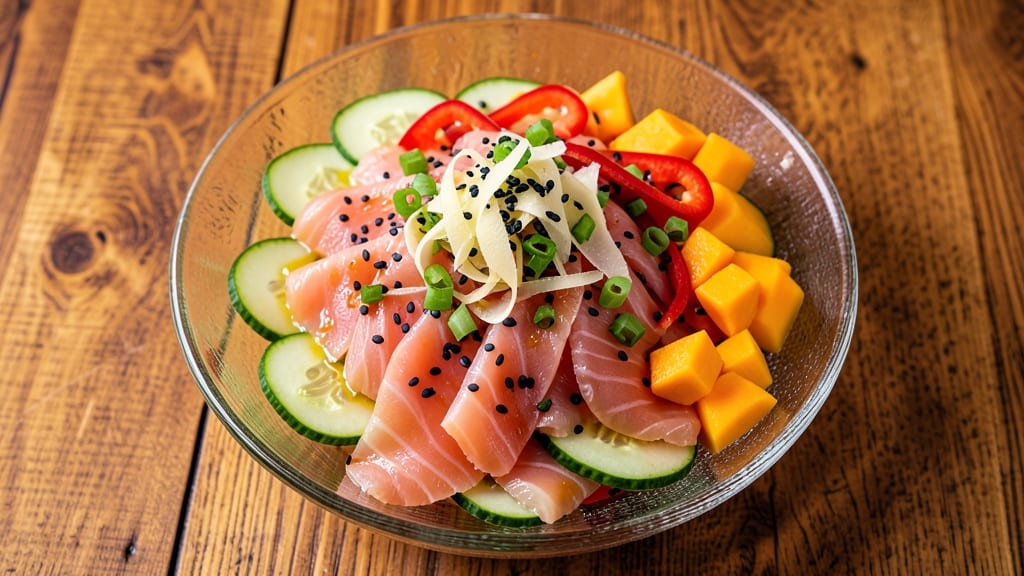
This Chinese New Year raw fish salad recipe brings luck and freshness to your table with crisp vegetables, tender fish, and a citrus-ginger dressing that sparkles with prosperity. 💛 The dish combines delicate sashimi-grade fish with vibrant mango, cucumber, and scallions, all tossed in a bright dressing that balances sweet, tangy, and spicy notes—perfect for celebrating the Year of the Dragon.
The secret lies in using fresh, high-quality ingredients and precise cutting techniques to create the right texture contrast. Thinly sliced fish stays tender yet firm, while crisp vegetables add crunch, and the dressing—made with rice vinegar, sesame oil, and a touch of chili—ties everything together with bold flavor.
Food safety is critical, so always use sashimi-grade fish and handle it carefully.
What makes this dish special is its cultural significance: the red and gold garnishes symbolize good fortune, while the fresh ingredients represent renewal and vitality. Serve it chilled for a refreshing start to your celebration, or pair it with steamed dumplings for a complete feast.
The combination of textures and flavors will leave your guests impressed and full of joy.
This recipe is designed for both beginners and experienced cooks, with clear steps to ensure success. Whether you're preparing for a family gathering or a quiet celebration, this dish delivers elegance and tradition in every bite. Let's bring luck to your table with this vibrant, flavorful salad.
Ingredients for chinese new year raw fish salad
Fresh, vibrant ingredients that celebrate prosperity with every bite and crisp texture.
| Ingredient | Amount | Notes |
|---|---|---|
| Sashimi-Grade Salmon 🐟 | 8 oz | Thinly sliced, skinless, chilled |
| Ripe Mango 🥭 | 1 whole | Diced into small cubes |
| Persian Cucumber 🥒 | 1 whole | Thinly sliced lengthwise |
| Green Onions 🧅 | 4 whole | Thinly sliced, white and green parts |
| Red Bell Pepper 🌶️ | ½ whole | Thinly sliced into strips |
| Sesame Seeds 🌾 | 1 tbsp | Toasted for garnish |
| Rice Vinegar 💧 | ¼ cup | Unseasoned, mild flavor |
| Sesame Oil 🫒 | 1 tbsp | Toasted sesame oil preferred |
| Fresh Ginger 🧄 | 1 tbsp | Finely grated, peeled |
| Honey 🍯 | 1 tbsp | Wildflower preferred |
| Sriracha 🌶️ | 1 tsp | Adjust for spice preference |
| Salt 🧂 | ½ tsp | Diamond Crystal kosher |
| Lime Juice 🍋 | 2 tbsp | Freshly squeezed |
| Red Food Coloring 🍬 | 1 tsp | Natural beet powder alternative |
| Gold Leaf 💛 | 1 sheet | Edible, decorative |
The sashimi-grade salmon is non-negotiable for this dish—look for vacuum-sealed packages at Whole Foods or your local seafood counter with a bright pink hue and no fishy odor. If you can't find salmon, sashimi-grade tuna or yellowtail work equally well, but avoid any fish with strong flavor. For the mango, choose firm yet ripe fruit—press gently near the stem, and it should yield slightly but not be mushy. The Persian cucumber is ideal for its crispness, but if unavailable, regular cucumber works when peeled and seeded. Toast your sesame seeds in a dry pan for 30 seconds until fragrant—this enhances their nutty flavor significantly.
No rice vinegar? Substitute apple cider vinegar, though the flavor will be slightly sharper. For a less spicy kick, reduce the sriracha to half a teaspoon or swap for gochujang paste at one-third the amount. The honey can be replaced with maple syrup for a vegan option, though the flavor profile shifts slightly. If you're avoiding red food coloring, blend cooked beets into a paste for a natural alternative—add just a teaspoon to achieve the same vibrant hue. For the gold leaf, edible gold flakes from specialty stores are a budget-friendly alternative, though they won't shimmer as dramatically.
Store the raw fish and dressing separately in airtight containers in the fridge for up to 2 days, tossing just before serving. The mango and cucumber should be prepped last to maintain crispness—keep them submerged in cold water until ready to use. The dressing keeps for 5 days in the fridge, and the gold leaf can be stored in its original packaging for up to 6 months in a cool, dry place. For a crowd-friendly version, double the ingredients and prepare components ahead, assembling just before serving to preserve texture.
Why You'll Love This Recipe
- No-Cook Magic: I swear by this when I’m too hot to turn on the stove—just slice, toss, and serve. The salmon stays perfectly fresh, and the mango-cucumber combo adds a refreshing crunch without a single pan in sight.
- Sweet-Savory Balance: That first bite of ripe mango and crisp Persian cucumber with the clean, buttery salmon? It’s like a party in your mouth. The red bell pepper adds just enough heat to keep it interesting, and the green onions tie it all together with a bright finish.
- Leftover Hero: Between us, this salad keeps beautifully for days—way better than takeout. I’ll make a big batch on Sunday, pack it for lunches, and still have half left for a quick dinner. The salmon stays tender, and the dressing just gets more flavorful over time.
- Celebration Ready: Honestly, this is my go-to for Chinese New Year gatherings—elegant but effortless. Serve it on a platter with rice crackers, and suddenly you’ve got a dish that feels fancy but takes less time than boiling water for noodles. Guests will think you slaved all day.
Step-by-step instructions for Chinese New Year raw fish salad
This vibrant dish combines fresh flavors and symbolic ingredients for prosperity—let's assemble it precisely.
👨🍳 Step 1: Prepare the Fresh Vegetable Components
Begin by peeling and dicing the 1 whole ripe mango into ½-inch cubes, ensuring each piece is uniform for balanced texture. Place them in a large mixing bowl. Next, thinly slice the 1 whole Persian cucumber lengthwise into ¼-inch strips, removing seeds to prevent excess moisture.
Slice the 0.5 whole red bell pepper into ¼-inch strips and thinly slice the 4 whole green onions, separating the white and green parts. Add these to the bowl with the mango. The combination of crisp cucumber, sweet mango, and pepper creates a perfect crunch contrast that's essential for this dish.
🍳 Step 2: Create the Signature Dressing
In a small bowl, whisk together the 0.25 cup rice vinegar, 2 tablespoons lime juice, 1 tablespoon sesame oil, 1 tablespoon honey, 1 tablespoon finely grated fresh ginger, 1 teaspoon sriracha, and 0.5 teaspoon salt. The mixture should be smooth and slightly thick—this balance of tangy, sweet, and spicy creates the perfect harmony.
Add 1 teaspoon red food coloring to the dressing and stir until fully dissolved. This subtle color enhancement represents prosperity in Chinese culture, giving your dish both visual appeal and symbolic meaning. Taste and adjust seasoning if needed, but be mindful that the salmon will add its own flavor profile.
🥘 Step 3: Assemble the Base Salad
Pour the dressing over the prepared vegetable mixture in the large bowl and gently toss everything together. The vegetables should be evenly coated with the vibrant dressing. Let this mixture sit for 5 minutes to allow the flavors to meld—this resting period ensures each bite delivers balanced taste.
While the vegetables marinate, carefully slice the 8 oz sashimi-grade salmon into ¼-inch thick slices against the grain. Arrange the salmon slices on top of the vegetable mixture, keeping them whole rather than chopped. The raw fish should be the star presentation element, symbolizing abundance and good fortune.
🔪 Step 4: Final Garnish and Presentation
Lightly toast the 1 tablespoon sesame seeds in a dry skillet over medium heat for 1-2 minutes until golden brown and fragrant. Immediately sprinkle them over the entire salad, concentrating on the salmon slices. The nutty aroma will complement the fresh flavors beautifully.
Finally, carefully place the 1 sheet gold leaf on top of the salmon slices, arranging it to create an elegant pattern. The gold leaf not only adds visual luxury but also carries symbolic significance for wealth and prosperity in Chinese culture. Serve immediately to maintain the freshest texture and presentation.
Pro Tips For Making Chinese New Year Raw Fish Salad
- Slice Salmon Thin: Use a sharp, long knife—not a serrated one—and cut the salmon against the grain at ¼-inch thickness. Thicker slices look like they’re from the butcher, and thinner ones get soggy faster. I learned this the hard way when my first batch turned into a mushy pile by lunch.
- Dry the Cucumber: Pat the Persian cucumber thoroughly with paper towels before slicing—no skipping this, even if it feels tedious. The moisture makes the salad watery, and no one wants a sad, limp salad when you’re serving it for luck and prosperity.
- Salt the Fish Last: Hold off on the soy sauce or salt until right before serving. Sashimi-grade salmon is delicate, and even a little salt can start breaking down the texture. Toss it in the bowl just as you’re plating—your guests will notice the difference.
- Dice the Bell Pepper Small: Cut the red bell pepper into tiny cubes (about ¼-inch), not thick strips. Big chunks throw off the balance of textures in the salad, and you want every bite to have that crisp, sweet, and fresh contrast. I used to skip this, and the dish always felt uneven.
Common mistakes when making your chinese new year raw fish salad
Skipping the Sashimi Grade
Using non-sashimi-grade fish is the most dangerous mistake—this dish relies on ultra-fresh, properly handled raw fish. Never substitute with regular grocery store fish, which may contain parasites or bacteria. Look for vacuum-sealed packages labeled "sashimi-grade" at specialty seafood counters or trusted Asian markets.
If you're unsure, ask your fishmonger to confirm the fish was flash-frozen at -4°F (-20°C) for 7 days to kill parasites.
Pro tip: Salmon, tuna, or yellowtail are safest, but avoid mackerel or swordfish—they have higher fat content that can spoil faster. Always check for bright color and no fishy odor before purchasing. 💛
Overcrowding the Bowl
Packing the salad bowl too tightly causes soggy vegetables and mushy mango from released juices. Arrange ingredients in single layers—first cucumber, then mango, then peppers—before adding the dressing. This keeps textures crisp. I also recommend tossing vegetables separately in batches before combining to prevent bruising.
For extra crispness, chill all vegetables in the fridge for 30 minutes before assembling. This firms up the mango and keeps cucumbers from wilting. Use a mandoline slicer for even cucumber strips—thinner than ¼-inch ensures they stay crunchy.
Underestimating Dressing Prep
Rushing the dressing preparation leads to uneven flavor distribution. Whisk all ingredients thoroughly for at least 30 seconds to emulsify the sesame oil properly. The ginger and honey need time to dissolve completely—let it sit for 5 minutes before using.
I've seen people skip the red food coloring, but it's key for that festive CNY look while keeping flavors balanced.
Taste the dressing before adding it to the salad—adjust salt or lime juice as needed. Remember, the salmon's natural flavor will mellow the dressing slightly, so don't over-salt. Store any leftover dressing in an airtight container for up to 5 days in the fridge.
Poor Fish Handling
Touching raw fish with bare hands or using dull knives ruins texture and safety. Always wear gloves or wash hands thoroughly with hot, soapy water before handling.
Use a sharp sashimi knife (or long, thin chef's knife) to slice against the grain—¼-inch thick slices should be uniform but not shredded.
Never press down hard while slicing—this crushes the fish. Instead, guide the knife gently with your other hand. If the fish feels sticky or slimy, discard it immediately—this indicates spoilage. Keep the fish chilled on ice while prepping to maintain firmness.
Ignoring Temperature Control
Leaving the salad at room temperature for too long creates a danger zone (between 40°F/4°C and 140°F/60°C), where bacteria multiply rapidly. Serve this dish immediately after assembly or keep it chilled until serving. Use a large platter with ice packs underneath to maintain cold temperatures during gatherings.
If prepping ahead, store fish and dressing separately in airtight containers in the fridge. Toss the salad just before serving to preserve crispness. For outdoor events, use a cooler with ice and serve in small portions to minimize exposure to warm air.
Nutrition facts
Frequently asked questions
Can I substitute salmon with another type of fish?
Yes, but choose carefully! Sashimi-grade tuna, yellowtail, or sea bass work beautifully. Avoid fatty fish like mackerel or swordfish—they spoil faster. Always verify the fish was flash-frozen at -4°F (-20°C) for 7 days to ensure safety.
How do I make this dish vegetarian?
Replace the raw fish with marinated tofu or king oyster mushrooms sliced thinly. Use vegan fish sauce (like coconut aminos) in the dressing and skip the gold leaf—opt for edible flowers instead. The texture contrast remains key!
Why does the mango turn mushy?
Overripe mango or excess moisture causes mushiness. Select firm yet ripe mango (yielding slightly when pressed) and dice it just before assembling. Chill all veggies for 30 minutes beforehand to maintain crispness.
Can I prepare this ahead of time?
Store components separately: fish and dressing in airtight containers (fridge, up to 2 days) and veggies prepped last-minute. Toss everything just before serving to preserve texture. For CNY gatherings, assemble in small batches to keep it fresh.
What's the significance of the gold leaf?
The gold leaf symbolizes wealth and prosperity in Chinese culture—a key element for CNY celebrations. If unavailable, use edible gold flakes or even crushed freeze-dried raspberries for a budget-friendly red alternative. The color represents luck!