Salads
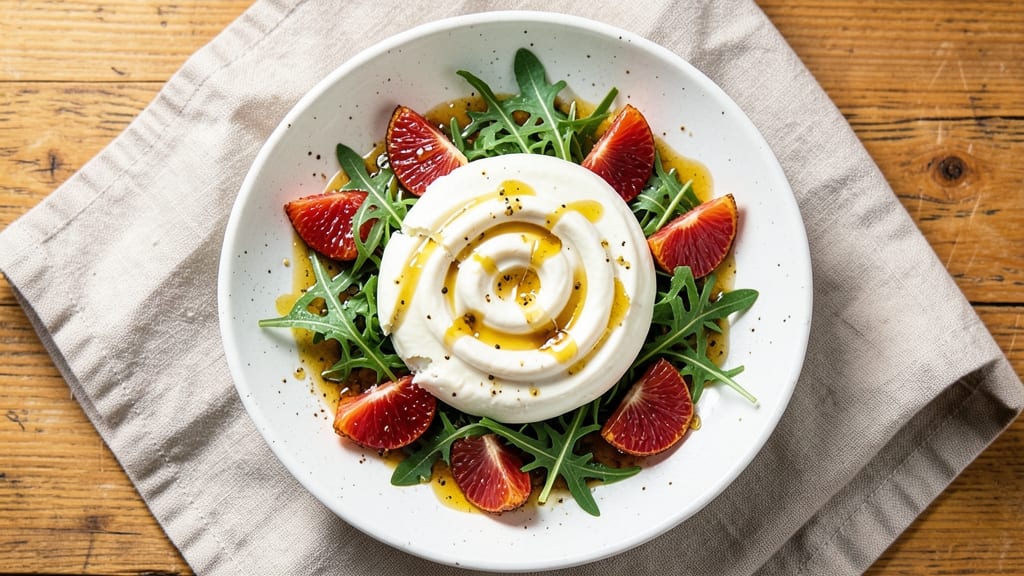
This citrus burrata salad transforms a simple lunch into a restaurant-worthy experience with every bite. The marriage of bright citrus segments and velvety burrata creates a balance of textures and flavors that’s impossible to resist.
I’ve perfected this dish by focusing on high-quality ingredients—juicy blood oranges, creamy burrata, and crisp arugula—that come together in just 15 minutes.
The secret lies in the dressing: a light infusion of citrus juice, olive oil, and a touch of honey that enhances the natural sweetness without overpowering the delicate flavors. Toasted nuts or crispy prosciutto add a satisfying crunch, while microgreens elevate the presentation to a level that feels special.
This salad isn’t just refreshing—it’s indulgent, making it perfect for summer lunches or elegant gatherings.
What makes this recipe stand out is the creamy burrata, which should be torn into generous pieces so its rich, buttery center contrasts beautifully with the tart citrus. The dressing ties everything together, ensuring every forkful is bright, creamy, and perfectly balanced.
Whether you’re serving this as a light main or a side, it’s sure to impress.
The best part? You can customize it with seasonal fruits, herbs, or proteins to keep it exciting. Let’s bring this vibrant, creamy salad to your table—it’s easier than you think and far more delicious than store-bought options.
Ingredients for citrus burrata salad
Juicy citrus, velvety burrata, and crisp greens create this restaurant-worthy salad in minutes.
| Ingredient | Amount | Notes |
|---|---|---|
| Blood Orange Segments 🍊 | 2 cups | Freshly segmented, seeds removed |
| Burrata Cheese 🧀 | 1 lb | High-quality, torn into pieces |
| Baby Arugula 🌿 | 4 cups | Fresh, washed and dried |
| Extra-Virgin Olive Oil 🫒 | ½ cup | Light, fruity variety preferred |
| Blood Orange Juice 🍊 | ¼ cup | Freshly squeezed |
| Honey 🍯 | 1 tbsp | Raw or wildflower preferred |
| Toasted Pecans 🥜 | ½ cup | Chopped, lightly toasted |
| Microgreens 🌱 | ¼ cup | For garnish, optional |
| Flaky Sea Salt 🧂 | ½ tsp | For finishing |
| Fresh Basil Leaves 🌿 | ¼ cup | Chopped, for garnish |
| Crispy Prosciutto 🥓 | 4 oz | Thinly sliced, optional |
| Lemon Zest 🍋 | 1 tsp | For brightness |
| Red Wine Vinegar 🍷 | 1 tsp | For dressing balance |
The burrata is the star—look for brands like La Latteria or BelGioioso for that ultra-creamy center. Whole Foods or specialty cheese shops carry the best quality, and it’s worth the splurge. Blood oranges add that signature tart-sweet contrast, so pick firm, vibrant ones—the deeper the red, the more intense the flavor. Baby arugula should be bright green and crisp, not wilted. If you can’t find blood oranges, navel oranges work in a pinch, though they’re less vibrant. The dressing ties it all together, so use fruity, extra-virgin olive oil—none of that bitter stuff.
No blood oranges? Grapefruit or Meyer lemon segments add a similar tang. Swapping prosciutto? Crispy fried shallots or candied pecans bring that same satisfying crunch. The honey should be raw or wildflower—it enhances the citrus without overpowering. If you’re avoiding honey, try agave nectar at half the amount. For the dressing, balance is key: start with equal parts citrus juice and olive oil, then adjust honey and vinegar to taste. The prosciutto can be omitted for a fully vegetarian version—just add extra nuts or toasted breadcrumbs for texture.
Burrata keeps for 2-3 days in the fridge, but use it within a day for the best texture. Store it in its original container with a paper towel to absorb moisture. The dressing can be made a day ahead—it actually tastes better after the flavors meld. If prepping ahead, keep the dressing and salad components separate until serving to maintain crispness. Microgreens and basil stay fresh for 3-4 days in the fridge, wrapped in damp paper towels. This salad reheats poorly, so assemble it right before serving to enjoy that perfect creamy-tart contrast.
Why You'll Love This Recipe
- Same bowl, different vibes: toss it together for a lazy lunch or plate it pretty with toasted nuts for guests. Honestly, I’ve served it both ways—no one judges.
- No-Cook Magic: The only prep is slicing oranges and tearing greens—no stove, no stress. I’ll admit, the first time I saw burrata whole, I panicked, but you just tear it open like a gift. That’s it.
- Sweet-Salty Balance: The blood orange’s tart bite and creamy burrata? It’s like a hug for your taste buds. Drizzle that juice and olive oil, and suddenly, arugula doesn’t taste like “rabbit food” anymore.
- Weeknight to Dinner Party: Same bowl, different vibes: toss it together for a lazy lunch or plate it pretty with toasted nuts for guests. Honestly, I’ve served it both ways—no one judges.
Step-by-step instructions for citrus burrata salads
Here's how to assemble this luxurious salad where creamy burrata meets vibrant citrus.
Prepare the Citrus Dressing
In a small bowl, whisk together the 0.25 cup blood orange juice, 1 tbsp honey, and 1 tsp red wine vinegar until completely combined. This citrus dressing should be smooth with a delicate balance of sweetness and acidity. I like to taste it at this stage—it should be bright and slightly tangy, not overly sweet.
Slowly drizzle in the 0.5 cup extra-virgin olive oil while continuing to whisk. The dressing should emulsify into a silky consistency, almost like a light vinaigrette. If it separates, simply whisk vigorously for another 10-15 seconds—this happens when the oil is added too quickly. Set aside while you prepare the salad base.
Assemble the Salad Base
Gently arrange the 4 cups baby arugula on a large platter or individual plates, creating a bed that covers the surface evenly. The arugula should be spread in a single layer, leaving space for the other components. I use my hands to distribute it evenly, being careful not to bruise the delicate leaves.
Add the 2 cups blood orange segments to the arugula, spacing them slightly apart to showcase their vibrant color. The blood orange segments should be fresh, with the bright red flesh contrasting beautifully against the green arugula. If using the 4 oz crispy prosciutto, arrange the thin slices in a circular pattern around the edges for an elegant presentation.
Add Creamy and Crunchy Elements
Tear the 1 lb burrata cheese into rough, irregular pieces and nestle them gently into the center of the salad. The burrata should be at room temperature for the best texture—creamy on the inside with a slight firmness on the outside. If the cheese is cold, let it sit at room temperature for 15-20 minutes before assembling.
Sprinkle the 0.5 cup toasted pecans evenly over the salad, focusing on the areas around the burrata and blood orange segments. The pecans add a satisfying crunch that contrasts perfectly with the creamy burrata. If you're using the 0.25 cup microgreens, scatter them lightly over the top for a pop of color and freshness.
Finish with Garnishes and Dressing
Drizzle the prepared citrus dressing lightly over the salad, starting in the center and working your way outward. You don't need to cover everything—just enough to create a glossy sheen and enhance the natural flavors. The dressing should coat the arugula and blood orange segments without making the salad soggy.
Finish with the 0.25 cup fresh basil leaves (chopped), 1 tsp lemon zest, and a sprinkle of 0.5 tsp flaky sea salt. The basil adds a fresh, slightly peppery note, while the lemon zest brightens the entire dish. The flaky sea salt enhances all the flavors without overpowering them. Serve immediately while the burrata is still creamy and the dressing is fresh.
Pro Tips For Making Citrus Burrata Salad
- Peel Blood Oranges First: Skip the messy mid-salad peeling—segment them over a bowl before adding to the arugula. The membranes cling to greens like glue, and you’ll spend more time picking them out than eating. (Yes, even if you’re impatient like me.)
- Tear Burrata, Don’t Slice: Use your hands to gently pull the cheese into rough chunks—no knife. Slicing releases too much whey, turning your salad dressing into a watery mess. The texture stays creamy, not sad.
- Dress Arugula Last: Toss the greens with olive oil and blood orange juice right before serving. Arugula wilts faster than you think, and the dressing makes it limp in minutes. Save the burrata for the final touch—it’ll stay proud and gooey.
- Use Chilled Burrata: Pull the cheese from the fridge 10 minutes before serving. Cold burrata holds its shape better, and the contrast with room-temp citrus segments makes every bite feel like a surprise. (Your guests won’t notice the trick, but they’ll remember the texture.)
Troubleshooting perfect results
Burrata Too Firm
If your burrata arrives rock-hard from the fridge, don’t panic! Let it sit at room temperature for 15-20 minutes before using. For extra creaminess, place it in a bowl of warm (not hot) water for 5-10 minutes—this gently softens it without breaking the delicate texture.
Never microwave it, as heat will make it grainy. 🧀
Citrus Dressing Separates
If your dressing splits when whisking, you’re likely adding oil too quickly. Instead, drizzle it in very slowly while whisking continuously. For a quick fix, add ½ tsp Dijon mustard to help emulsify.
If it still separates, simply whisk vigorously for 30 seconds—the citrus acid will eventually re-bind the oil. Always taste before drizzling to adjust sweetness or acidity.
Wilted Arugula
Fresh arugula wilts fast when wet. To keep it crisp, pat it dry thoroughly with a salad spinner or clean towel before assembling. If using pre-washed greens, drain them well and add dressing just before serving.
For extra crunch, chill the arugula on a plate in the fridge for 10 minutes before tossing with citrus segments—this firms up the leaves beautifully.
Prosciutto Too Soft
If your prosciutto loses its crispness, toast it quickly in a dry skillet over medium-high heat for 10-15 seconds per side until just golden. Alternatively, wrap it around a chilled wine bottle for 5 minutes to crisp it up without cooking.
Store prosciutto in the fridge, not the freezer, to maintain its delicate texture. 🥓
Blood Oranges Too Tart
If the blood oranges overwhelm the dish, balance them with 1 extra tbsp honey in the dressing or a sprinkle of toasted almonds for sweetness. For a milder flavor, use Meyer lemons instead—they’re sweeter and less acidic.
Always taste the citrus segments before adding them to the salad to gauge tartness.
Dressing Overpowers
Too much dressing can make the salad soggy. Instead of drowning it, drizzle lightly and let guests add more as needed. For a lighter touch, thin the dressing with 1 tbsp water or ice-cold citrus juice to create a glossy, barely-there coating.
Serve dressing on the side if you’re worried about sogginess—it keeps the salad crisp while letting everyone customize their flavor.
Nutrition facts
Frequently asked questions
Can I substitute regular mozzarella for burrata in this salad?
While you can use mozzarella, it won't give you the same luxurious texture. Burrata's creamy, buttery center melts beautifully with citrus, while mozzarella stays firmer. For a similar effect, try mixing ½ lb mozzarella with ½ lb ricotta—it'll be creamier but won't have the same delicate rind.
What's the best way to store leftover citrus burrata salad?
Store components separately: keep the burrata in its container with a paper towel, citrus segments in a sealed container, and dressing in a small jar. Reassemble just before serving to maintain crispness. The salad keeps for 1 day in the fridge, but the burrata loses its creaminess after that.
How can I make this salad vegetarian?
Skip the prosciutto and add ¼ cup toasted pine nuts or crispy chickpeas for crunch. For extra protein, include ¼ cup marinated white beans or avocado slices. The citrus dressing and burrata keep it rich and satisfying without meat.
Can I use grapefruit instead of blood oranges?
Grapefruit adds a slightly bitter contrast that works beautifully. Use 1 cup grapefruit segments and reduce honey to ½ tbsp in the dressing since grapefruit is less sweet. For a milder taste, choose pink or red grapefruit varieties.
What's the ideal temperature for serving this salad?
Serve at room temperature for the best texture contrast—65-70°F. If the burrata feels cold, let it sit at room temperature for 10 minutes before assembling. Chilling the salad too long makes the burrata firm and the arugula limp. For summer, serve immediately after dressing.