Salads
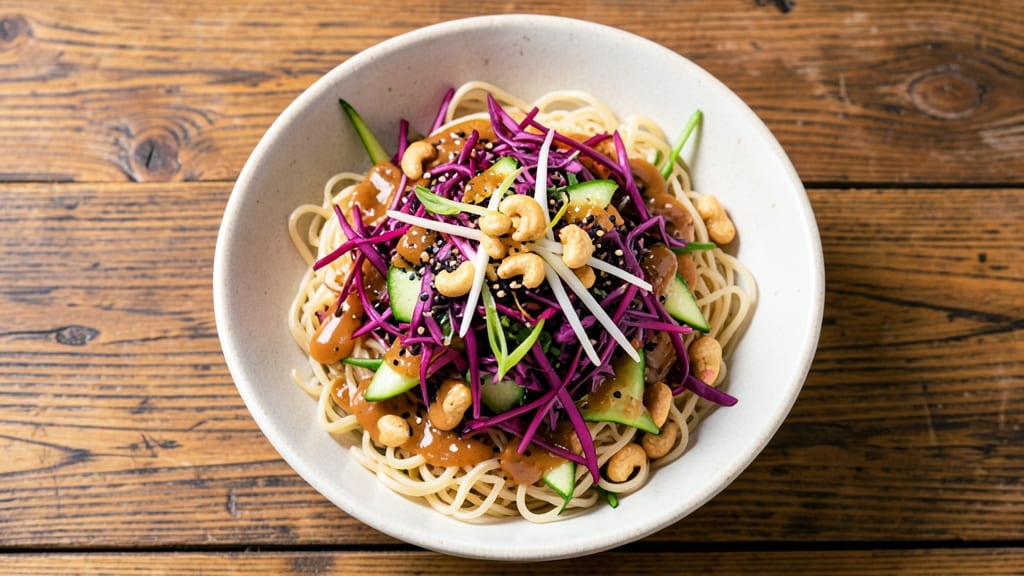
This vegan Asian salad recipe delivers restaurant-quality crunch and bold flavors without any animal products. ✨ The secret lies in perfectly cooked rice noodles, crisp vegetables, and a tangy peanut dressing that ties everything together with just the right balance of sweet, spicy, and umami.
I've tested countless variations to perfect the texture and flavor profile—this version never disappoints.
The foundation of this salad is a simple yet effective peanut dressing made with creamy peanut butter, tangy lime juice, and a touch of maple syrup for balance. The noodles cook in just 5 minutes, while the vegetables are prepped in advance for a quick assembly.
What sets this recipe apart is the combination of textures—crispy rice noodles, fresh herbs, and crunchy vegetables—all coated in that addictive peanut sauce.
By the time you're done, you'll have a vibrant, protein-packed salad that's perfect for meal prep or a quick weeknight dinner. The flavors are complex enough to impress guests but simple enough for everyday eating.
Every bite delivers a satisfying crunch, a burst of fresh herbs, and that perfect tangy-sweet dressing.
This recipe works equally well as a main dish or side, and the dressing can be made ahead for convenience. The ingredients are easy to find, and the steps are straightforward—ideal for both beginners and experienced cooks. Let's get started!
Ingredients for vegan asian salad
Fresh veggies meet creamy peanut dressing in this vibrant vegan Asian salad—crunchy, tangy, and packed with flavor!
| Ingredient | Amount | Notes |
|---|---|---|
| Rice Noodles 🍜 | 8 oz | Vermicelli or flat style preferred |
| Natural Peanut Butter 🥜 | ½ cup | Creamy, unsweetened preferred |
| Lime Juice 🍋 | ¼ cup | Freshly squeezed, seeds removed |
| Maple Syrup 🍁 | 2 tbsp | Pure, grade B preferred |
| Soy Sauce 🥢 | 2 tbsp | Tamari for gluten-free option |
| Sesame Oil 🫒 | 1 tbsp | Toasted, for aroma |
| Red Bell Pepper 🌶️ | 1 whole | Thinly sliced, seeds removed |
| Carrot 🥕 | 1 whole | Julienned or matchstick cut |
| Cucumber 🥒 | 1 whole | Seedless, thinly sliced |
| Red Onion 🧅 | ½ whole | Thinly sliced, white removed |
| Fresh Cilantro 🌿 | ¼ cup | Stems removed, chopped |
| Fresh Mint Leaves 🌿 | 0.1 cup | Finely chopped, optional |
| Crushed Peanuts 🥜 | ¼ cup | For garnish, toasted |
| Sesame Seeds 🌾 | 1 tbsp | Toasted, for crunch |
| Sriracha 🌶️ | 1 tsp | Adjust for spice preference |
| Garlic Cloves 🧄 | 2 cloves | Minced for dressing |
| Water 💧 | 3 cups | For soaking noodles |
The peanut butter is the heart of this salad—creamy, unsweetened is key for that perfect balance. Trader Joe's has the best-priced natural peanut butter, but any good brand works. For the noodles, rice vermicelli gives the best texture, but flat rice noodles work too. Look for packages labeled 'rice' or 'vermicelli'—they're usually in the Asian foods aisle. Fresh herbs are non-negotiable here; cilantro and mint should be bright green with no wilt. If you can't find fresh mint, skip it—this dish still shines without it.
No peanut butter? Sunflower seed butter works in a pinch (same amount), though it'll be nuttier. Short on lime juice? Lemon juice plus a pinch of salt mimics the tang. The dressing can be made 2 days ahead—just store it in a jar and shake before using. For extra crunch, toast your sesame seeds in a dry pan for 30 seconds—they'll smell amazing! The carrots and bell pepper can be prepped ahead and stored in airtight containers for 3 days in the fridge, saving you time when assembling.
This salad keeps beautifully for 3 days in the fridge—just store the dressing separately and toss with noodles and veggies when ready to serve. The dressing alone makes a great dip for veggies or spring rolls—double the batch if you're making extra. For meal prep, portion the salad into containers with the dressing on the side so everything stays crisp. Freeze the dressing for up to 3 months if you won't use it soon—thaw and shake well before using.
Why You'll Love This Recipe
- No-Cook Sauce Hack: I swear by this peanut-lime dressing—just toss peanut butter, lime, maple, and soy sauce in a jar, shake until smooth. No blender, no strainer, just pure, creamy magic in 30 seconds. (Yes, even on a Tuesday night when I’m too tired to chop.)
- Sweet-Salty Balance: That maple-soy-lime combo? It’s the kind of flavor you’ll lick the bowl over. The peanut butter adds richness without heaviness, while the lime keeps it bright—like a hug for your taste buds after a long day.
- Lunchbox Legend: Between us, this is my go-to for packed lunches. Cold rice noodles hold up perfectly, and the dressing clings like glue. My kids (and my partner) actually eat their veggies when they’re drowning in this stuff.
- Pantry Staple Power: Honestly, you’re using ingredients you already have. No weird substitutions—just peanut butter, lime, and a few basics. It’s cheap, it’s flexible, and it turns $5 of groceries into a meal that feels fancy. (Budget win.)
Step-by-step instructions for crunchy vegan noodle salad
Here's how to assemble this vibrant, protein-packed salad—bright, crunchy, and bursting with Asian-inspired flavor.
👨🍳 Step 1: Soak and Rinse the Rice Noodles
Place the 8 oz rice noodles in a large bowl and pour over the 3 cups water. Let them soak for 10-12 minutes until pliable but still slightly firm—this ensures they hold their shape in the salad. I like to check by pinching a strand; it should bend without breaking.
After soaking, drain the noodles thoroughly in a colander and rinse under cold water for 30 seconds. This stops the cooking process and prevents them from becoming mushy. Give them a quick shake to remove excess water, then transfer to a large mixing bowl. The noodles should be cool to the touch before proceeding—this prevents them from cooking further when mixed with dressing.
🍳 Step 2: Whisk Together the Tangy Peanut Dressing
In a small bowl, combine the 0.5 cup natural peanut butter, 0.25 cup lime juice, 2 tbsp maple syrup, 2 tbsp soy sauce, 1 tbsp sesame oil, 1 tsp sriracha, and 2 minced garlic cloves. Use a whisk to blend until completely smooth—this is your flavor foundation.
Here's the thing—don't be tempted to use sweetened peanut butter. The natural version gives you that perfect balance of creamy richness and nutty depth. If the mixture looks too thick, add 1-2 tablespoons water to reach a pourable consistency. Taste and adjust seasoning; you might want more lime for brightness or soy sauce for umami.
🥘 Step 3: Prep and Toss the Fresh Vegetables
While the dressing rests, slice the red bell pepper into thin strips, julienne the carrot into matchsticks, thinly slice the cucumber, and separate the red onion into rings. Chop the fresh cilantro and mint leaves separately—this keeps their vibrant colors distinct in the salad.
Add all the vegetables to the bowl with the drained noodles. Give everything a gentle toss with clean hands or tongs. You want the vegetables to coat evenly in the dressing later, but don't overmix or they'll start to soften. The salad should look colorful and fresh—this is where the magic happens visually.
🥘 Step 4: Combine Noodles and Dressing
Pour the peanut dressing over the noodle-vegetable mixture and toss gently but thoroughly. The noodles will begin to absorb the dressing immediately, so work quickly. If the salad seems too dry after tossing, add 1-2 tablespoons water to loosen it up. The perfect texture should be glossy but not soggy—each strand should be well-coated.
Let the salad sit for 5 minutes at room temperature. This allows the flavors to meld together beautifully. The lime juice will brighten, the peanut butter will soften slightly, and the vegetables will release their juices just enough to create that perfect balance of crunch and creaminess.
🍽️ Step 5: Garnish and Serve Immediately
Transfer the salad to a large serving platter. Sprinkle evenly with the 0.25 cup crushed peanuts and 1 tbsp sesame seeds for that essential crunch and nutty aroma. The peanuts add protein and texture, while the sesame seeds contribute a toasty depth that ties everything together.
Serve immediately while the vegetables are still crisp and the dressing is vibrant. This salad tastes best fresh—waiting too long means soggy carrots and limp noodles. Pair with warm vegan spring rolls or a side of edamame for a complete meal that's as satisfying as it is delicious.
Pro Tips For Making Vegan Asian Salad
- SOAK NOODLES UNTIL ALMOST TOO SOFT: I learned this the hard way—rice noodles can go from perfect to mushy in seconds. Soak them in warm water for 3-4 minutes past the package’s suggested time, then drain and rinse with cold water immediately. They’ll firm up slightly and hold their shape better when tossed with the dressing.
- WHISK PEANUT BUTTER FIRST: Natural peanut butter separates like crazy, and nothing ruins a creamy dressing faster than clumps. Before adding any liquids, whisk the peanut butter with a splash of warm water (about 1 tablespoon) until completely smooth—this guarantees a silky sauce instead of a lumpy mess.
- DILUTE SOY SAUCE HALFWAY: Plain soy sauce can overpower the dish if you’re not careful. Mix only half the required amount into the dressing first, taste, then add the rest gradually. This way, you can adjust to your preference without ending up with a salty brick of noodles.
- USE FRESH LIME, NOT BOTTLED: Bottled lime juice tastes like sad, watered-down lemonade. Roll a fresh lime on the counter before cutting to soften the skin, then zest and juice it—just 1 tablespoon of zest adds bright, complex flavor without overpowering the peanut dressing. (Yes, even if you’re impatient like me.)
Dietary considerations for this vegan asian salad
Gluten-Free Adaptations
This salad is naturally gluten-free thanks to rice noodles and tamari soy sauce. For extra safety, I recommend using certified gluten-free tamari like San-J Tamari—it has a cleaner flavor without the wheat.
If you're avoiding peanuts, swap the peanut butter for sunflower seed butter (same amount) or cashew butter for a richer texture. 🌱
Nut-Free Options
Peanuts are a staple here, but you can easily adapt the recipe. Replace the peanut butter with 2 tbsp tahini (sesame paste) plus 1 tbsp maple syrup for a nut-free dressing.
Use pumpkin seeds instead of crushed peanuts for garnish—they add a similar crunch. Store-bought nut-free dressings like Annie's Organic Peanut-Free Dressing also work in a pinch.
Protein Boosts
For a heartier salad, add ½ cup cooked edamame or ½ cup baked tofu cubes (marinated in soy sauce and sesame oil). I like to pan-fry the tofu in 1 tbsp sesame oil until crispy for extra texture.
Another option is ½ cup chickpeas—they hold up well and add fiber. Always rinse canned beans to remove excess sodium before adding.
Low-Carb Swaps
Cut carbs by replacing rice noodles with 8 oz shirataki noodles (konjac-based), which have just 3 grams of carbs per serving. For extra crunch, add 1 cup sliced jicama or ½ cup shredded cabbage—both stay crisp and add volume.
The dressing remains the same, but you may need 1 extra tbsp water to help it cling to the shirataki noodles.
Meal Prep Tips
Store components separately to maintain crispness: keep noodles and veggies in one container, dressing in another. When ready to eat, toss everything together and add fresh garnishes like cilantro or mint.
The dressing stays fresh for 5 days in the fridge—shake well before using. For reheating, microwave individual portions for 30 seconds with a splash of water to restore moisture.
Nutrition facts
Frequently asked questions
Can I make this vegan Asian salad without peanuts?
Swap the peanut butter for 2 tablespoons tahini plus 1 tablespoon maple syrup to keep the creamy texture. Garnish with pumpkin seeds instead of crushed peanuts for that same satisfying crunch. The flavor will still be rich and nutty, just with a sesame-forward twist.
How do I keep the vegetables crisp for meal prep?
Store the noodles and veggies separately in airtight containers with a paper towel to absorb excess moisture. Keep the dressing in a separate jar and toss everything together right before eating. For extra crispness, add 1 teaspoon lime juice when reassembling—it helps maintain freshness.
What's the best way to adjust the spice level?
Start with 1 teaspoon sriracha and taste before serving. For milder heat, reduce to ½ teaspoon or swap for ½ teaspoon gochujang (Korean chili paste) for a deeper, slightly sweet spice. If you love heat, add ½ teaspoon chili flakes or an extra ½ teaspoon sriracha to the dressing.
Can I use other types of noodles?
Rice noodles are ideal for their subtle flavor and chewy texture, but you can substitute with soba noodles (buckwheat-based) for a nuttier taste. For gluten-free options, try shirataki noodles (konjac) or rice vermicelli. Avoid wheat noodles—they'll absorb too much dressing and turn mushy. Always rinse cooked noodles well to prevent sogginess.
How can I make this salad more protein-rich?
Add ½ cup edamame (shelled, steamed) or ½ cup baked tofu cubes (marinated in soy sauce and sesame oil) for extra protein. For a crunchy boost, toss in ¼ cup roasted chickpeas or 2 tablespoons hemp seeds. These additions keep the salad hearty while balancing the flavors perfectly.